
Does fast charging technology reduce the lifespan of smartphone batteries?
The YouTube channel HTX Studio recently completed a large-scale, two-year smartphone battery charging experiment involving 40 devices, aiming to answer the long-standing debate about whether fast charging actually reduces smartphone battery life. The results were quite surprising.
Unlike typical battery tests that only measure the usage time or charging speed of newly released smartphones, the Chinese YouTube channel HTX Studio conducted a completely different experiment: testing battery aging under prolonged use conditions, with a simulated real-world charge-discharge cycle.
The research team purchased a total of 40 smartphones and spent nearly two years developing the automation process before beginning official testing. The most crucial part was creating consistent charge-discharge loops for all devices, ensuring the data obtained was reliable.
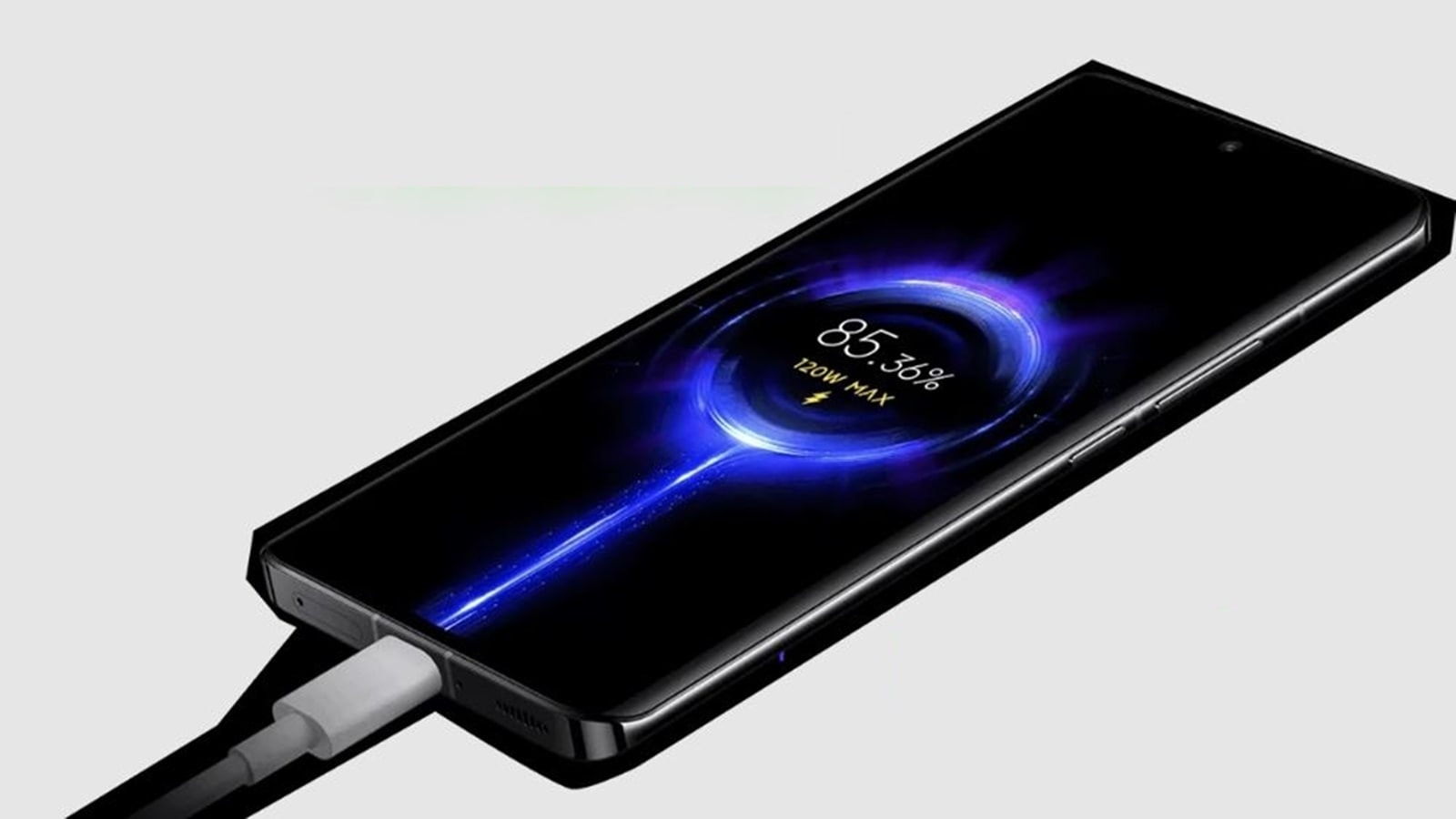
In the main phase of the test, HTX Studio used 6 iPhone 12s and 6 iQOO 7s, divided into two groups: fast charging and slow charging. For the iPhones, the fast charging power was 20W, while for the iQOO it was 120W - a charging level considered very high by current standards.
To simulate real-world user behavior, the team designed an application that automatically discharges the battery from 100% down to 5% (equivalent to 0.95 cycles) before activating charging mode, and then repeats this process once the battery is full.
Another experiment was conducted with a limited charging range from 30% to 80% (equivalent to 0.5 cycles) to replicate the "battery protection charging" habit that many people consider optimal.
After 167 days, equivalent to 500 charging cycles, or about 1.5 years of actual use, the research team obtained a series of important data.
Does fast charging cause batteries to degrade faster?
The results from HTX Studio contradict many common concerns. Many people believe that fast charging will cause batteries to "degrade faster," but the actual data shows that the difference is negligible, as follows:
- iPhone 12 charging is slow: losing 11.8% of battery capacity.
- iPhone 12 fast charging: loses 12.3% of battery capacity.
- iQOO 7 charges slowly: loses 8.8% of battery capacity.
- iQOO 7 fast charging: loses 8.5% of battery capacity.
Data shows that fast charging does not cause greater battery degradation compared to slow charging. Even in the case of iQOO, the fast-charging group lost less capacity, although the difference was very small.
HTX Studio concludes that modern battery management technology has advanced significantly, reducing heat, regulating charging current, and protecting batteries from damaging factors. This explains why the difference between fast and slow charging is no longer as noticeable as it used to be.
Is it really better to charge from 30% to 80%?
Another point of contention is whether charging between 30% and 80% is advisable to prolong battery life. Theoretically, lithium-ion batteries don't like being fully charged to 100% or discharged too low.
However, the results showed that the difference between the two charging methods was very small, although charging within the 30%-80% range offered a slight advantage:
- Fast charging between 30% and 80% degrades the battery less than slow charging between 5% and 100%.
But the difference is still too small to significantly affect actual life expectancy.
This means you don't need to put too much pressure on yourself to keep your battery in the "safe zone" of 30% - 80%, unless you really want to optimize every percentage point of battery life.
Experiment on battery aging when not in use.
HTX Studio also conducted an additional test: leaving three iPhone 12s at battery levels of 1%, 50%, and 100% (with the 100% device still plugged in) for a week. The results showed no significant change in battery capacity.
This shows that battery aging is a long-term process, not something that happens in a few days or weeks, and leaving the phone at 100% for a short period of time does not significantly harm the battery.
This is an important finding, because many people worry that charging overnight will cause the battery to "degrade quickly," but in reality, modern battery management systems will automatically cut off the charging current when the battery is full.
When should you replace your smartphone battery?
Alongside the charging and discharging experiments, HTX Studio also tested how smartphone performance is affected as the battery degrades. The results showed that battery performance begins to noticeably impact performance when the capacity is around 85%.
At this level, the device can reduce its clock speed by about 11%, compared to 5% when the battery capacity is above 85%. Meanwhile, when the battery is below 79%, the usage time decreases significantly and processing speed is also more strongly affected.
This aligns with the recommendations of many smartphone manufacturers, who advise that when the battery level drops below 80%, it's a good time to consider replacing it to restore original battery life and performance.
In summary, HTX Studio's two-year experiment showed that modern fast charging technology does not degrade batteries significantly faster than slow charging. Rules like charging from 30% to 80% offer only minor benefits, and charging overnight is not as seriously harmful as many people fear.


