
Liverpool 1-1 Sunderland: Anfield loses its dominance.
Liverpool went three games without a win at Anfield, drawing 1-1 with Sunderland despite having 68% possession and only 4 out of 23 shots on target; Arne Slot admitted the opposition believed in getting points.
In the 94th minute, Sunderland nearly sealed the game at Anfield. Liverpool pushed their entire team forward, leaving huge gaps behind, and only a timely defensive intervention from Chiesa saved them from defeat. The 1-1 draw speaks volumes about the new but worrying feeling: this is no longer a place the visitors fear, but a place where they believe they can leave with points.
Regis Le Bris, the Sunderland manager, stated bluntly after the match: "We were a little surprised by the amount of time and space we had to play." A concise remark, but an indictment of the level of pressure Liverpool are currently applying.
Anfield is no longer a fortress.
Last season, Liverpool won 14 and drew 2 of their 17 home Premier League matches, establishing a formidable dominance that intimidated all opponents. This season, a run of three winless games at Anfield – their first since the Covid period – has exposed the reality. Liverpool have only won four of their seven home Premier League matches. Arne Slot admitted: "Teams now come here thinking they can get results. And this season has proven that."
It's not just about the score, it's about identity. When Anfield no longer creates that suffocating atmosphere, the psychological advantage shifts decisively to the visitors, while the Liverpool players play with a fear of making mistakes.
Sunderland exposes weaknesses.
Liverpool had 68% possession but only 4 out of 23 shots were on target. However, possession didn't translate into control of the game: Sunderland had twice as many shots on target and hit the post twice. Liverpool's equalizer came from a shot by Florian Wirtz deflecting off Mukiele, a moment more akin to luck than their usual sharpness.
In the final minutes, signs of panic emerged: a desperate push forward, exposed defenses, and disorganized transitions. Prior to that, the first half had seen almost no pressing – a stark contrast to the image of Liverpool suffocating their opponents at Anfield.
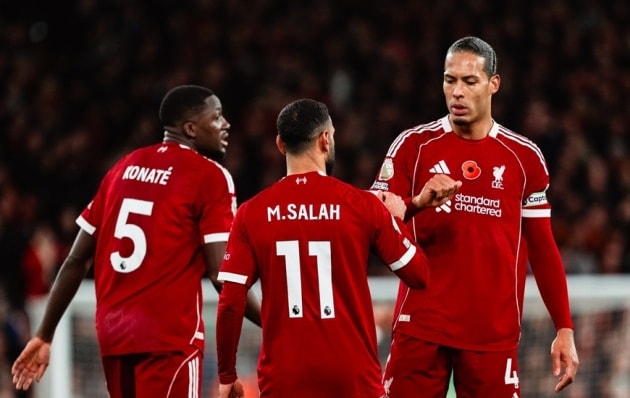
Individuals who fell short of expectations.
Van Dijk made a direct error leading to the goal conceded. Alexander Isak was almost invisible in his role as a striker. Mo Salah – for the first time ever benched for two consecutive Premier League matches at Anfield – pulled his snood almost completely over his face as he watched his team lack creativity. These details describe a team that is slow, predictable, and lacking the urgency that was once their DNA.
The numbers speak for themselves.
| Index | Liverpool vs. Sunderland match |
|---|---|
| Score | 1-1 |
| Ball control | 68% |
| Finish | 23 |
| Hit the target. | 4 |
| Sunderland hit the target. | Double Liverpool |
| The ball hit the post of the Sunderland goal. | twice |
| A winless streak at Anfield | 3 consecutive matches |
| Winning at home in the Premier League this season. | 4/7 matches |
| Performance in the last 14 matches (all competitions) | Only won 4 |
| Last season at Anfield (Premier League) | Win 14, draw 2 out of 17 matches |
Psychological impact and bottlenecks
A rare bright spot: Liverpool earned their first point from a deficit since May. But after three winless games at Anfield and only four wins in their last 14 matches across all competitions, anxiety in the stands is mounting. Despite being only two points behind Chelsea, what the team is losing is their dominance at Anfield – an intangible asset that was once their greatest advantage.
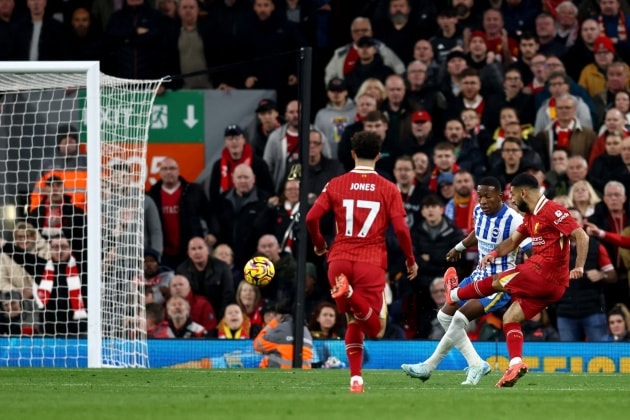
Pressure on Arne Slot
Slot faces a double dilemma: adjusting tactics and rekindling team energy. From the intensity of pressing and the speed of movement to the sense of urgency, Liverpool needs to rediscover what makes Anfield such a suffocating 90-minute experience for visiting teams – rather than for themselves, as is currently the case.


