
Liverpool spent £446 million, but their pressing is lacking – why?
Seven new signings, £446 million spent, but Liverpool's pressing has weakened: PPDA increased to 11.0, ball recoveries averaged only 6.9 per game. They have lost 5 out of 6 matches, are in 8th place, and are 8 points behind Arsenal.
Liverpool spent £446 million on seven new signings after their title-winning season, but their pressing – the cornerstone of their identity – is clearly weakening. Their PPDA has risen to 11.0, while their possession count in the high zone has dropped to just 6.9 per game. After 11 rounds, they have lost five of their last six matches, falling to eighth place and trailing Arsenal by eight points.

When the once-perfect machine starts to malfunction
In February 2024, Liverpool beat Chelsea in the Carabao Cup final, a victory Jurgen Klopp called "the most special" due to a squad ravaged by injuries and the resurgence of young players. Virgil van Dijk's header secured their victory, while Mauricio Pochettino's Chelsea became the target of ridicule after spending billions of pounds under Maurizio Sarri.
Less than two years later, Liverpool themselves found themselves embroiled in criticism. In the summer of 2025, Arne Slot spent £446 million – the largest investment in a single Premier League transfer window – to upgrade the squad. The short-term results were the opposite of expectations: the rhythm was broken, and the pressing lacked cohesion.
With many new players, the intensity has decreased and the pressing has weakened.
Liverpool were forced to revamp their attack: Luis Diaz and Darwin Nunez expressed their desire to leave, and the tragic death of Diogo Jota further complicated transfer plans. Slot brought in Hugo Ekitike (£69 million), Florian Wirtz (£100 million), and Alexander Isak (£125 million). However, both Wirtz and Isak had a difficult start.
Former Liverpool midfielder David Thompson emphasized the first standard: “When wearing the Liverpool shirt, even if the form isn't great, new players have to bring intensity, they have to run, they have to press. This is something the new signings haven't done as well as the previous generation like Diaz, Nunez, or Jota.”
Statistics show that the height of the pressure mass has decreased.
- Ball recoveries in the high zone: 6.9 times/game (down from 8.1 last season and 10.3 in Klopp's last season).
- PPDA: 11.0 (worse than 10.3 last season and 8.9 in the 2023/24 season).
| Index | Present | Last season | 2023/24 season |
|---|---|---|---|
| Winning the ball high (times/match) | 6.9 | 8.1 | 10.3 |
| PPDA | 11.0 | 10.3 | 8.9 |
Tor-Kristian Karlsen, former sporting director of AS Monaco, sees problems with rhythm and cohesion: “Liverpool have improved the quality of their players, but have lost the rhythm, timing, and collective instinct. The movements in pressing are not synchronized.”
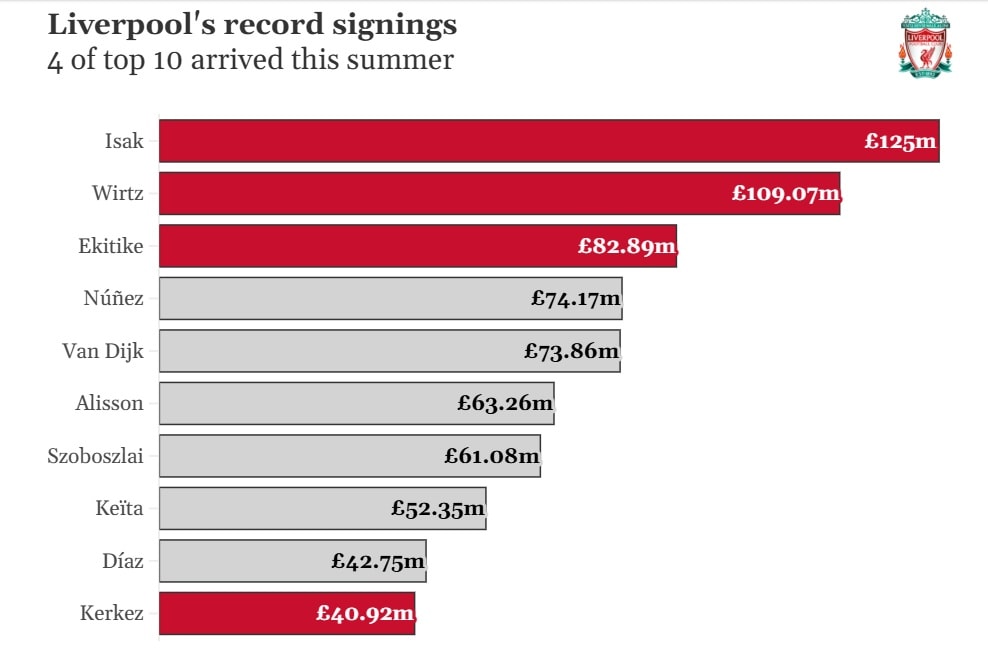
Making too many changes can have the opposite effect.
Liverpool isn't the only team in the Premier League to have witnessed failed "rapid rebuilds."
- Chelsea: 53 signings, spending over £1.5 billion during the Todd Boehly and Clearlake era, the oversized squad made it difficult for the manager to build a solid structure. Graham Potter admitted: “We have too many players. You can only choose 11.”
- Nottingham Forest: In 2022, they signed 21 players and spent £163 million; won only one of their first 11 games and finished 16th, before needing more time to stabilize and secure a European spot the following season.
Meanwhile, Liverpool's two most recent league wins (2020 and 2025) came after transfer windows where they signed almost no players. Stability is the foundation for intensity and structure. Jamie Carragher once commented after a defeat to Manchester United: “Liverpool’s summer transfer window looks more like Real Madrid than Liverpool. When you buy the most expensive players, you have to find a way to get them on the pitch.” Karlsen added: “Unmeasurable factors like harmony, spirit, and consistency are more important than the data.”
Arne Slot's biggest challenge
Besides the integration of the new signings, Liverpool also faces the following challenges:
- Some key players have experienced a drop in form.
- Injuries kept disrupting the plan.
- The psychological impact of Jota's death.
- Opponents are no longer as intimidated by the pressure of pressing as they used to be.
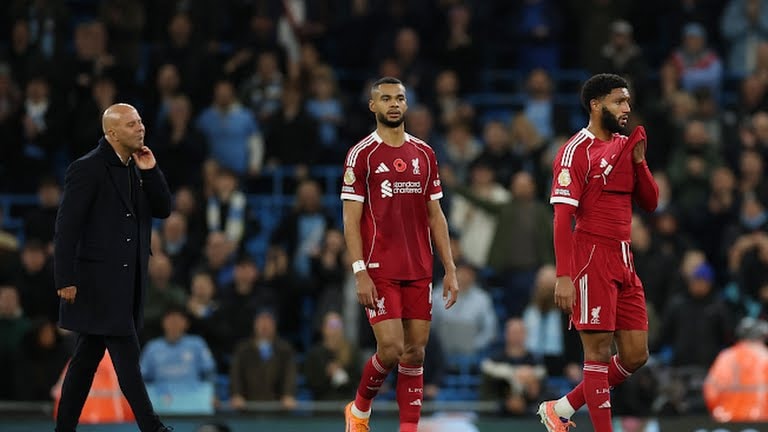
Impact and the path forward
The Premier League has a very thin line between competition and failure. In the short term, the situation is alarming; in the long term, the £446 million could be beneficial if Liverpool can regain their rhythm. Karlsen concludes: “Liverpool are not rebuilding because of a crisis. They are upgrading when they are at their peak. But to get the old machine running again with new components, they need patience. If they rush, everything will fall apart.”
A disjointed pressing, new signings failing to integrate, and an unstable structure are holding Liverpool back. Arne Slot's challenge is to get the pressing machine back in sync – before the season is over.


