
Liverpool's decline: Midfield paralyzed, new signing out of sync.
Liverpool are in crisis after winning the Premier League: midfield loses control in transitions, defense is fragile, and Wirtz and Isak are struggling to adapt.
The string of defeats, culminating in the humiliating loss to Nottingham Forest, exposed a truth: manager Arne Slot's winning machine was malfunctioning in midfield. Just months after winning their 20th Premier League title, Liverpool were in crisis as their midfield "brain" stopped functioning precisely when the team needed it most.
The midbrain stops functioning.
The root of the problem isn't just individual errors in defense. The issue lies in the cracks in the defensive shield. When in possession, Dominik Szoboszlai is still smooth, Alexis Mac Allister and Ryan Gravenberch still show quality. But in the transitional moments – when they lose possession – their ability to read the game, sense danger, and cover for each other is no longer what it used to be. Gaps open up, cuts into the center are less intercepted, leaving Slot's defense without a crucial cushion – something rarely seen in his team.
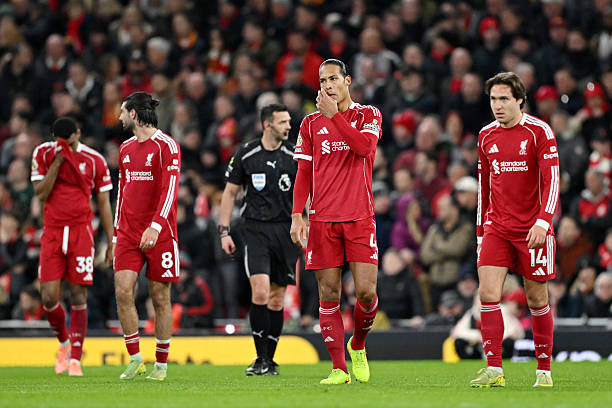
The domino effect: from the midfield to both ends of the field.
At 34, Virgil van Dijk began showing signs of age, but that wasn't the only reason. With the midfield no longer providing cover, the defense faced more dangerous situations in a disorganized state. From there, defensive interventions became passive, and counter-attacks frequently occurred during Liverpool's "vulnerable moments"—right after they lost possession.
At the other end of the pitch, the disruption in the transition phase resulted in disjointed attacks, lacking players involved at the right time. When a goal was needed to turn the tide, the attack wasn't adequately prepared. The fragility in the defense and the deadlock in the attack both stemmed from one point: the midfield was no longer a launching pad or a shield.
Expensive new signing and the integration test.
Florian Wirtz – a £116 million signing and last season's Bundesliga Player of the Year – is still struggling to find his rhythm in a different intensity environment. Moments of brilliance appear, but consistency is a luxury when the pressure of his transfer fee weighs heavily on him.
Alexander Isak, the record-breaking £125 million signing, after finishing second in the Golden Boot race last season, has been a shadow of his former self. Missing the pre-season and arriving late to Anfield hampered his integration into the team. At times when Liverpool needed a key striker, Isak often became a mere "passenger" on the pitch.
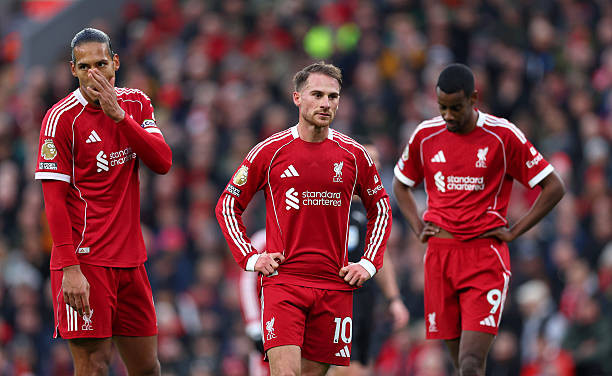
The system picture
The crisis unfolds in a chain reaction: a weakened midfield → a fragile defense → a stagnant attack. When the "brain" can no longer regulate the tempo and height of the team's formation, pressing becomes disjointed, ball recovery is delayed, and gaps between lines appear more frequently.
The irony is that Liverpool still have quality individuals in midfield, but the team as a whole falters at the most crucial moment: the transition from attack to defense. That's where a Slot team's identity is defined, and it's also the link dragging the entire system down.
Questions for Arne Slot
Everything seems to be against Arne Slot right now, despite his remaining trust thanks to his championship legacy. The core question is: how to "restart" the midfield before the season spirals out of control? Only when the midfield rediscovers its instinct for reading the game, its ability to cover for opponents, and its synchronization in transitions between phases, can Liverpool regain stability.
Key facts
- Their 20th Premier League title came just before a period of decline.
- The heavy defeat against Nottingham Forest exposed systemic problems.
- Virgil van Dijk, 34 years old, is showing signs of aging.
- Florian Wirtz, valued at £116 million, has yet to achieve consistency.
- Alexander Isak, valued at £125 million, missed pre-season and has been slow to adapt.
From here, Liverpool's path out of crisis will only open up if their midfield "brain" starts functioning again – because that is the key to all the problems holding the team back.


