
Liverpool conceded 34 goals: their defensive structure crumbled.
The 1-4 defeat against PSV in the Champions League exposed Liverpool's defensive weaknesses: only 4 clean sheets in 20 matches, 34 goals conceded, disjointed pressing, and repeated individual errors.
Liverpool lost 1-4 to PSV Eindhoven in the Champions League, extending their defensive slump: only 4 clean sheets in 20 matches across all competitions, conceding a total of 34 goals. These numbers raise serious questions about the team's structure – not just scattered individual errors, but a system that is crumbling, from pressing to organizing space between the lines.
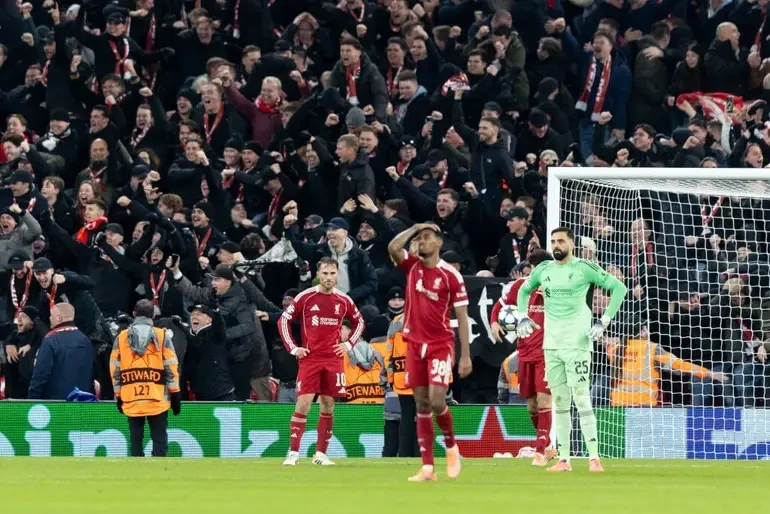
The moment of truth: PSV punishes, 1-4 is a wake-up call.
Immediately after manager Arne Slot bluntly called the recent goals conceded "ridiculous," Liverpool let in four more goals. The Champions League match served as a clear reflection: a lack of aggression in one-on-one challenges, constantly exploited gaps in the midfield, and a lack of concentration in marking opponents.
Fault points in the system
- Pressing is no longer a unified whole: isolated efforts are easily overcome.
- The gap between the lines forms after uncontrolled surges.
- Lack of concentration in man-marking and second ball control, especially in set-piece situations.
- Individual performance declined, leading to direct mistakes.
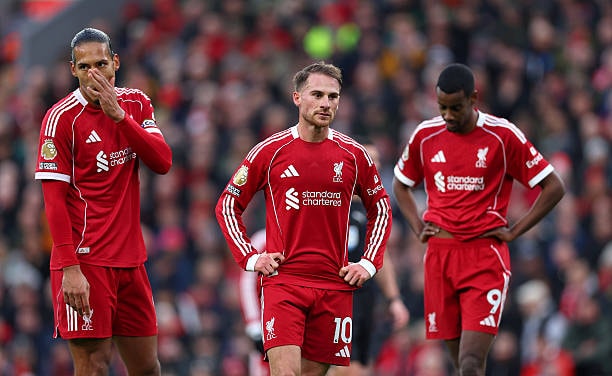
Disjointed pressing: when the team's cohesion is lost.
Liverpool's defining strength used to be their synchronized pressing. This season, that structure lacks fluidity. The attacking line surges forward but doesn't receive cover from behind; opponents escape the press with few passes and open up counter-attacks in the left-open flanks. When Mohamed Salah or Alexis MacAllister lose one-on-one challenges, the entire team is stretched, leaving dangerous gaps in front of the defense.
The gap in the line: a consequence of role changes.
Ryan Gravenberch was allowed to push further forward and participate more in attack, leaving behind "deadly" spaces. When the lone defensive midfielder wasn't in the right position, Liverpool were vulnerable in transitions. This pattern was evident against Chelsea and clearly repeated against PSV: just one through pass was enough to split the defensive block in two.
Individual decline and misalignment of links in the chain.
Ibrahima Konate lacked his usual consistency, making elementary mistakes that led to goals conceded. On the right flank, the instability was even more apparent when Curtis Jones – a midfielder – was forced into a role that was out of his natural position. When positional discipline was lost, even attacking players like Cody Gakpo were criticized for neglecting their marking duties, leaving opportunities for opponents to penetrate the final third of the pitch.
Weaknesses in set pieces: losing in second balls, lacking collective reflexes.
Even set pieces – where Liverpool used to be strong – have now become their Achilles' heel. The majority of goals conceded don't come directly from the first cross, but from second balls. This is a sign of a lack of decisiveness and concentration: the chain reaction is slow, individuals are too eager to rush forward on the counter-attack, neglecting their secondary defensive positions.
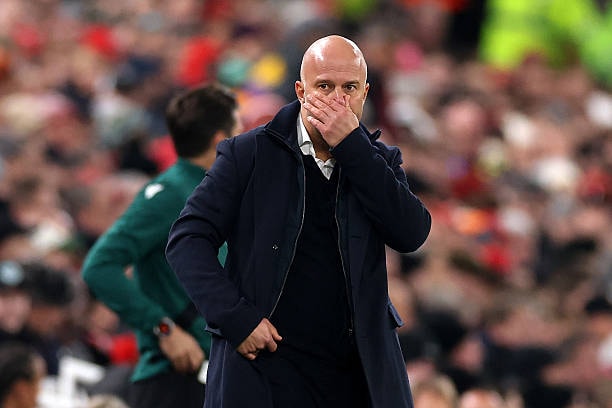
Impact and direction: a return to fundamental principles.
34 goals conceded in 20 games and only 4 clean sheets is no longer a temporary phenomenon. It's a trend. For Arne Slot, the problem cannot be solved by a single change: pressing needs to be synchronized from the front line; the gaps between the lines must be narrowed through positional discipline from the defensive midfielders; the spirit of tackling and concentration in second balls needs to be restored. Before thinking about anything else, Liverpool must rediscover their defensive fire – the aggression and discipline that were once the foundation of their success.
Key numbers
- 20 matches in all competitions: 4 clean sheets, 34 goals conceded.
- Last match in the Champions League: lost 1-4 to PSV Eindhoven.
The defensive crisis has become systemic. The answer now lies in how quickly Liverpool can rediscover the discipline, cohesion, and aggression – values that seem obvious but are currently lacking.


