
Eliminate inefficient projects and put an end to the "give-and-take" system in public investment.
National Assembly representatives proposed reviewing and resolutely removing from the list those "reserved" projects that have dragged on for many years without completing land clearance, affecting people's lives; fundamentally reforming public investment management and eliminating the "request-and-grant" mechanism.
On the afternoon of April 21st, continuing the program of the first session of the 16th National Assembly, the National Assembly discussed in the plenary hall the Medium-Term Public Investment Plan for the period 2026-2030; the National Five-Year Financial Plan for the period 2026-2030; the Public Debt Borrowing and Repayment Plan for the period 2026-2030; and approved the State Budget Settlement for 2024. Member of the Central Committee of the Party, Vice Chairwoman of the National Assembly Nguyen Thi Hong presided over the session.
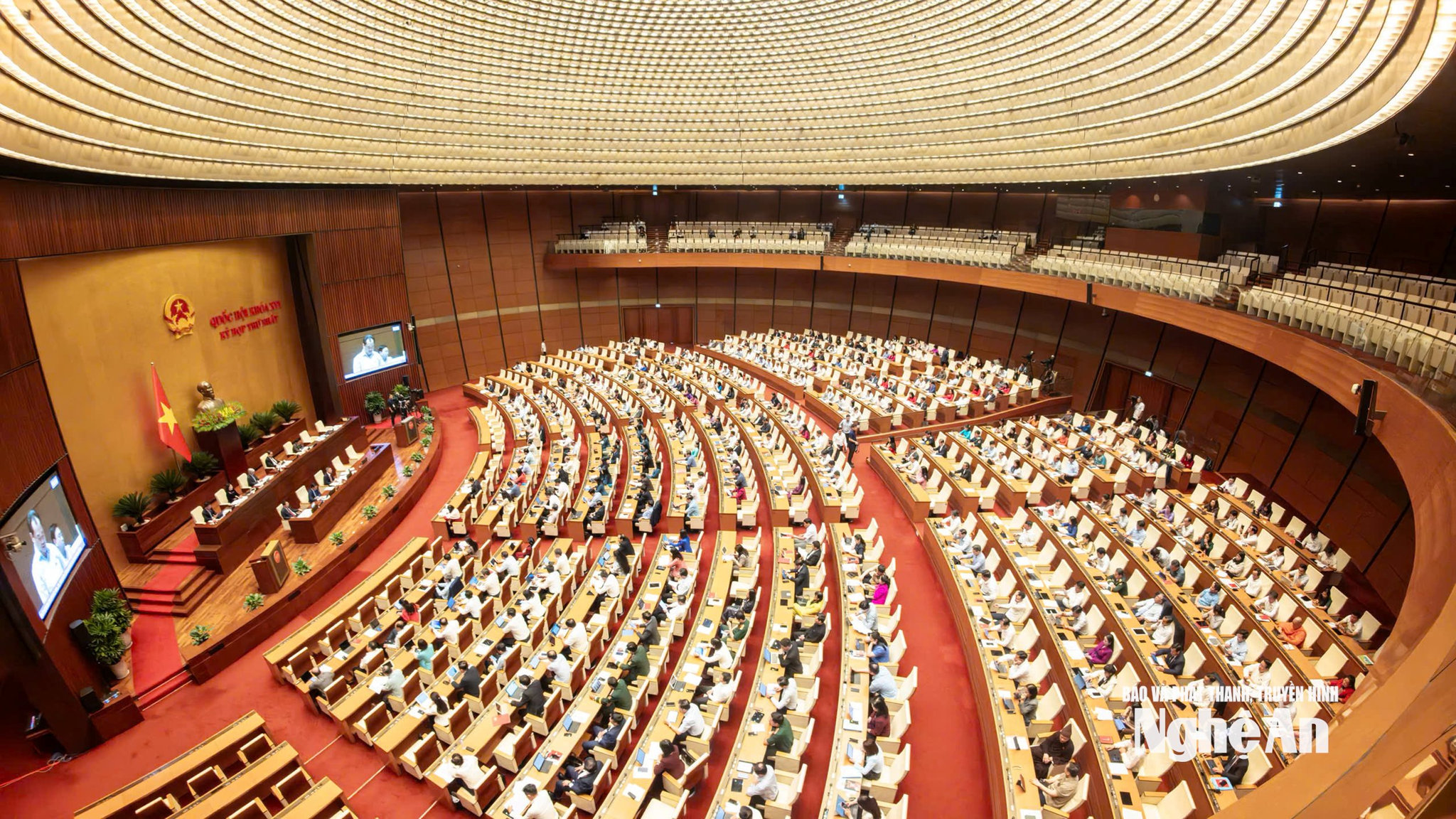
In the early afternoon, the National Assembly voted to approve amendments and additions to the agenda of the first session of the 16th National Assembly.
Specifically, two additional items are submitted to the National Assembly for consideration and approval: the draft Law amending and supplementing a number of articles of the Law on Personal Income Tax, the Law on Value Added Tax, the Law on Corporate Income Tax, and the Law on Special Consumption Tax; and the plan for handling funds used to implement international arbitration awards; and the submission to National Assembly deputies for review of Government Report No. 217 dated April 18, 2026, on the advance payment to the Gasoline and Diesel Price Stabilization Fund from increased central government budget revenue.
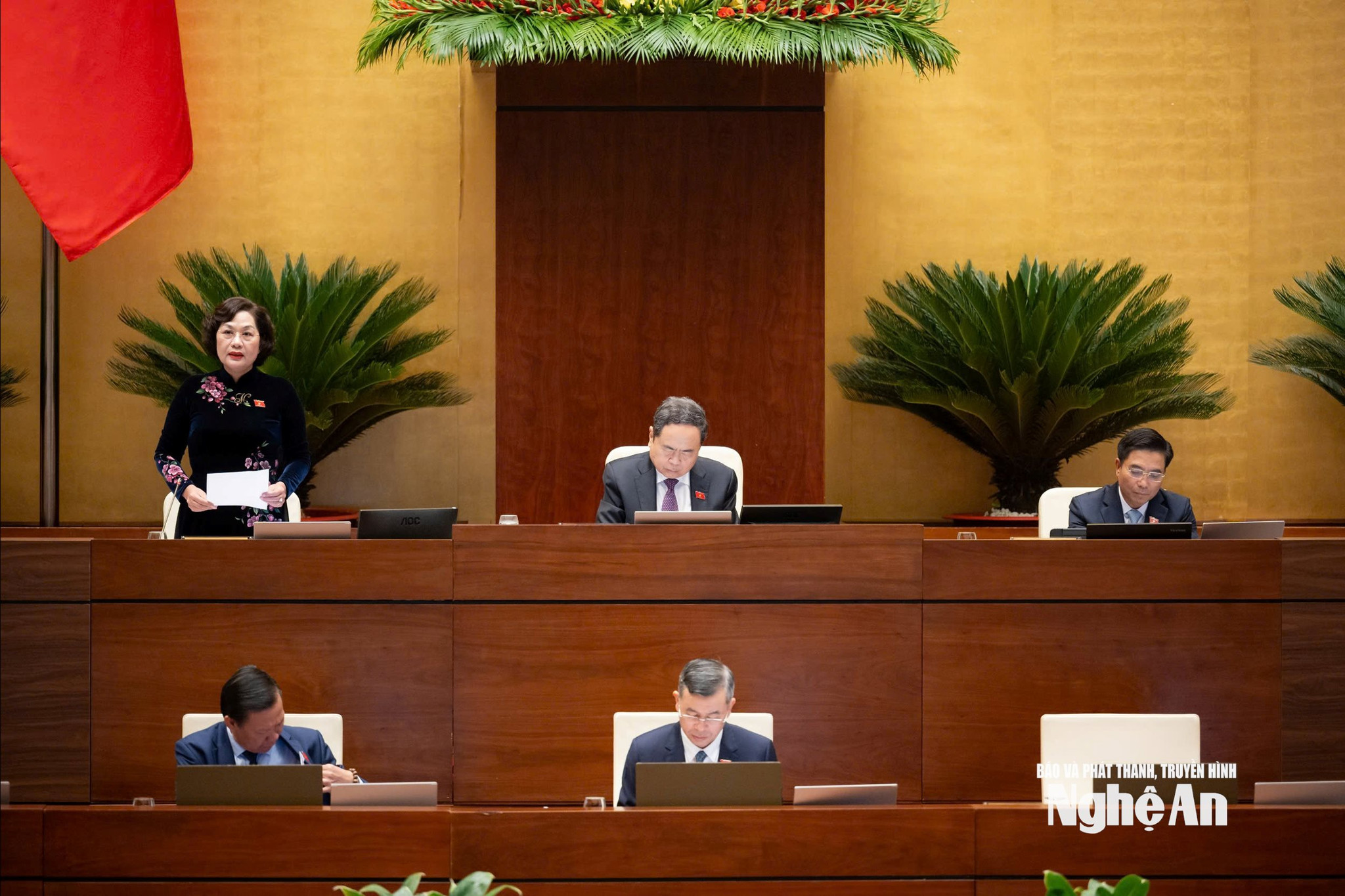
With this addition, the National Assembly will adjust the timing of consideration and approval of some contents accordingly, and allocate an additional 0.5 days for the National Assembly to work, with the session expected to adjourn on the morning of April 24, 2026.
Clearly identify the "bottlenecks" in the organization and implementation of public investment.
Participating in the discussion, National Assembly Deputy Nguyen Duy Minh (Da Nang City delegation) expressed basic agreement with the orientations of the medium-term public investment plan for the period 2026-2030. Looking back at the period 2021-2025, public investment has played an important role in stabilizing the macroeconomy, restoring growth, and implementing many strategic infrastructure projects, creating a foundation for the country's long-term development.
However, delegates also pointed out current shortcomings such as: slow disbursement, limited capital absorption capacity, many projects being prolonged and requiring numerous adjustments, reducing investment efficiency. The core issue does not lie in a lack of capital but in the operational mechanisms and implementation organization.
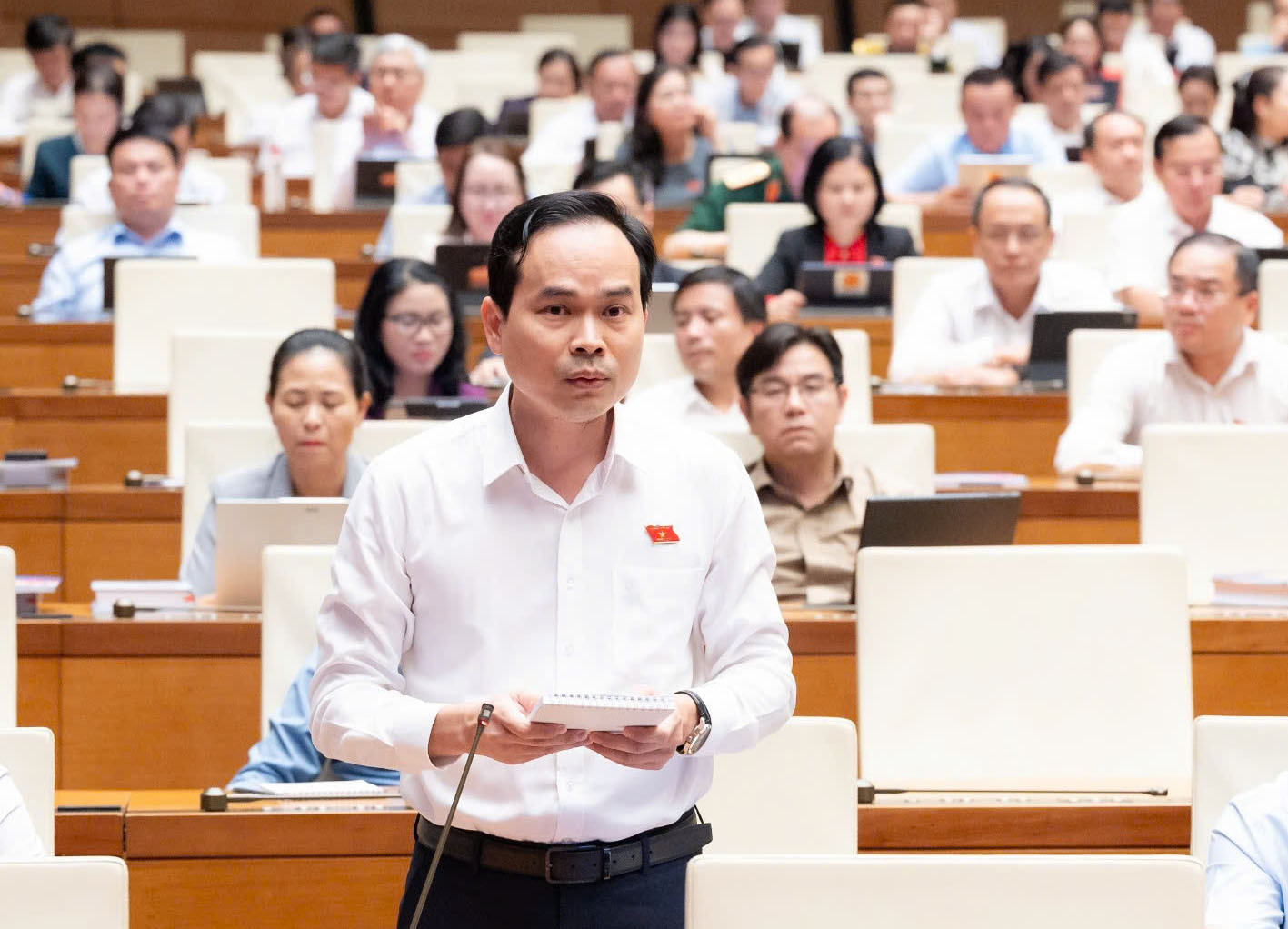
Representative Nguyen Duy Minh argued that the biggest bottleneck currently is the complex and uncoordinated investment procedures. A project has to go through many steps according to different laws such as the Law on Public Investment, the Law on Planning, the Law on Land, the Law on Environment, the Law on Construction, and the Law on Bidding. These steps are mainly carried out sequentially, each stage requiring a separate set of documents that are not interconnected, leading to prolonged project preparation time.
Based on this reality, delegates proposed that the Government implement a comprehensive set of solutions: Prioritize amending relevant laws to unify and streamline processes, reduce intermediate procedures, and allow for the parallel implementation of appropriate steps; continue reforming administrative procedures, classifying projects by scale and risk level to simplify processes for small projects, and strengthen decentralization and delegation of authority coupled with inspection and supervision; at the same time, review and resolutely remove from the list those "reserved" projects that have dragged on for many years without completing land clearance, affecting people's lives.
Notably, delegates also pointed out the paradox in the use of resources for public investment. According to regulations, mineral resources are owned by the entire population and managed by the State, but when implementing projects, the State has to purchase raw materials through market mechanisms, creating an unreasonable "cost loop," driving up total investment costs, affecting disbursement progress and capital efficiency, and impacting construction costs for the people.
.jpg)
Furthermore, resource planning is often reactive and lacks coordination with public investment plans. In many cases, projects only begin searching for materials, applying for mining permits, or adjusting existing plans when they are actually being implemented.
Therefore, delegates proposed the need for a price regulation mechanism or strategic reserve for construction materials; simplification of licensing procedures for exploitation; promotion of a circular economy model in the construction materials sector; and improvement of the institutional framework for managing public assets to ensure the efficient use of resource potential.
Reforming public investment management and improving capital utilization efficiency.
Sharing the same view on improving the efficiency of public investment, National Assembly Deputy Le Huu Tri (Khanh Hoa province delegation) emphasized that the draft Resolution has clearly defined the central goal as improving the efficiency of public investment, promoting its leading and spreading role, attracting maximum non-state resources; contributing to promoting rapid and sustainable growth, completing the strategic infrastructure system, ensuring social security and national defense and security.
Representative Le Huu Tri argued that capital allocation must comply with the Constitution, laws on public investment and the State budget, be consistent with the ability to balance resources, and ensure public debt safety; at the same time, the management and use of capital should be based on socio-economic efficiency, feasibility, and lessons learned from previous periods.
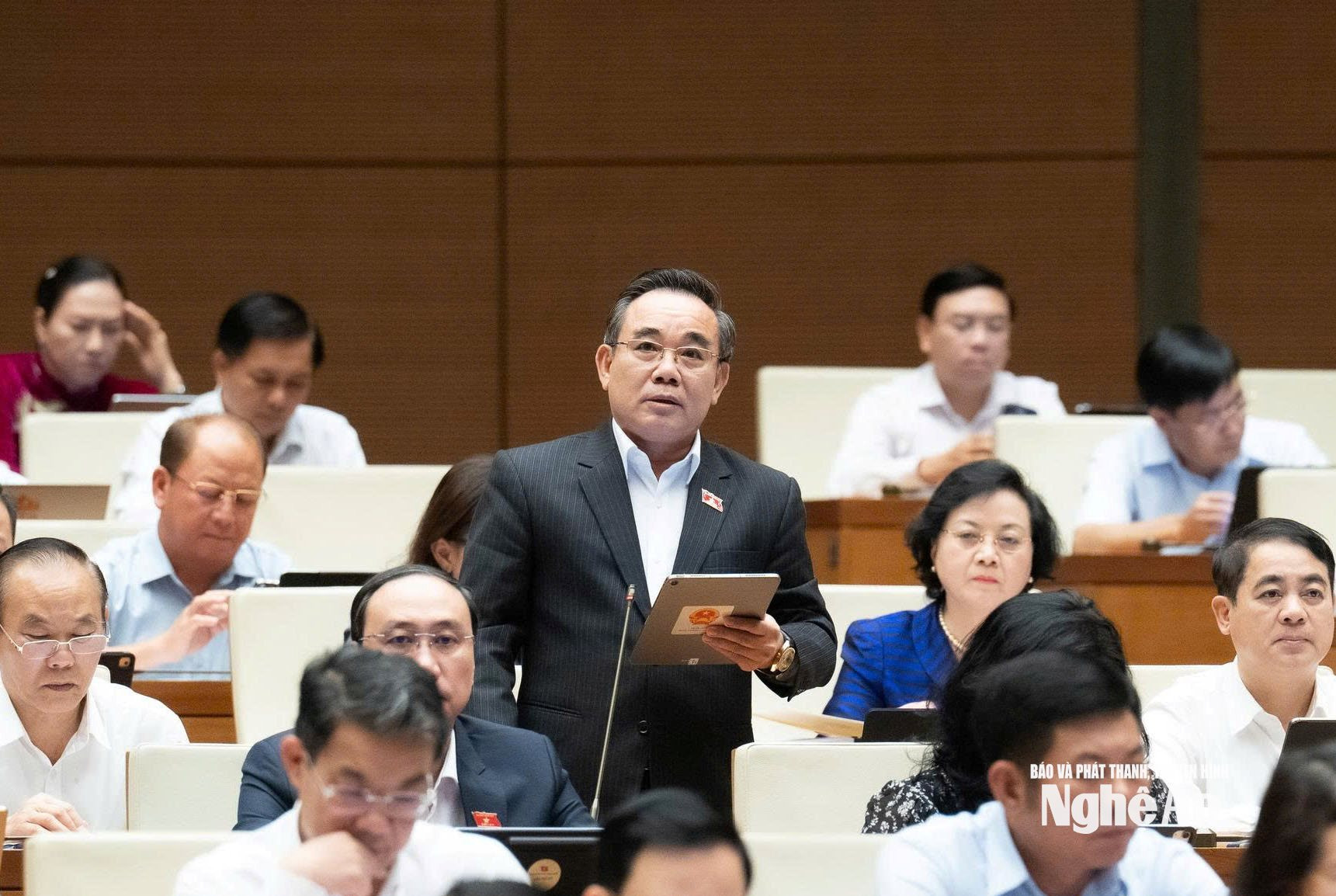
To achieve the set goals, delegates proposed: Continuing to review and resolutely eliminate projects that are not truly necessary or do not meet the conditions, focusing resources on key projects; fundamentally reforming public investment management, eliminating the "request-and-grant" mechanism; prioritizing quality over quantity of projects, emphasizing the responsibility of those who decide on investment policies; and not approving inefficient projects.
Delegate Le Huu Tri also emphasized the challenges in reducing the ICOR coefficient to 4.5-4.8, requiring the rectification of scattered investments, slow progress, limited quality of consulting and surveying, and low disbursement rates. At the same time, it is necessary to strengthen the "early and remote" monitoring mechanism and strictly handle violations in the surveying, design, cost estimation, and bidding stages; thereby contributing to preventing corruption and waste, and addressing legal loopholes.
Removing institutional bottlenecks and creating momentum for implementation.
Expressing her agreement with the results of public investment in the 2021-2025 period and the plan for the 2026-2030 period, National Assembly Deputy Doan Thi Le An (Cao Bang province delegation) assessed that, in the context of many difficulties and challenges, the Government has managed decisively, considering public investment as an important driving force for growth and achieving many positive results.
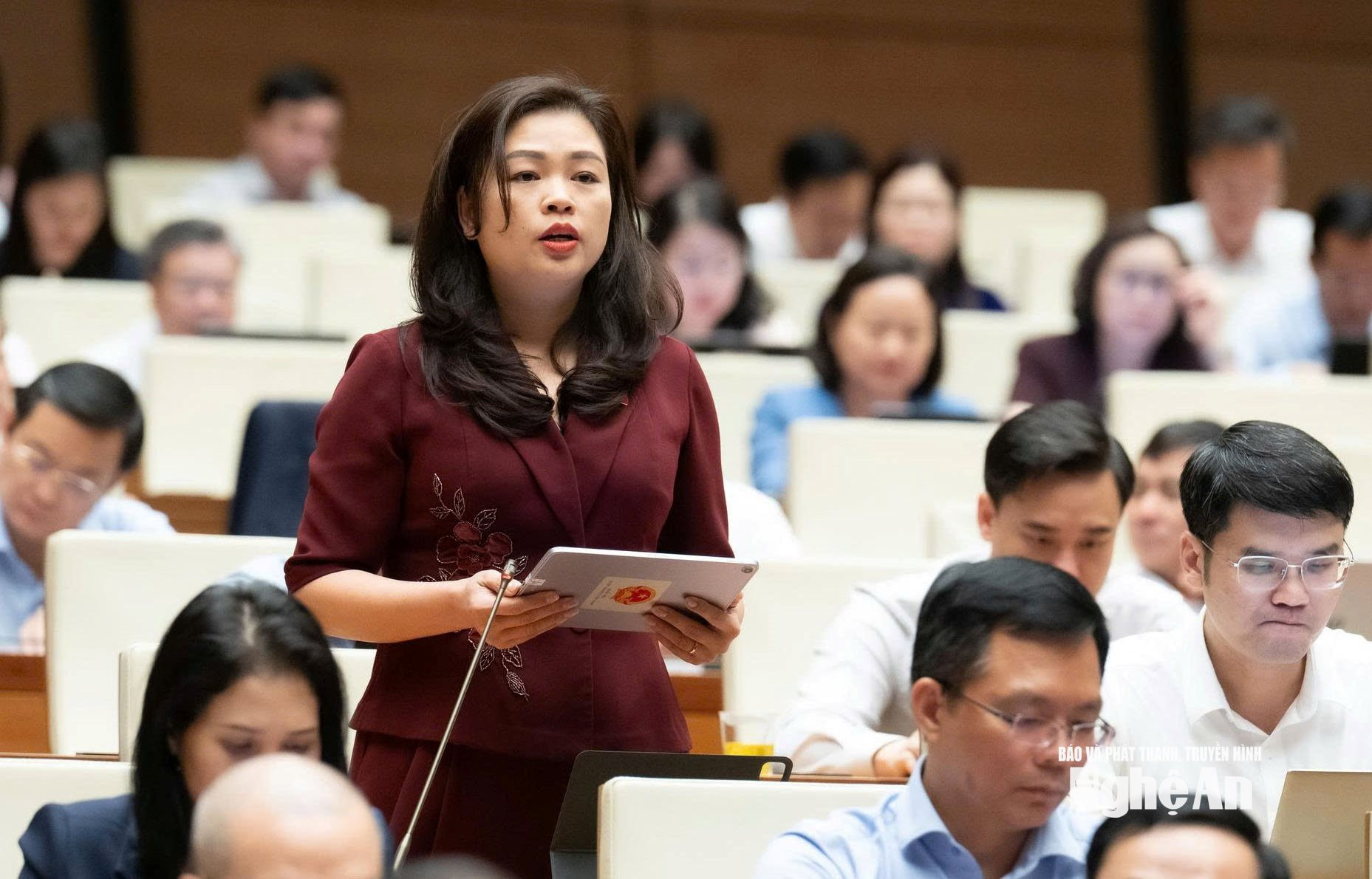
The structure of budget expenditure for development investment has shifted in a positive direction, with resources being allocated more effectively, gradually overcoming the situation of scattered and wasteful spending; at the same time, enhancing the autonomy and responsibility of all levels and sectors; the allocation of capital basically adheres to the Party's guidelines and the National Assembly's resolutions.
However, delegates also noted that these results still fall short of expectations. "The situation of slow and uneven disbursement among ministries, sectors, and localities still persists; some areas have funds but cannot spend them, reflecting systemic bottlenecks ranging from institutional issues to implementation capacity," delegate Doan Thi Le An stated.
Therefore, delegates recommended that the Government continue to improve institutions, simplify procedures, and enhance the quality of investment preparation; at the same time, overcome the mentality of hesitation and fear of making mistakes, creating conditions for officials to dare to think, dare to act, and dare to take responsibility for the common good.


