
Filter the truth.
Social media has become a popular information channel for many people in society. However, it has also become a giant "information marketplace" full of fake news, misinformation, unverified information, and other extremely chaotic content.

Nhat Lan |Design:Huu QuanJune 19, 2026
Social media has become a popular information channel for many people in society. However, it has also become a giant "information marketplace" full of fake news, misinformation, unverified information, and other extremely chaotic content.

Recently, a photo of rice grains exploding in the scorching sun went viral on Facebook. According to VTC News (the online newspaper VTC News) ("Photo of rice grains exploding in the sun: Experts speak out" - VTC News, May 25, 2026), a Facebook user living in Hanoi posted the photo, claiming that the extremely high outdoor temperature caused the rice grains drying in the yard to spontaneously explode.
Because of the prolonged period of intense heat, the photo and accompanying caption attracted tens of thousands of interactions, comments, and shares. Many people believed the photo and information were real, sharing it on their personal social media accounts or expressing concern about the extreme weather and its negative impact on health. However, is it really possible for the weather to be so hot that it could cause rice grains to explode? VTC News clarifies this question through interviews with several experts.
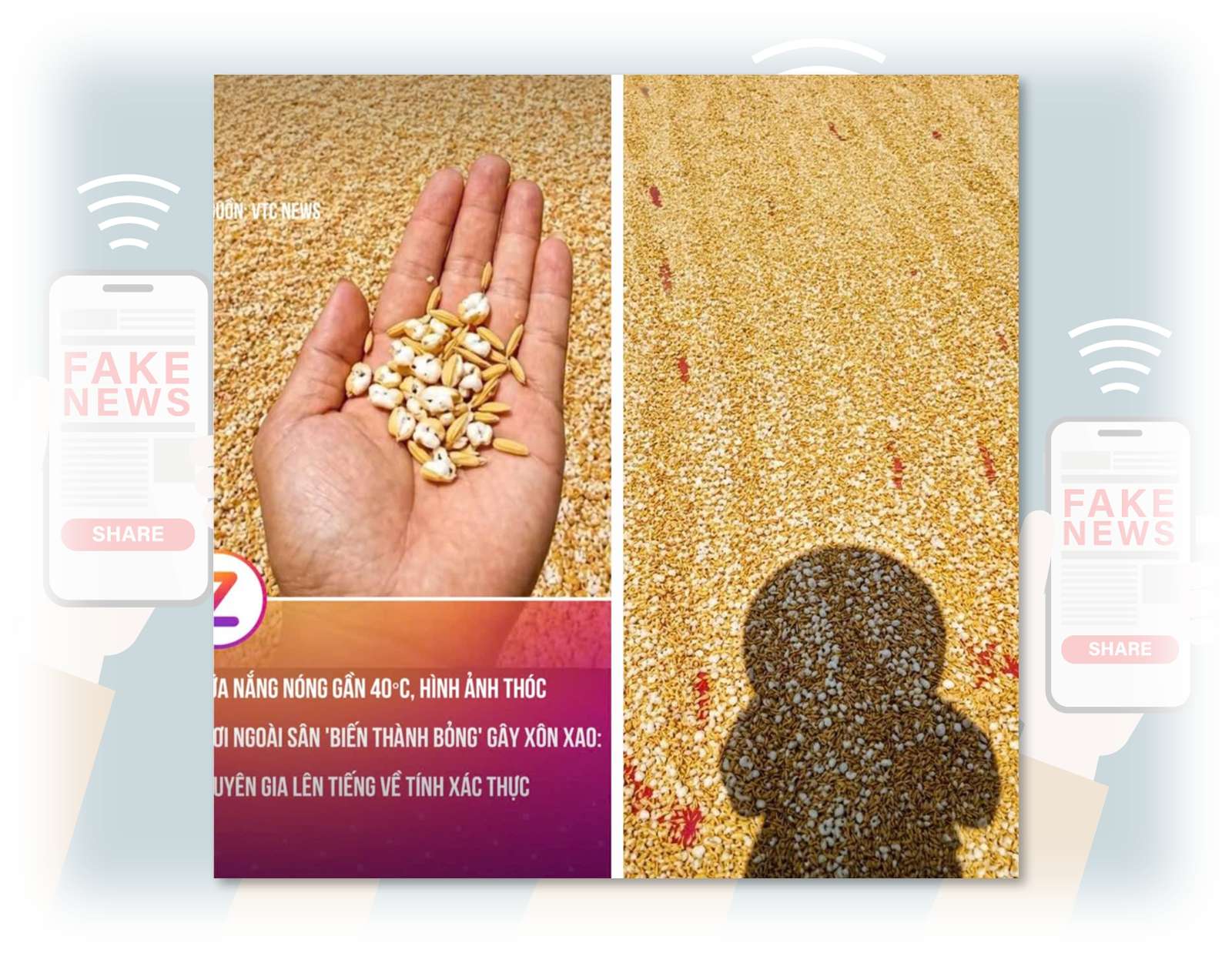
According to Dr. Vu Thi Tan, a lecturer at Hanoi University of Science and Technology, the photo was most likely created by AI or manipulated using digital technology. This is because for rice grains to pop into puffed rice, very high temperatures are required. "Even though the outdoor temperature is very high, it's still far from the temperature needed to make rice grains pop into puffed rice. Direct sunlight cannot create the process like in a roasting oven," VTC News quoted Dr. Vu Thi Tan as saying.
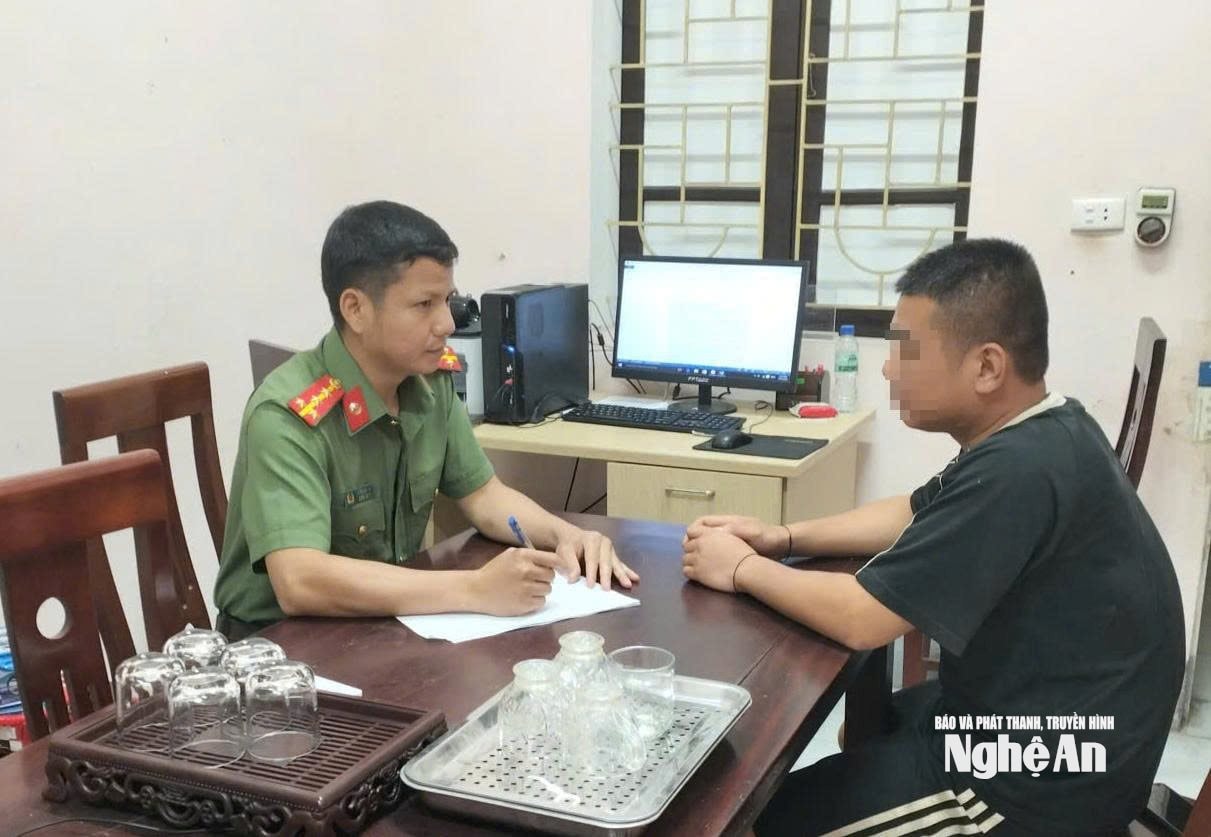
The incident mentioned above is actually just one of countless fake news, misinformation, and unverified information circulating on social media. Specifically in Nghe An province, since the enactment of the Cybersecurity Law in 2018, authorities, with the police as the core force, have detected and dealt with numerous individuals violating the law by posting false information on social media. Despite this, driven by a desire for quick "fame" and likes, many individuals disregard regulations and post unverified information on their personal social media accounts; some even spread fake, harmful, and malicious news, causing public panic.

To date, there have been studies and in-depth articles published on the current state of information on social media; guiding social media users on how to identify fake news, misinformation, unverified information, etc., to avoid being "poisoned" by information.
For example, in March 2025, in Yen Bai province, a woman named NTD posted false information about the merger of provinces and cities nationwide on her personal Facebook account. For the act of "providing and sharing false information on social media," Ms. NTD was fined 5 million VND.
Following this incident, the Ministry of Public Security's online portal published an article titled "Beware of False Information on Social Media." Through Ms. NTD's actions, the article thoroughly analyzed the habits of many social media users who mistakenly believe it's a virtual environment where they can speak freely without accountability. This is the main reason for a lack of caution, even leading to the exploitation of social media as a tool for distortion and fabrication, negatively impacting society. Therefore, it advises social media users to carefully consider before commenting on or sharing information they access; and guides them on how to select, utilize, and receive information to avoid inadvertently assisting malicious actors.
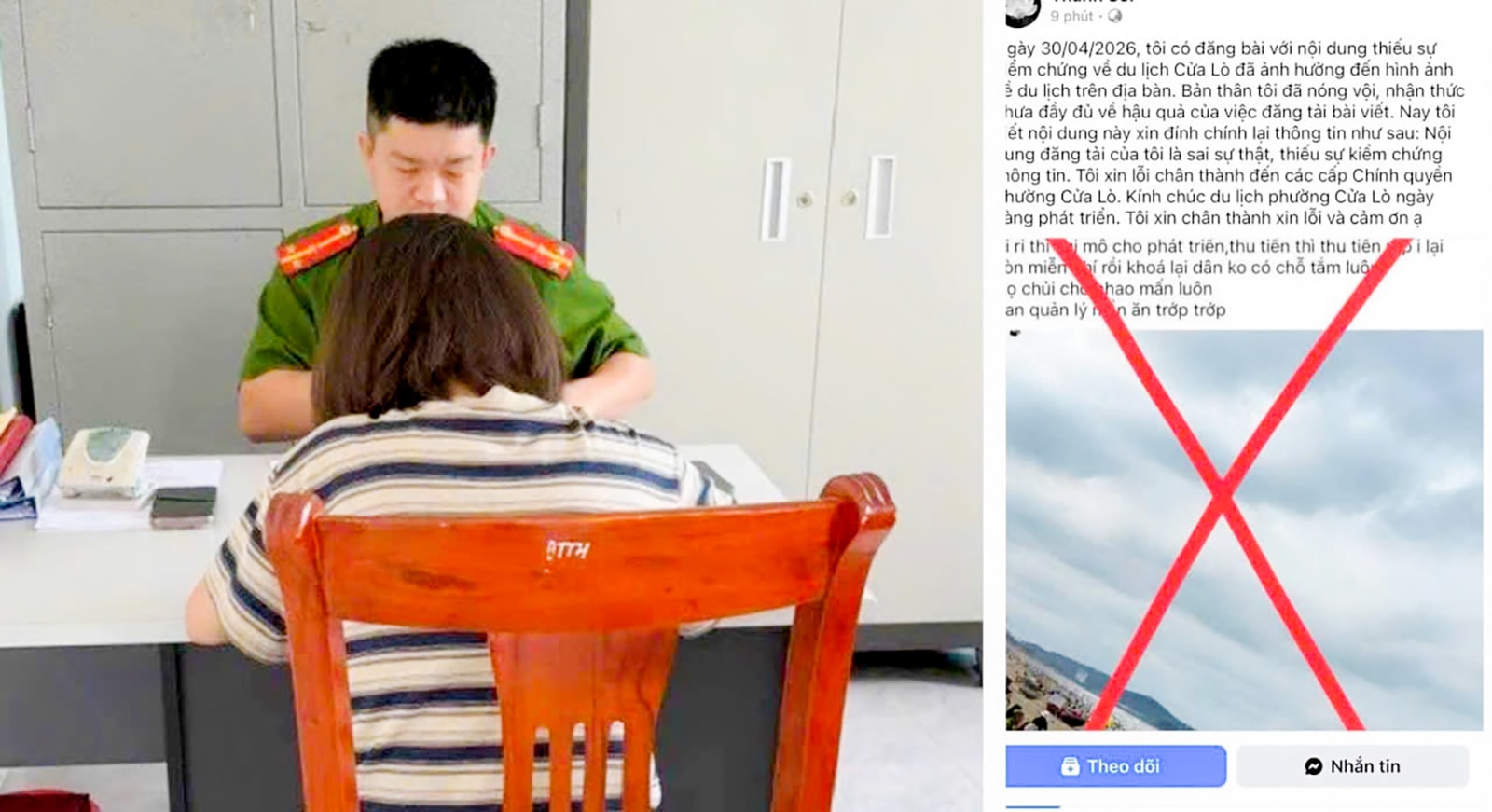
It must also be frankly stated that when using social media and viewing it as an information channel, each individual must equip themselves with the skills to verify information, avoiding falling into the "trap" of harmful, toxic, or fake information, and inadvertently violating the law.
However, in the current context, those with malicious intentions have used digital technology to produce extremely sophisticated information, images, and videos that are "fake but look real." If social media users lack knowledge and skills in verifying information, it will be very difficult to avoid being misled. Therefore, relevant authorities, especially the press, need to more clearly demonstrate their role and responsibility, viewing the timely screening and handling of harmful, toxic, and fake information as a task of "supporting righteousness and eradicating evil," contributing to the stability of social order.
I say this because mainstream media, while playing a key role in shaping social information, still suffers from a race to publish information, a lax approach to reporting, and in some cases, even being swayed by unverified information from social media.
To conclude this short article, let me reiterate the incident of the molasses tank rupture at the Song Lam Sugar Factory and the mass fish deaths in cages on the Lam River. If journalists had been truly careful in their verification, they would have easily discovered that downstream from the Song Lam Sugar Factory to Anh Son commune (the initial point of mass fish deaths), along a stretch of river approximately 20 km long, there were no fish deaths. If this information had been promptly investigated and reported by the press, public opinion would have been calmer, awaiting the conclusions of the competent authorities, instead of creating a commotion of suspicion!


