
The road has been turned into a rice drying area, posing a potential traffic accident risk.
In many localities in Nghe An province, the spring rice harvest is in full swing. Consequently, the practice of drying rice on roads has been occurring, posing significant traffic safety risks.
In Dien Chau district, people utilize many roads as places to dry rice. For example, in Dien Nguyen commune (Dien Chau), people dry rice on the main roads of the commune. Tree branches, car tires, etc., are used as warning signs, but in reality, they become dangerous obstacles.
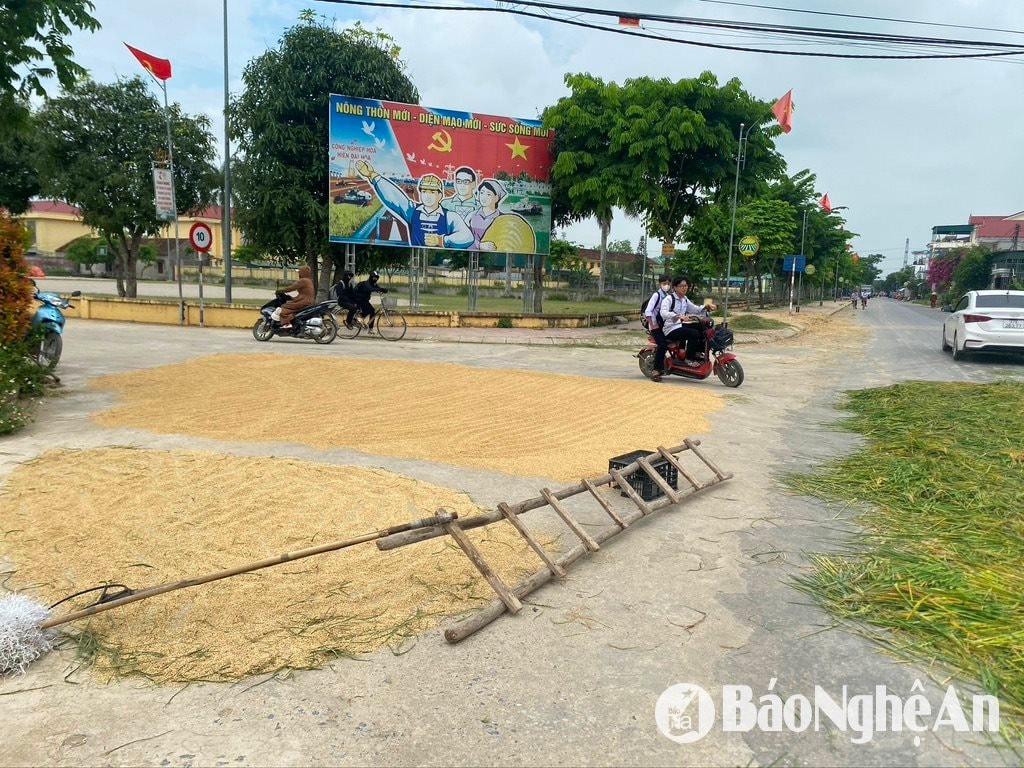
During school dismissal times, students traveling along these roads have to weave their way through obstacles. Some even bring rice threshing machines into the middle of the road to work, blocking the Dien Nguyen - Dien Cat inter-communal road and causing traffic congestion.
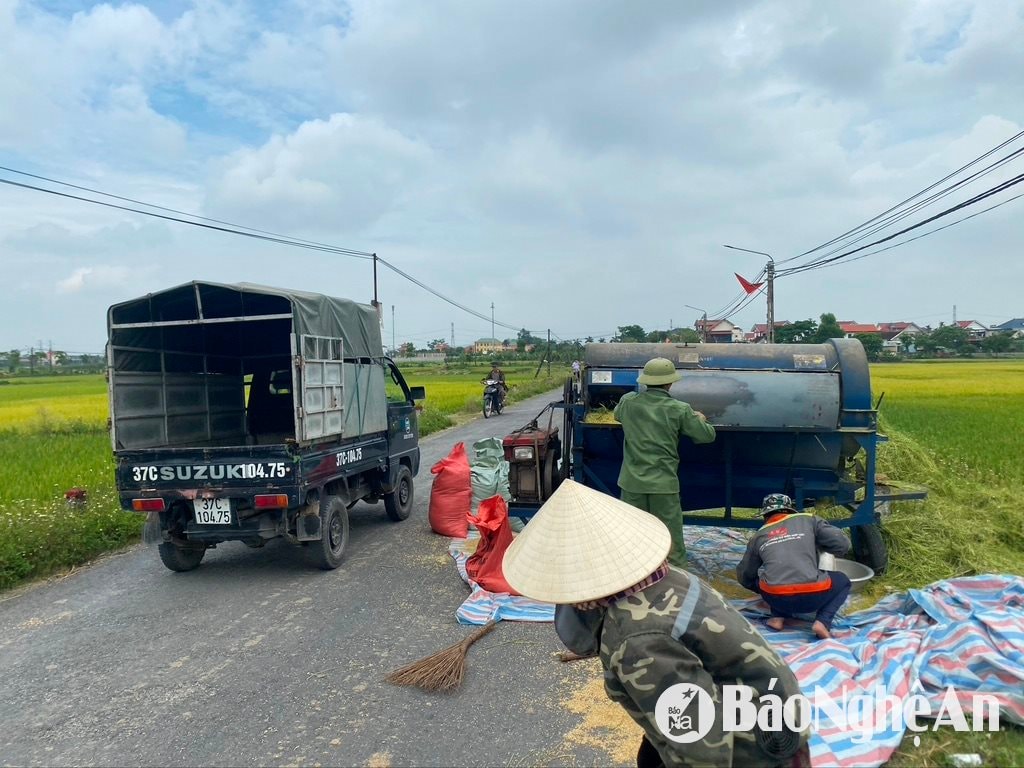
Similar to many other places, in Do Luong district, people also utilize the road to dry rice after harvest. On National Highway 7 - a route with high traffic density - people in Dang Son commune dry their rice right in the middle of the road.
.jpeg)
Mr. Nguyen Minh Kien, a local resident, shared: "Drying rice after the harvest is an essential need, however, people need to choose the right location and time. Instead of occupying the road, they should utilize the commune's stadium, community hall grounds, etc., to ensure traffic safety."
A similar situation occurred on National Highway 7C, the section passing through Bai Son commune, Do Luong district, where people spread rice out to dry along the road, despite the heavy traffic.
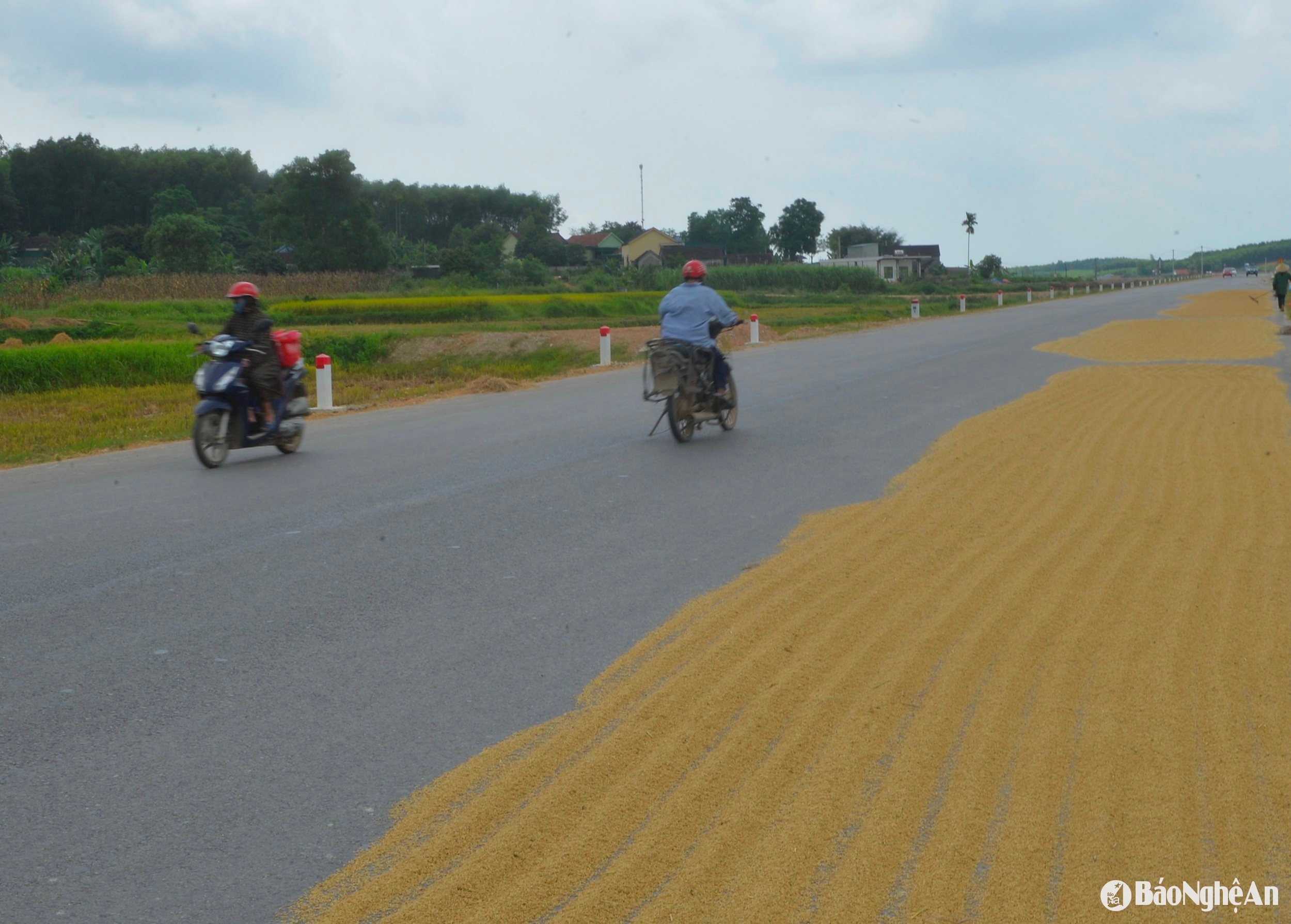
Currently, along the road leading to the Thanh Thuy border gate, people are drying corn and rice, spilling onto the road and affecting traffic. A local farmer shared: "Our family doesn't have a drying yard, only a shelter on the ground. With the weather constantly changing unpredictably, if we don't take advantage of sunny days to dry the rice, it will become damp and sprout after just a few days. Therefore, even though we know it's against the law, we still have to put the rice out on the road to dry."
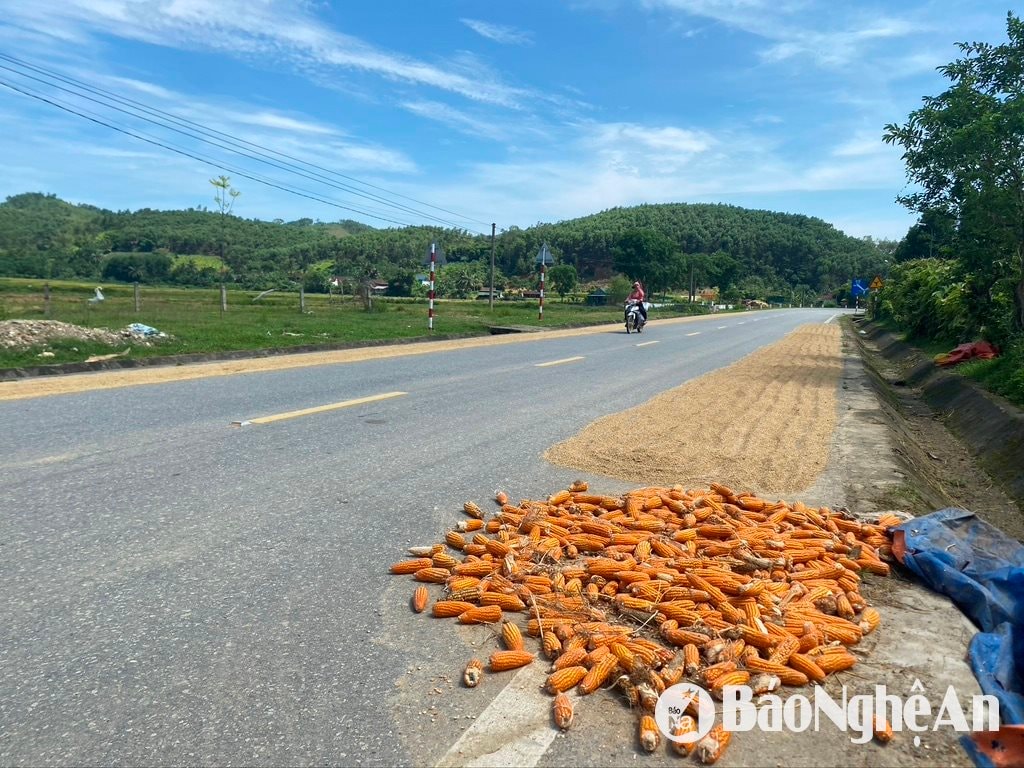
Mr. Tran Van The, a driver in Thanh Chuong district, said: "I frequently transport goods through here and have noticed that many sections of the road are being used by locals to dry rice after the harvest. This poses a potential traffic safety risk."
Mr. Ha Hong Thai, Chairman of the Thanh Thuy Commune People's Committee, said: Before the rice harvest season, the commune government intensified propaganda through the local broadcasting system to raise people's awareness about not drying straw, rice, or leaving threshing machines on the road or roadside. However, despite these propaganda efforts, the practice of drying rice on the road is still unavoidable.
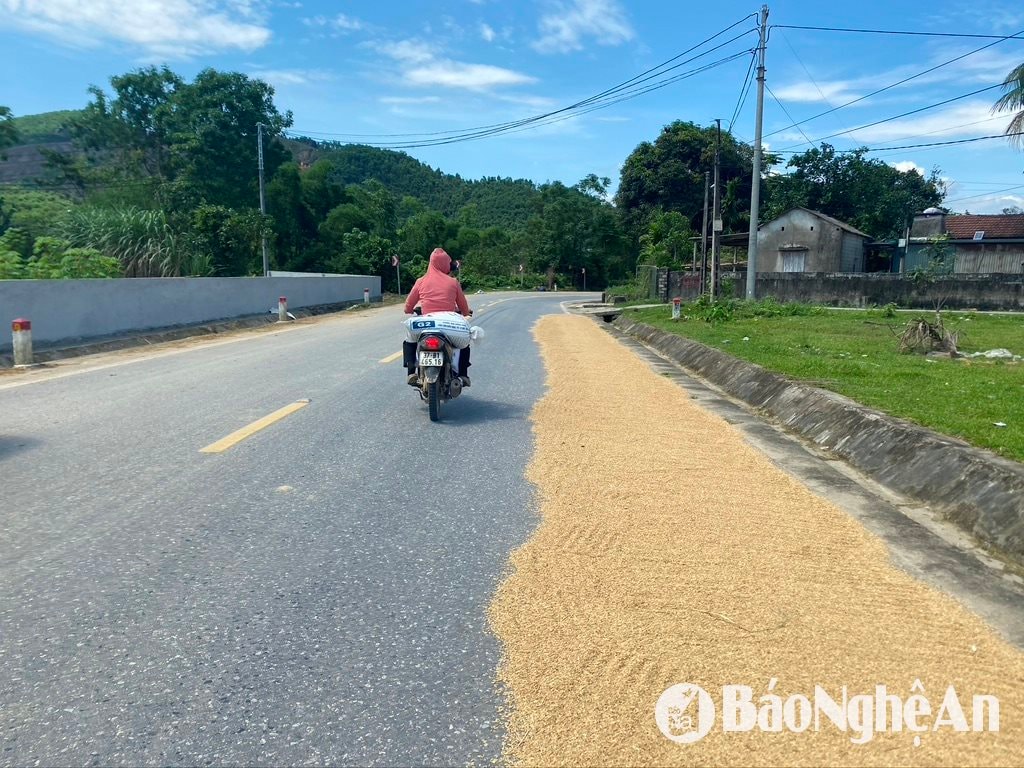
In Yen Thanh district, many roads are being used by locals to dry their rice. A typical example is the road connecting Gam Temple to Truc Lam Zen Monastery (Xuan Thanh commune), where many households are drying their rice right in the middle of the road.
More seriously, some households even use obstacles to block vehicles from passing through the rice drying area, causing serious traffic congestion and posing a potential risk of accidents.
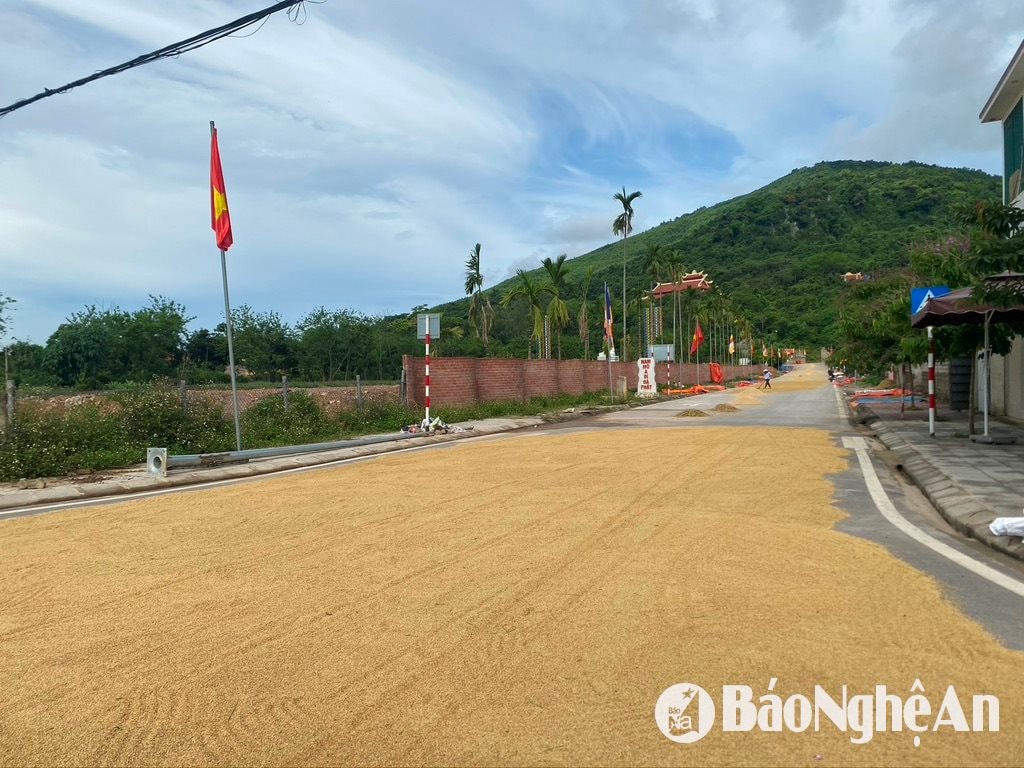
Mr. Phan Hoang Thu, Chairman of the People's Committee of Xuan Thanh commune, said that the local government has actively propagated and encouraged people not to dry rice on the roads to ensure traffic safety. However, implementation still faces many difficulties, as most households have yards with corrugated iron roofs, making it impossible to dry rice. Therefore, people have brought their rice out onto the road to dry.
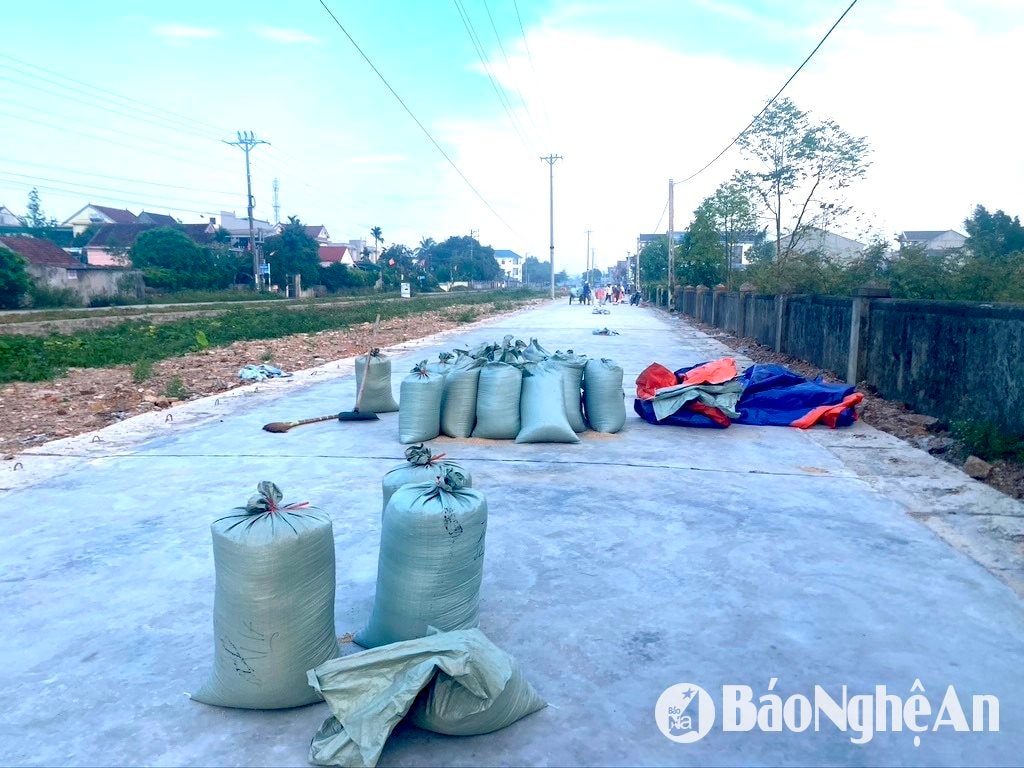
Not only in the aforementioned districts, but also along National Highway 46C through Hung Nguyen and Nam Dan districts, people have turned the road surface into a "drying yard" with agricultural products covering both sides of the road in a golden hue.
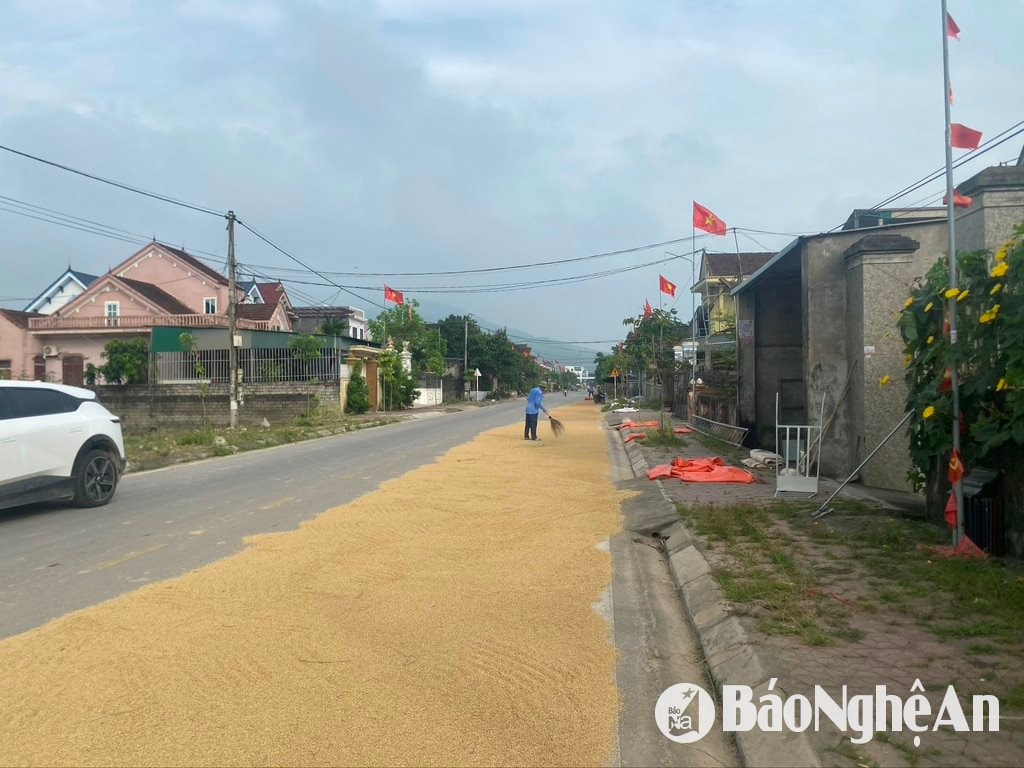
To prevent this situation from continuing, in addition to strengthening propaganda and mobilizing people to raise awareness, it is time for local authorities to take strict measures against violators, in order to ensure the safety of citizens and traffic order and safety in the area.


