
Integrating energy saving and efficiency goals
(Baonghean.vn) - Energy consumption remains highly intensive; energy costs for many industrial sectors account for over 60% of product costs. This necessitates macro-level solutions, integrating energy consumption targets with economic restructuring plans.
Ensuring national energy security
As early as 2010, the National Assembly enacted the Law on Economical and Efficient Energy Use, along with a system of implementing guidelines. The National Target Program on Economical and Efficient Energy Use, implemented during the period 2006-2015, helped save over 15 million tons of oil equivalent (TOE).
For the period 2019-2030, the Program aims to save 5-7% of total national energy consumption by 2025 and 8-10% over the entire period from 2019 to 2030, equivalent to approximately 60 million tons of oil equivalent (TOE).
Prime Minister's Directive No. 20/CT-TTg on strengthening electricity saving during the 2020-2025 period requires a 2% annual reduction in electricity consumption.

In addition to quantitative goals, the National Program also sets qualitative goals of changing the energy usage behavior of agencies, organizations, communities, and individuals towards saving, efficiency, and responsibility, aiming to build responsible individuals and businesses regarding national energy resources through changes in awareness, mindset, behavior, and the formation of habits of energy saving and efficiency.
In particular, Resolution No. 55-NQ/TW on the orientation of Vietnam's national energy development strategy to 2030, with a vision to 2045, issued on February 11, 2020, affirms: "Effectively exploit and utilize domestic energy resources combined with rational energy production and import; thoroughly practice energy saving and efficient energy use. Proactively produce some key equipment in energy sub-sectors; upgrade and build advanced and modern power transmission and distribution grids."
International experience shows that investing one unit of capital in energy conservation and efficiency yields benefits equivalent to investing three to four units of capital in developing energy sources. Therefore, efficient and economical energy use, coupled with energy resource conservation, is a key factor in ensuring national energy security.
Integrating usage objectives
Recently, at a seminar on "Improving the dissemination of information on efficient energy use for sustainable development" held in Hanoi, Dr. Vu Dinh Anh, an economic expert, stated: Although Vietnam has many clear, consistent, and scientific policies and guidelines on energy conservation and efficiency, the implementation has been slow, causing businesses, which are key stakeholders in the national program, to struggle with implementation. Furthermore, the results of implementing economic restructuring strategies, technological development, and cultural development have not met their targets, thus hindering the achievement of energy conservation and efficiency goals as integrated objectives.
Based on that, Dr. Vu Dinh Anh emphasized three solutions, including:
Firstly: Integrate energy conservation and efficiency goals into economic restructuring plans. Restructure the economy towards harmony and sustainability, limiting and eventually eliminating the reliance on energy consumption for economic growth. Reconsider the development needs and energy consumption structure of each sector and field to shape a national economic structure that relies less or minimally on energy consumption.
Secondly: Integrate electricity saving goals and efficient energy use into the national strategic plan for technological and engineering innovation. Technological innovation must be closely linked to the efficient and economical use of energy and electricity. Avoid importing outdated technologies and equipment that consume a lot of energy and have high electricity consumption into Vietnam. Develop a roadmap for replacing old technologies, techniques, machinery, and equipment with low energy efficiency and electricity consumption.

Thirdly: Integrate the goals of electricity conservation and efficient energy use into the strategy for building and developing culture and people to meet the requirements of sustainable national development. Electricity conservation and efficient energy use must become a characteristic of the new Vietnamese civilization. Propaganda, training, and awareness-raising activities for individuals and communities regarding electricity conservation and efficient energy use must be closely linked to the development of Vietnamese people, aiming to build a new society responsible for national energy resources and for future generations in conserving these resources.
Implement solutions in a coordinated manner.
Specifically for the above objectives, Dr. Vu Dinh Anh believes that it is necessary to change habits and genuinely raise the awareness of energy saving among workers.
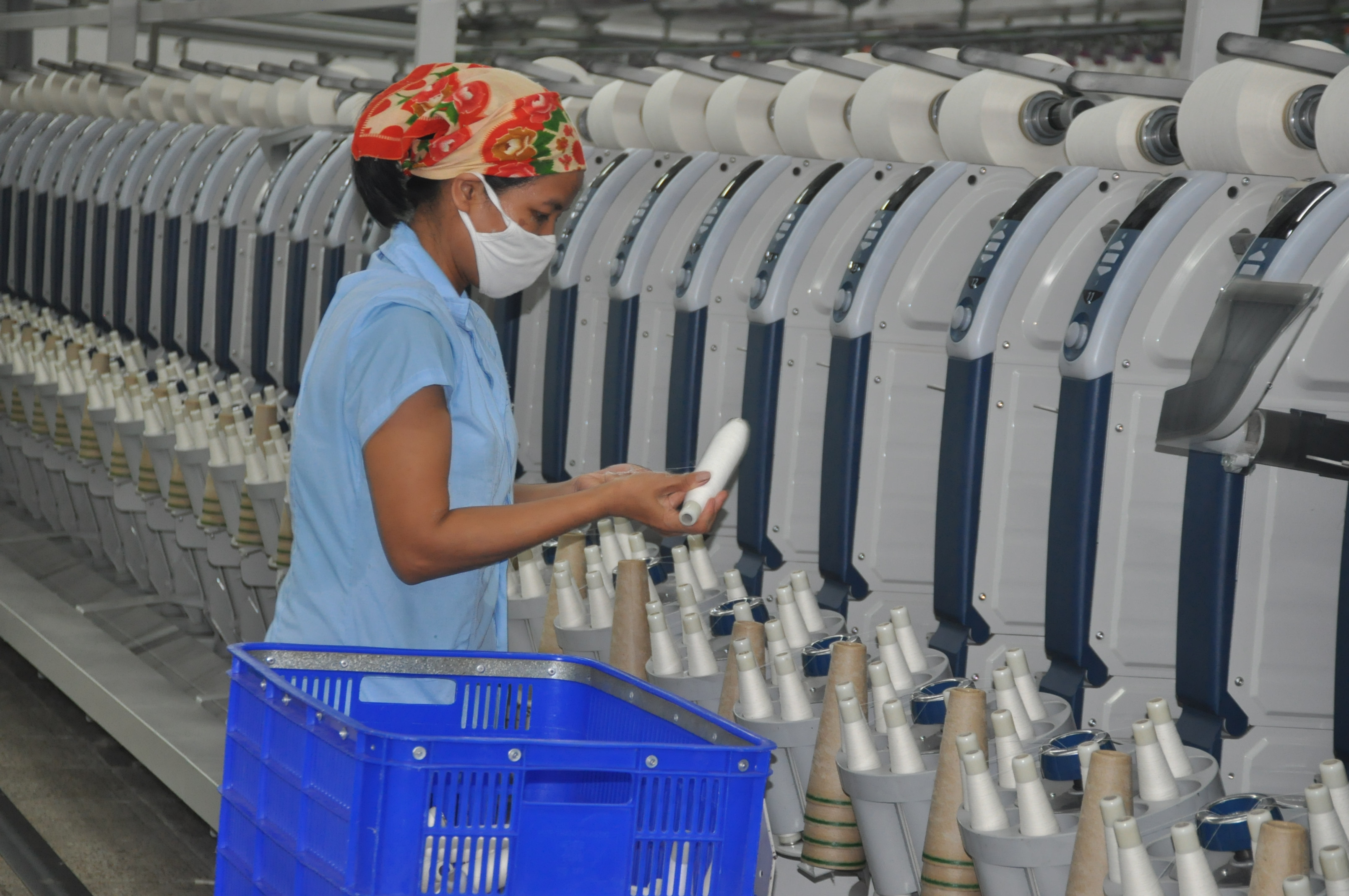
Industrial zones and factories have high energy consumption, so educating workers about the benefits of energy saving, launching emulation movements, and organizing reward activities for collectives and individuals who demonstrate responsibility in energy saving, coupled with strict measures to address cases of energy waste, is of practical significance. Many businesses have adopted productivity improvement tools such as TPM, 5S, and Kaizen, which have contributed to encouraging employees to be more self-aware and responsible in their work, raising their awareness of energy saving, and reducing costs for businesses.

This also involves the application of modern technology, production automation, and the use of new, alternative energy sources. According to assessments, the high energy costs for industrial production are mainly due to many businesses using old, outdated, and energy-inefficient machinery and equipment. Meanwhile, they lack the financial capacity to upgrade technology and replace old, outdated equipment and production lines with newer, more efficient ones.
Therefore, replacing old, outdated equipment with modern, energy-efficient equipment is an inevitable trend for businesses. According to the Director of the Center for Energy and Green Growth Research (Vietnam Union of Science and Technology Associations), the potential for electricity savings in manufacturing businesses is still very large. Using high-efficiency electrical equipment can save 20-40% of electricity consumption, depending on scale and technology.

Furthermore, installing large-scale renewable energy systems such as rooftop solar power is also a solution to reduce electricity consumption and even sell surplus electricity back to suppliers. Promoting energy saving and efficiency is not only about saving energy for individual consumers but also contributes to reducing the load on the overall power system, helping to ensure national energy security. The biggest challenge for businesses is solving the cost-benefit equation and securing financial resources for technological innovation, purchasing machinery and equipment, as well as dealing with policy risks.
At the same time, the system must be monitored and improved towards energy saving and efficiency. Businesses should use energy efficiently and effectively through metering, analysis, monitoring, and warning technologies to detect leaks or energy losses, manage electricity usage, reduce energy consumption, regularly monitor all areas and systems that consume the most energy, arrange production plans rationally, and minimize the use of high-power electrical equipment during peak hours, etc.


