
The new coating prevents bacterial contamination on medical devices.
SLIPS coatings, with their very low adhesion, can prevent bacteria from contaminating and growing on medical devices.
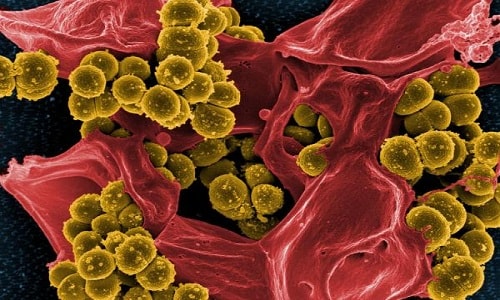 |
SLIPS coatings can prevent bacteria from contaminating and adhering to medical devices. Photo: Flickr/NIAID. |
Joanna Aizenberg, a lecturer at the Wyss Institute at Harvard University, has successfully developed a SLIPS coating with very low adhesion that can prevent bacteria from growing on medical instruments and other equipment, UPI reports.
"Infection through medical instruments is a major problem in healthcare, burdening society with millions of dollars in healthcare costs. Antibiotics cannot solve this problem. We need new methods to reduce the risk of infection. This new product is a significant step forward in our research," said Dr. Elliot Chaikof, chief surgeon at Beth Israel Deaconess Medical Center in Boston, USA.
SLIPS coatings can remove many impurities and can be used in a variety of environmental conditions. Test results show that it can reduce bacterial adhesion by more than 98%.
"We are developing SLIPS for a wide range of medical applications by testing it on various medical materials, ensuring the durability of the coating and incorporating the non-contamination properties of SLIPS into specific environmental conditions. Here, we have applied SLIPS very effectively to medical lubricants, demonstrating its great potential for integration into devices susceptible to bacterial buildup and contamination," Aizenberg said.
The research team also conducted a practical experiment by coating medical mesh with SLIPS. A mouse was implanted with this mesh and then injected with Staphylococcus aureus, a common cause of infection among staphylococcal strains. After three days, the results showed very few signs of infection in the mesh, with an infection control rate of over 90%.
According to VNE
| RELATED NEWS |
|---|


