
Border Guard Laws reach the villages, the border is secure, and the villages are peaceful.
After five years of implementing the project to disseminate the Vietnamese Border Guard Law, the Nghe An Border Guard has created a clear transformation in the awareness and actions of the border community. Propaganda sessions in local languages, theatrical performances, and daily afternoon announcements via Border Guard loudspeakers have naturally and effectively integrated the law into daily life, contributing to building a strong all-people border defense posture and maintaining peace along the border.
The law is reaching every village and hamlet.
On those afternoons at the border, the loudspeakers from the Border Guard Posts regularly echo through the mountains and forests. For the local people, this seemingly ordinary sound has become a familiar part of their lives, a gentle reminder of their responsibility to the border and boundary markers.
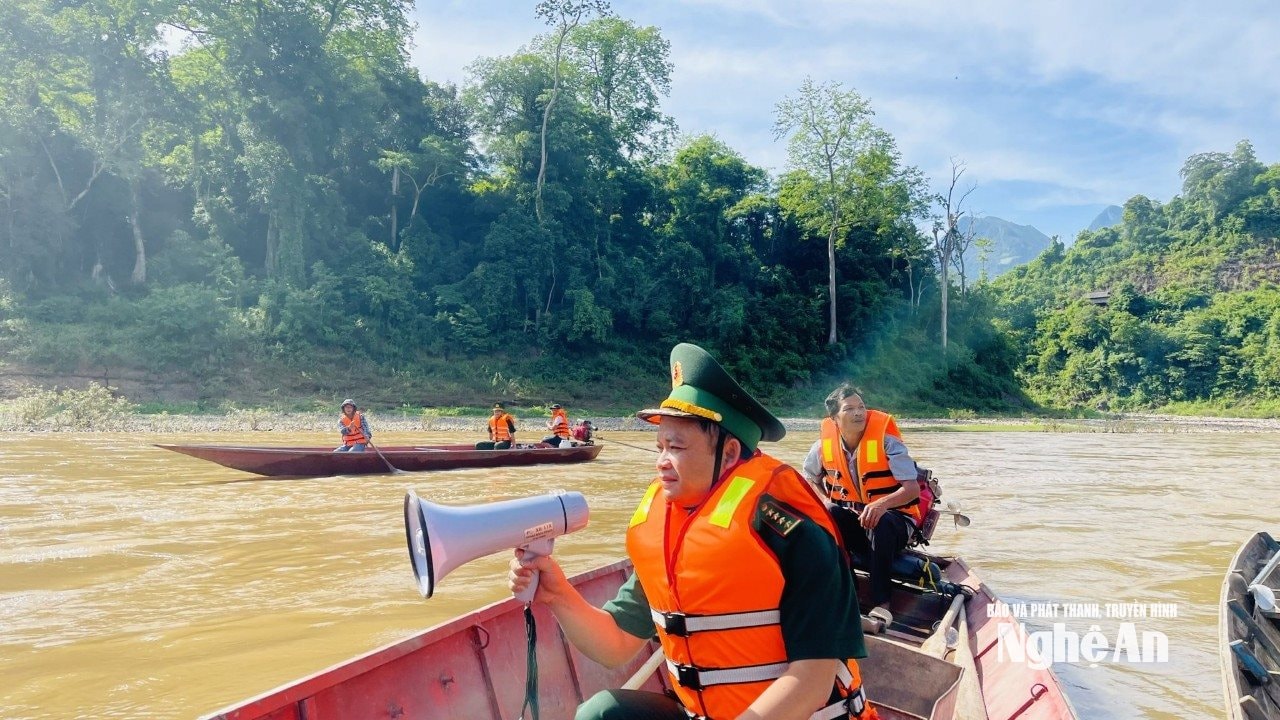
In Pha Lom village, Tam Thai commune, people of all ages can share a few things about Vietnam's Border Guard Law. Xong Ba Cho, the village head, said: "Before, when people heard about the 'law,' they would shake their heads, thinking it was too difficult. But since border guards came to the village and explained it in Thai and Hmong languages, giving examples from everyday life, everyone understands and remembers it. Now, when we mention the border and boundary markers, people are much more proactive than before."
The story of Huoi Le village, Keng Du commune, is also full of such transformations. The awareness campaigns are no longer dry meetings, but warm and friendly gatherings. Xeo Van La, a member of the Border and Boundary Marker Self-Management Team, recounts that in the past, whenever he heard officials talk about border regulations, he was afraid of making mistakes and didn't dare ask questions. But now it's different. “Officials clearly explain each point and task, making it very easy to understand. We know what our rights are, what we have to do, and more importantly, why we have to protect the border. It's the responsibility of the villagers themselves, not just one person.”
This change stems not only from the way information is conveyed, but also from the creativity of those involved in the propaganda work. In Nhon Mai and Tam Thai communes, people have become accustomed to gatherings where Thai folk songs and Mong flute music blend with legal content. When the law is incorporated into songs, people not only listen to learn but also find it familiar, easy to remember, and easy to follow. The cheerful songs, while containing messages about the responsibility of safeguarding the border, make learning the law as accessible as learning a new flute melody.
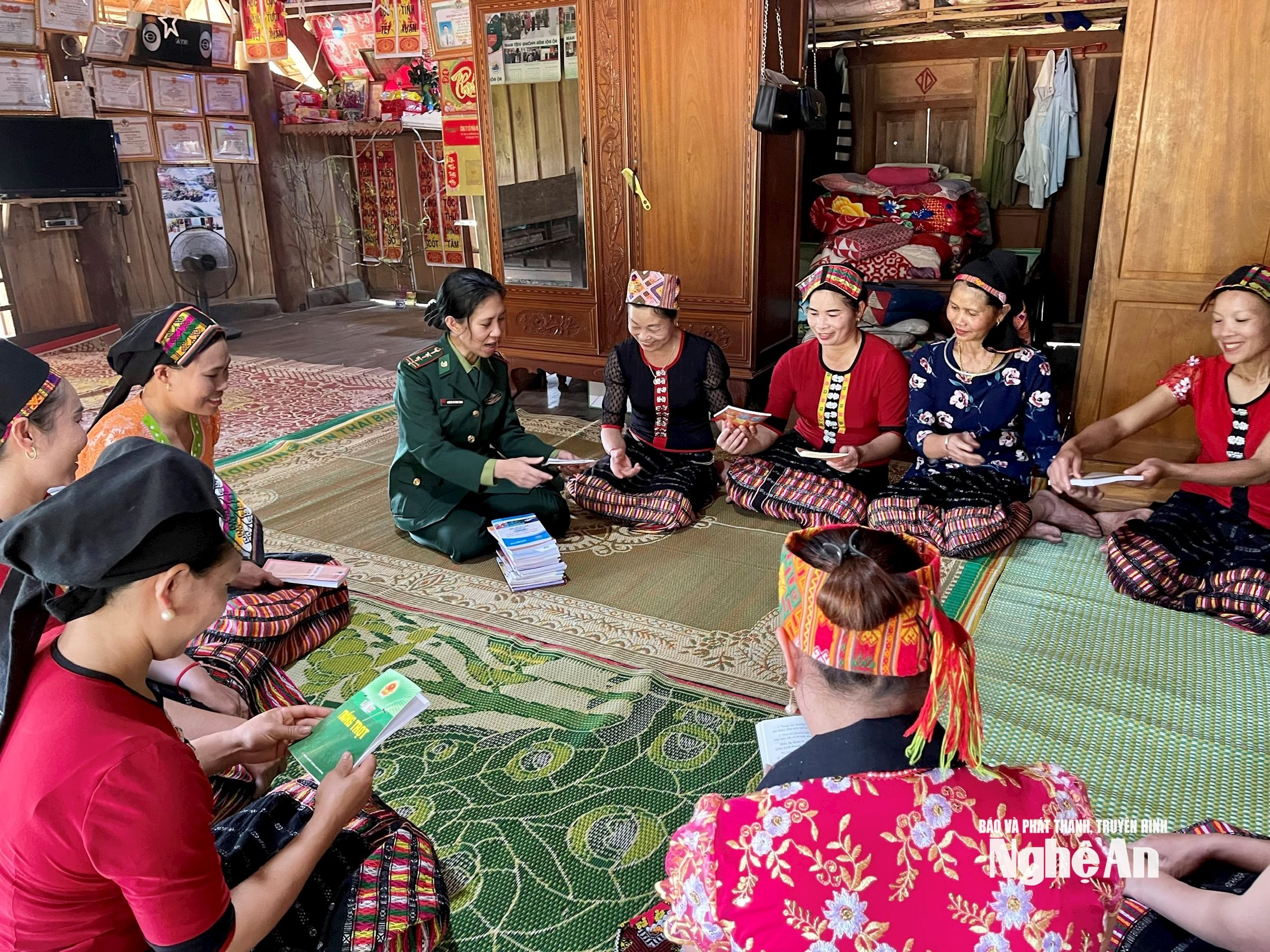
Not only the elderly, but also young people and self-governing groups, and women in border areas play a crucial role. In the communes of Thong Thu, Tri Le, and Mon Son, groups of women "participating in protecting the border and boundary markers" gather monthly. They share stories from their families, ask each other how to encourage their children not to encroach on the border or settle illegally, and remind each other to abide by regulations when crossing the border. With their inherent gentleness, skill, and perseverance, women have helped integrate legal regulations into daily life very naturally.
Previously, people listened to information, but now they listen to understand and follow it. They view border laws as essential as food and water, something they must know to live peacefully. Instead of waiting for officials to call before reporting, people now take the initiative, immediately reporting any strangers or unusual traces. This is very encouraging.
Major Hoang Ngoc Binh - Political Officer of Mon Son Border Guard Station
The effectiveness of appropriate communication methods.
After five years of implementation, the project "Organizing intensive training; disseminating and popularizing the Vietnamese Border Guard Law and its detailed regulations for the period 2021-2025" at the Nghe An Border Guard Command has created a clear transformation, spreading the law to every village, hamlet, and household in the border areas. Immediately after its issuance, the provincial Border Guard Command advised on organizing a large-scale training system, including five provincial-level courses for over 1,200 officers and 30 specialized courses at the grassroots level for over 800 trainees. The courses were innovative in content and methods, linked to real-life situations and the specific characteristics of each ethnic group, thereby building a core team of lecturers who can convey the law vividly and effectively.
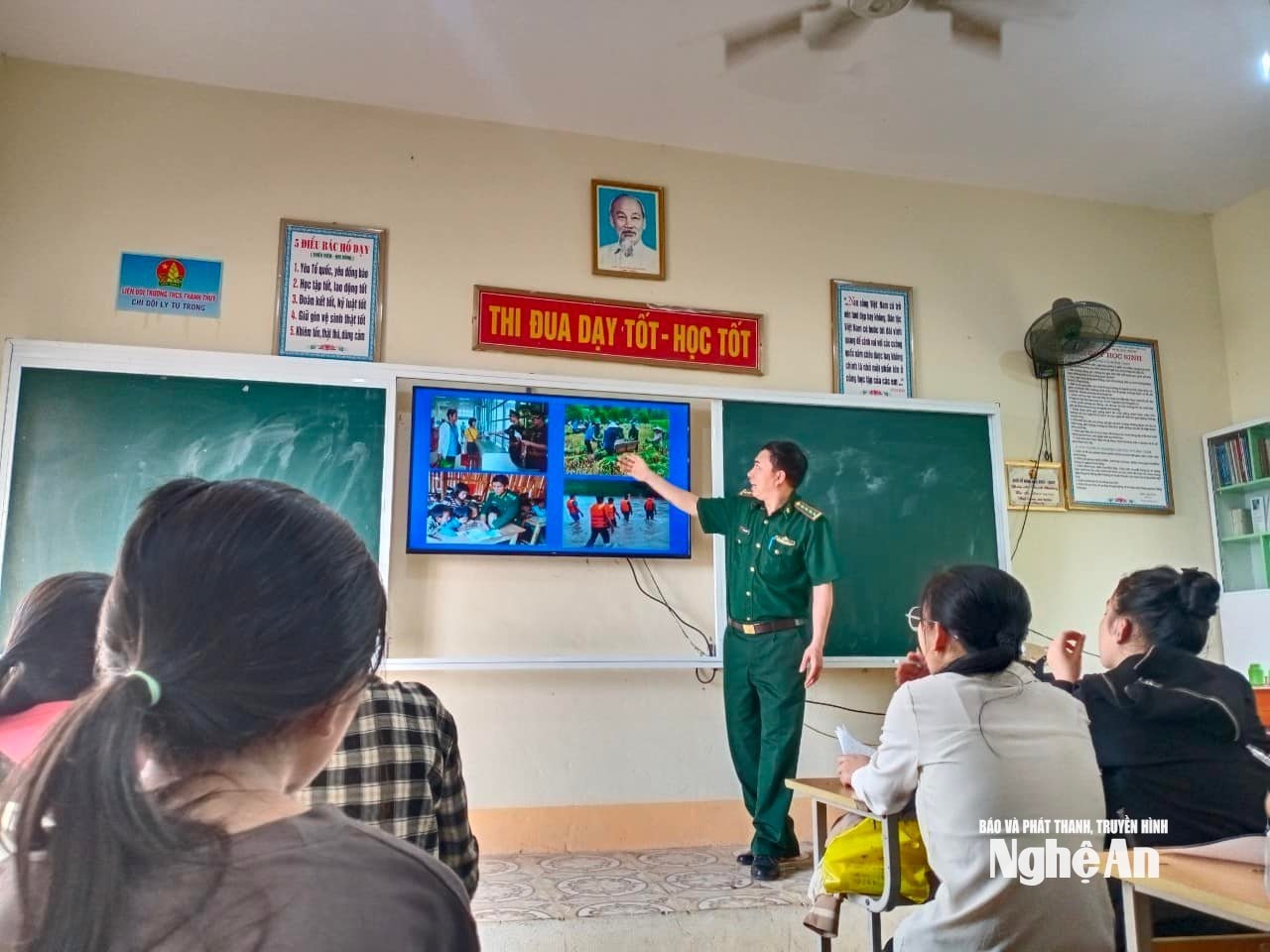
Along with training activities, surveys of communication needs were conducted regularly and comprehensively. Through eight on-site inspections and evaluations using various methods such as group interviews, questionnaires, and community meetings, the Nghe An Border Guard Command identified practical content that closely matched the needs of the people, thereby adjusting communication methods to suit each area. This approach of "meeting the needs and doing things the right way" helped transform each communication session into a close dialogue, where people could ask questions, listen, and receive clear explanations, instead of receiving information in a one-sided manner as before.
From 2021 to 2025, Border Guard units in the province organized more than 3,000 propaganda sessions, attracting over 250,000 listeners. Legal content was conveyed through various engaging methods. Innovative models such as "Border Guard Loudspeakers" with short news bulletins broadcast regularly every day; "One Law Per Week" helping people gradually access and internalize the law over time; or dramatizing the law through Thai and Mong folk songs created a special appeal, making learning the law easier and more accessible. In addition, community events such as the Great Unity Day, the Spring Border Guard Day, and the National Border Guard Day were also effectively integrated with propaganda, creating a vibrant atmosphere and raising legal awareness among the people.
Alongside direct dissemination, communication efforts through newspapers, radio, television, and social media have been intensified, creating a wide reach. More than 2,000 news articles, reports, and hundreds of videos and infographics produced and posted by border guard posts have helped bring the Border Guard Law to the people in a visual and easily accessible way.
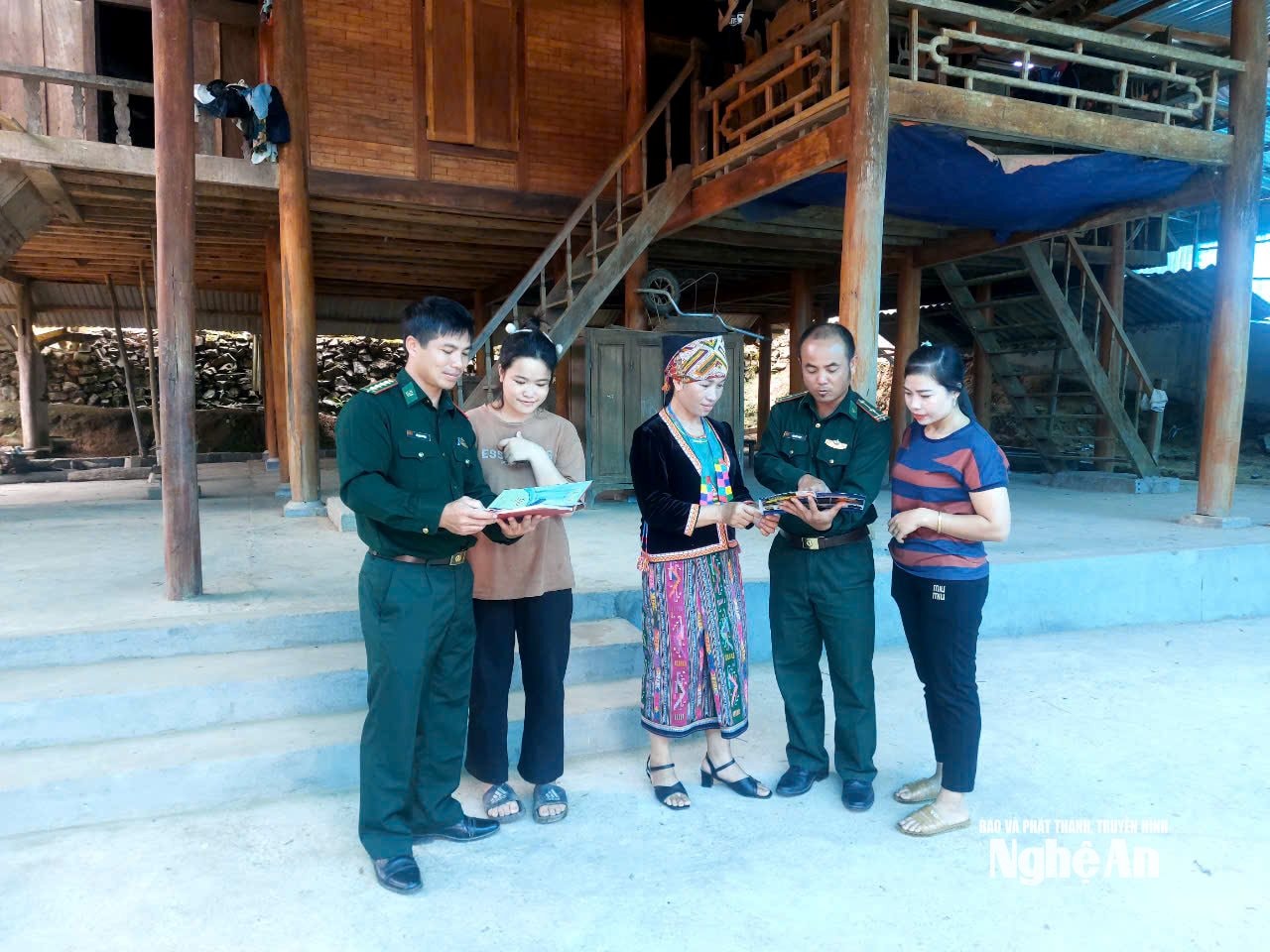
A highlight in the implementation of the Project was the strong involvement of socio-political organizations. More than 1,500 mobile propaganda sessions were conducted in coordination with women, youth, the Fatherland Front, and other organizations. In many border guard posts such as Thong Thu, Tri Le, Keng Du, Tam Quang, and Mon Son, the model of "Women participating in protecting the border and boundary markers" has proven effective, while youth union members at Nam Can, Thanh Thuy, and Phuc Son posts... played a core role in small group propaganda teams. The participation of village elders, community leaders, and influential people increased persuasiveness and spread, as these are the voices closest to and most trusted by the people.
During the implementation of the Project, the Nghe An Border Guard Command also focused on mobilizing resources, creating a foundation for the systematic and widespread dissemination of information. The Provincial People's Committee allocated 4.4 billion VND to support the Project's activities, while Border Guard units proactively socialized and mobilized additional legitimate resources. More than 30,000 leaflets, 8,000 sets of question-and-answer documents, audio and video files, brochures, etc., were compiled and distributed to each commune, village, and hamlet; supplementing the legal library to meet the people's need for self-study.
Looking back over the past five years, Colonel Ho Quyet Thang, Deputy Commander and Chief of Staff of the Provincial Border Guard, affirmed that the dissemination of the Vietnamese Border Guard Law has created profound changes in the people's awareness. People understand their responsibilities towards the border and border markers better; they proactively cooperate in providing information and working with the Border Guard to maintain security and order. This is a crucial foundation for building an increasingly strong all-people border defense posture.
Integrating the Border Guard Law into Party branch meetings, village meetings, and cultural events has gradually integrated the law into daily life. People understand the law and voluntarily abide by it, thereby contributing to maintaining security and stability, and creating conditions for local socio-economic development.
Mr. Pham Manh Hung - Chairman of the People's Committee of Mon Son Commune


