
Reasons why the US Air Force will maintain the A-10 Thunderbolt II attack aircraft until 2030.
The US Air Force has decided to extend the operational lifespan of the A-10 Thunderbolt II anti-tank aircraft due to its proven effectiveness in regional conflicts and its cost-effectiveness.
The U.S. Air Force has officially decided to postpone the retirement of the A-10 Thunderbolt II ground attack aircraft. Originally designed to counter armored forces during the Cold War, this aircraft has proven its irreplaceable strategic value in modern military operations.
Practical effectiveness at conflict hotspots
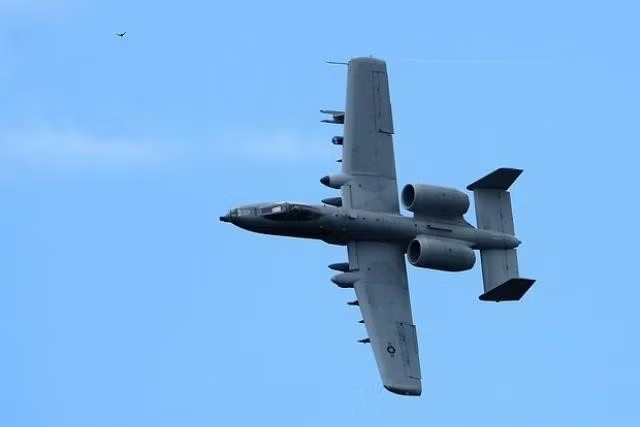
According to an analysis by expert Jack Buckby in 19FortyFive magazine, the decision to retain the A-10 stems from the practical results of operations in the Iran region. Initially, the US military intended to retire the A-10 due to concerns that modern air defense systems would make this slow-flying, low-altitude aircraft vulnerable. However, the Thunderbolt II has proven its superior durability and reliability in continuous combat missions.
While next-generation fighter jets like the F-35 focus on achieving air superiority, the A-10 shines in its role of direct ground support. Its ability to fly slowly at low altitudes allows pilots to accurately identify and destroy moving targets, while effectively protecting threatened infantry units and warships.
Specialized economic and tactical solutions
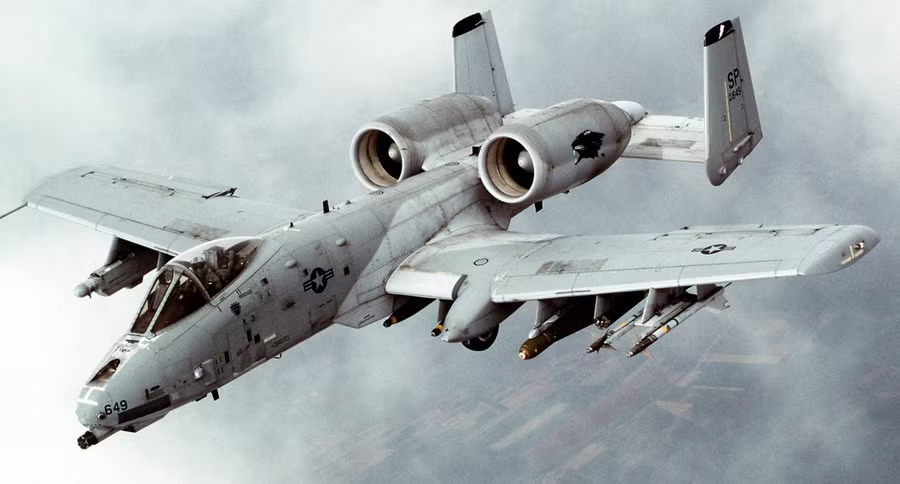
Using the A-10 for strike missions helps the US Air Force avoid wasting resources on expensive fighter jets. Military experts believe that in regional conflicts that do not require highly advanced stealth technology, deploying the A-10 offers a far more cost-effective solution than deploying modern but expensive squadrons in terms of operation and maintenance.
Although acknowledging that the A-10 attack aircraft is unlikely to directly confront adversaries with comparable (or equal) military capabilities, the US military still affirms its value in specialized missions. In early April, US Air Force Secretary Troy Meinke confirmed a new roadmap, according to which the A-10 Thunderbolt II aircraft will continue to serve in service at least until 2030.
Parameters and historical role
Developed since the 1970s, the A-10 Thunderbolt II is renowned for its 30mm GAU-8 Avenger cannon and its exceptional battlefield resilience. Extending its service life demonstrates the US military's continued preference for the practicality of older, yet stable, weapon platforms in asymmetric warfare scenarios.


