
The thrilling story of recovering an ancient stone statue from a national monument after it was stolen many years ago.
During the stone artifact craze, two statues of horsemen at the national historical site of Than Temple were stolen by thieves over several years. However, the incident was not reported by the local authorities, who instead hastily replaced them with concrete statues. Years later, heritage management officials discovered the ancient stone statues had been replaced during an inspection.
A warning from national monuments.
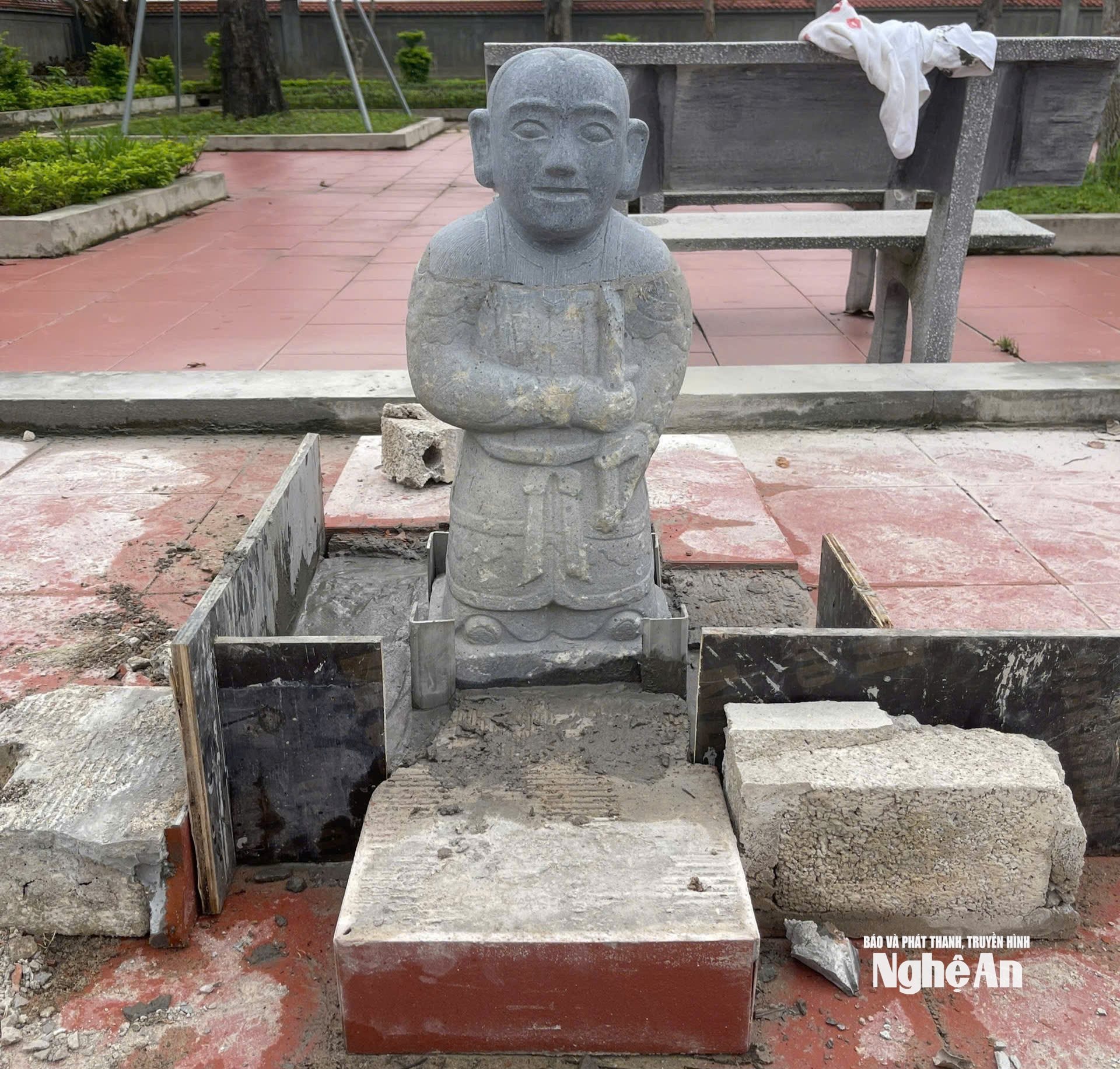
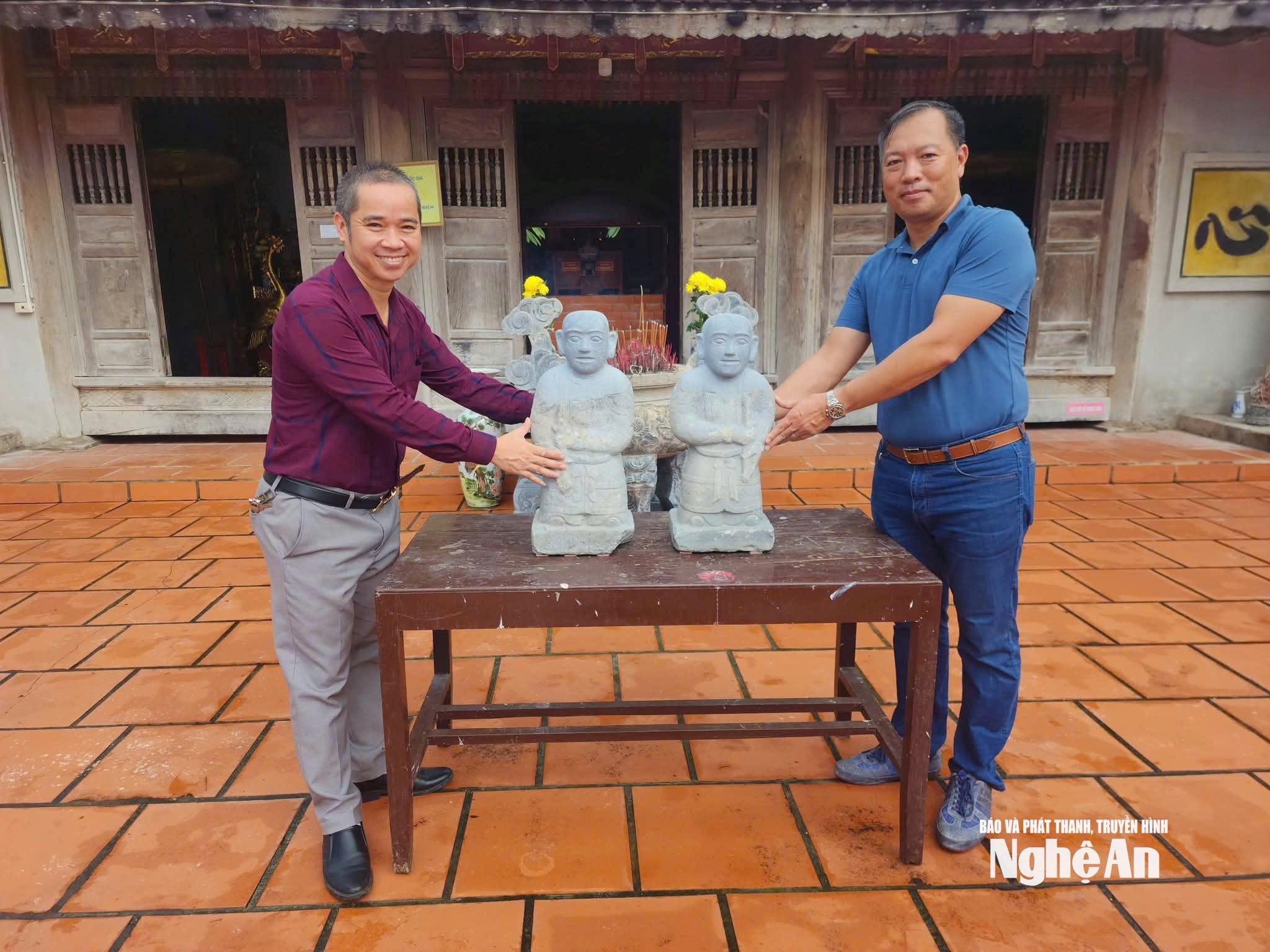
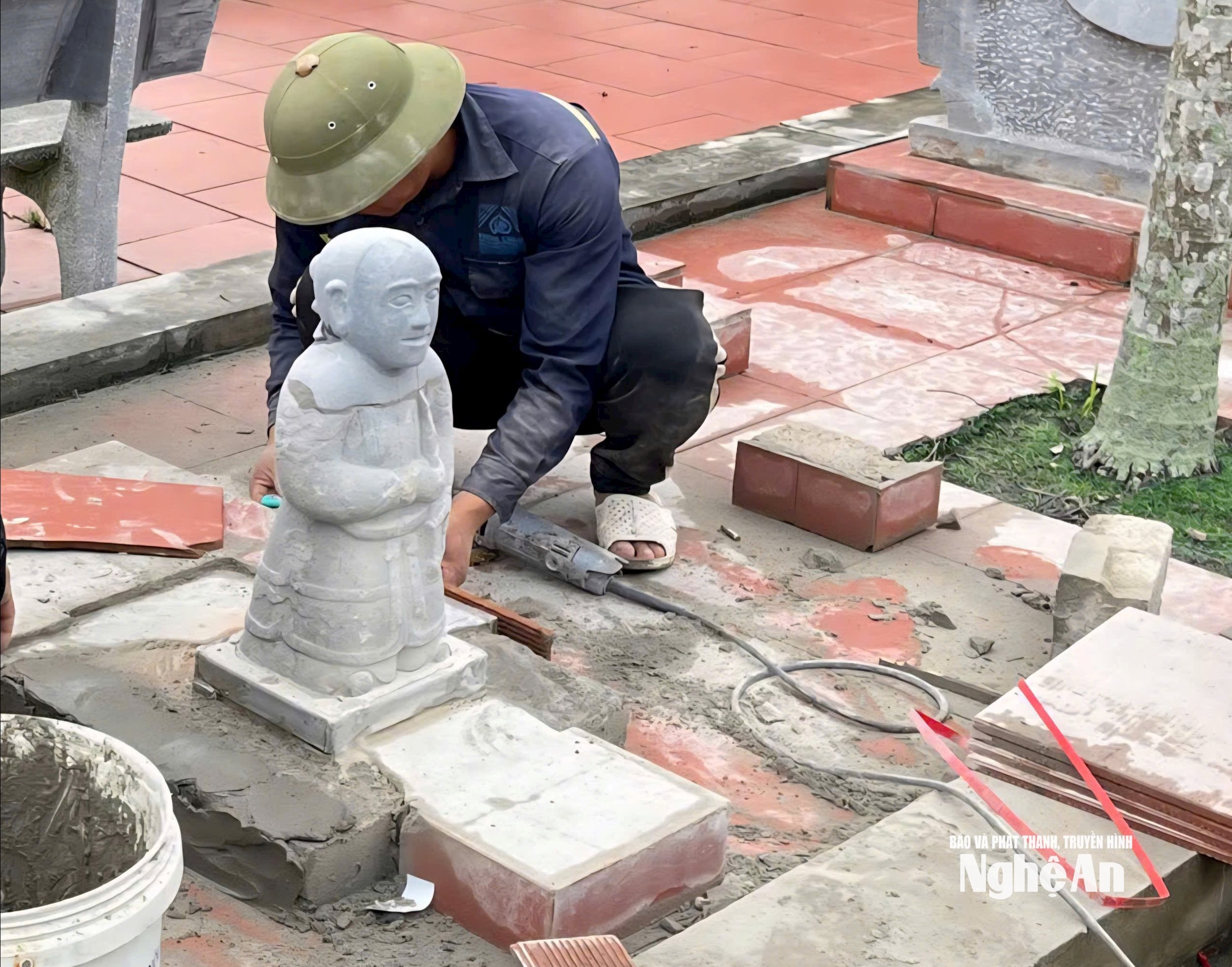
In late November, the local authorities of Quynh Anh commune (formerly Quynh Luu district) were urgently reinforcing two ancient statues at the National Monument of Than Temple after receiving them from a local benefactor along with officials from the Nghe An Department of Culture, Sports and Tourism. “Immediately after receiving the two stone statues after many years of theft, we hired experts to restore them to their original condition. At the same time, we are casting sturdy concrete pedestals for the statues and reinforcing the protective frame to prevent further theft,” said Mr. Ho Anh Dung, Head of the Culture and Social Affairs Department of Quynh Anh commune.
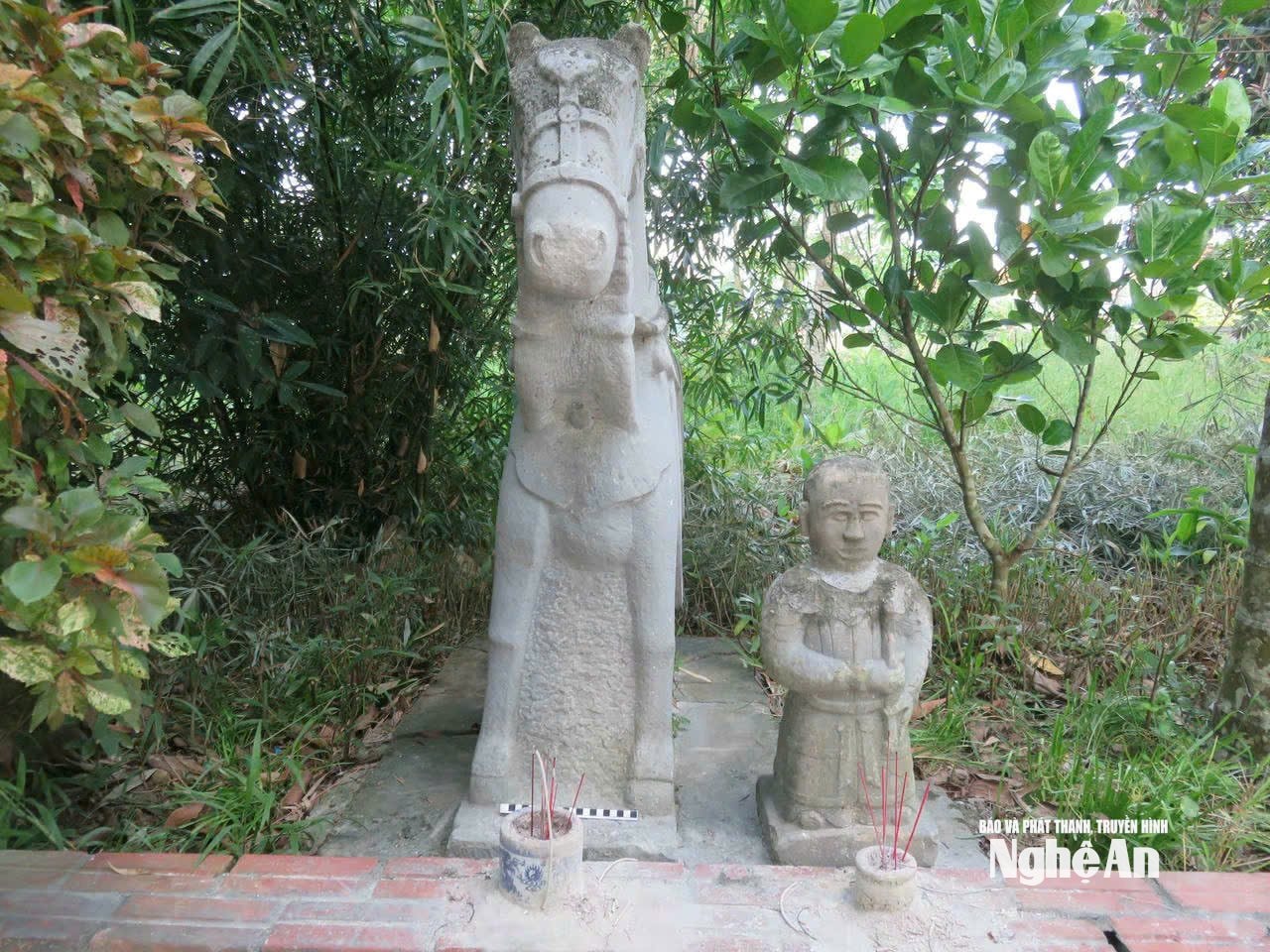
These two stone statues, originally placed within the grounds of the temple (formerly in Quynh Doi commune), have been there for hundreds of years. They are positioned next to a pair of stone horses at the entrance to the historical site. Each statue, 0.6m tall, is fully carved, dressed in martial attire, and holds a sword in its right hand, ready to protect its warhorse.
According to a former leader of Quynh Doi commune, these two ancient stone statues were stolen at two different times. One was stolen around 2020, and some time later the commune had a concrete statue cast to replace it. By the end of 2023, the remaining stone statue was also stolen. The commune had to cast another concrete statue to replace the original, however, these statues are not very similar.
According to Mr. Ho Manh Ha, Deputy Head of the Heritage Management Department (Nghe An Department of Culture, Sports and Tourism), it was only recently, when a working group from the Department inspected the damage to historical sites after typhoon No. 10 in the area, that they unexpectedly discovered that two very valuable ancient stone statues had been stolen from the Than Temple National Monument.
“We then requested a report from the local authorities, and I also shared the story of the stolen stone statues on social media. Shortly after, a resident of Quynh Doi contacted me and said they had a suspicious lead related to these stone statues,” Mr. Ha recounted.
That's Mr. Ho Van Huong (47 years old), currently living in Hanoi. Mr. Huong said: "Every time I visit my hometown, I often go to the temple, so I remember the stone statues at this historical site very clearly. Last Tet, I went to the temple and discovered that the pair of statues had been stolen, so I asked some people with connections in the ancient stone statue collecting community to investigate, but there was no information. A few months ago, I happened to visit an acquaintance who specializes in collecting ancient stone statues in the former Hai Duong province, and I saw that he displayed two stone statues in his cabinet that were very similar to the pair of horse-riding statues at the temple."
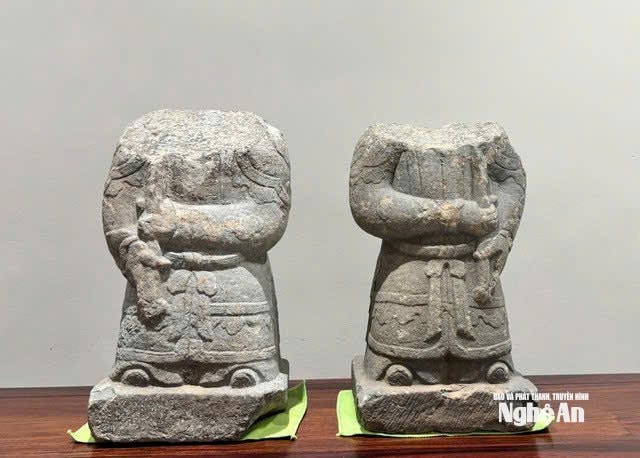
At this time, the two ancient statues were no longer intact, with their heads missing. "Although they looked quite similar, I didn't dare confirm that they were the statues of the horseman at the temple, because the statues were still intact before the theft. The two statues were stolen at two different times, so I didn't think it would be a coincidence that they ended up in the same place like this. Therefore, I only took pictures of them, borrowed the statues to use as models, and hired artisans to carve two more statues to donate to the Temple of the God to replace the stolen ones," Mr. Huong recounted, adding that before this was completed, he happened to see Mr. Ho Manh Ha's post on social media and contacted him to discuss further.
Mr. Huong then sent Mr. Ho Manh Ha photographs of the two headless statues. By comparing the remaining parts of the statues with the available records, Mr. Ha confirmed that these were indeed the statues of the horseman at the National Monument of Than Temple that had been stolen many years earlier. Immediately afterward, Mr. Huong used his own money to buy back the statues.
"After redeeming them, I used the documentary photos that Mr. Ha provided and hired some artisans to sculpt the heads from stone and attach them to the statues. Only after they were completed did I bring these two statues back to the historical site," Mr. Huong said.
Strengthening the protection of ancient artifacts.
According to Mr. Ho Anh Dung, Head of the Culture and Social Affairs Department of Quynh Anh commune, in addition to casting concrete and reinforcing the two ancient statues that recently returned, the local authorities have also taken many measures to protect a series of other ancient artifacts remaining in the area.
"We have also installed numerous security cameras and instructed the guards at the historical site to focus on prevention. Because the Quỳnh Anh commune in general, and Quỳnh Đôi village in particular, has many historical relics, including many valuable artifacts. Especially at the temple, besides these two statues of the horseman, there are many other ancient stone statues that are also being strictly protected."
Mr. Ho Anh Dung - Head of the Culture and Social Affairs Department of Quynh Anh Commune
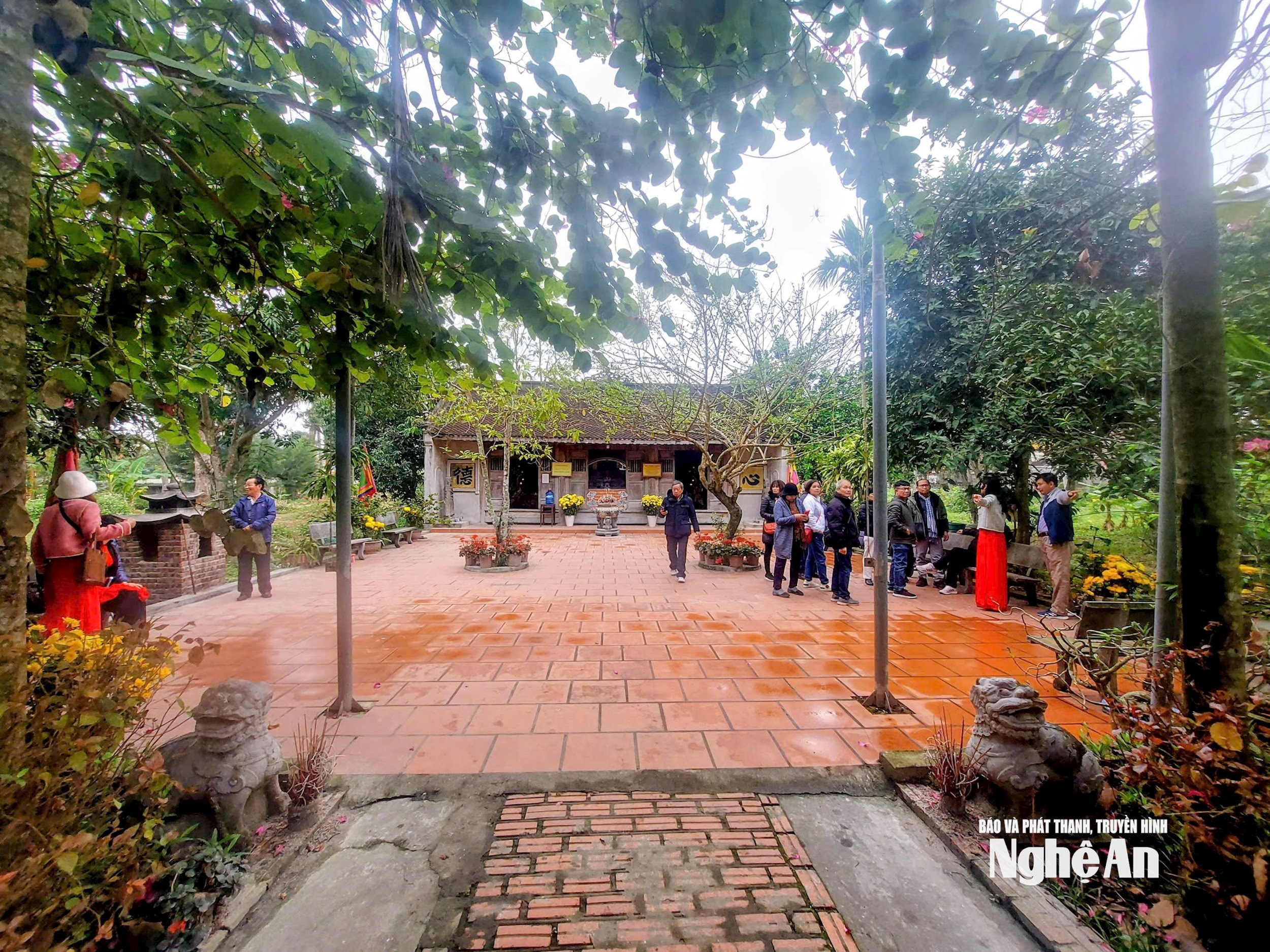
The Temple of the God of the Mountains is one of eight national relics in Quynh Doi village, classified as such in 2013. The temple has a long history, worshipping the "Moc Loi Linh Ung Thien Than" and the three founding ancestors of the Ho, Nguyen, and Hoang families – celestial and human deities who contributed to protecting the nation and its people. This is a valuable ancient architectural structure, built a long time ago, possessing historical, cultural, scientific, and aesthetic value. Furthermore, the temple preserves many ancient artifacts exquisitely crafted from stone, reflecting the talent of folk artisans from Nghe An province, such as stone statues of tigers, war horses, war elephants, mythical creatures, and guardian deities.
In recent years, the temple has become an attractive spiritual destination for tourists visiting Quynh Doi. In 2024, the local government also invested billions of VND to restore and renovate this national historical site from contributions by philanthropists.
“Not only at the temple, but in Quynh Doi village there are many historical sites possessing very valuable artifacts, especially ancient stone statues. Meanwhile, in recent years, ancient stone artifacts have become highly sought after, with some statues even being offered for billions of dong. Even ordinary items like stone pedestals are worth hundreds of millions of dong. Therefore, many historical sites have been robbed. That is why it is necessary to strengthen the management of these artifacts.”
Mr. Ho Manh Ha - Deputy Head of the Heritage Management Department (Nghe An Department of Culture, Sports and Tourism)
In response to this situation, the Department of Culture, Sports and Tourism has issued numerous directives to strengthen management at museums and historical sites. Most recently, in May 2025, the Department sent a document to the People's Committees of districts, cities, and towns (formerly) regarding strengthening propaganda and preventing illegal excavation and hunting of artifacts. The document clearly stated: Recently, some information has appeared on social media about the illegal excavation and trading of artifacts in some localities, seriously affecting cultural resources and heritage preservation efforts. To promptly prevent and stop this situation, the Department requests local authorities to strengthen the management and protection of historical sites and archaeological sites in their areas; widely disseminate information to the public about the meaning and value of cultural heritage, and encourage people not to participate in the illegal buying, selling, or excavation of artifacts and relics. The People's Committee of the commune/ward and the Management Board of historical sites regularly inspect and review the area, promptly detecting, preventing, and strictly handling acts of illegal excavation, hunting, and trading of ancient artifacts.


