
Ly Son: Finding breakthrough solutions to become a national tourist destination.
Possessing rare geological beauty and a rich maritime culture, Ly Son is striving to overcome infrastructure bottlenecks to elevate its position on the international tourism map.
Located in the East Sea with unique volcanic geological heritage, Ly Son Island (Quang Ngai province) has long been an attractive destination. However, at the workshop "Solutions for building and developing Ly Son into a national tourist area" held on the afternoon of December 25th, experts noted that the island is still facing significant infrastructure challenges to truly achieve breakthroughs.
The bottleneck stems from infrastructure and national standards.
Ms. Y Ngoc, Vice Chairman of the Quang Ngai Provincial People's Committee, acknowledged that despite a steady increase in tourist numbers and the establishment of the island's brand, Ly Son's development has not yet lived up to its potential. The island's internal transportation system remains cramped, the port is small in scale and heavily dependent on weather conditions, making it difficult for tourists to access.
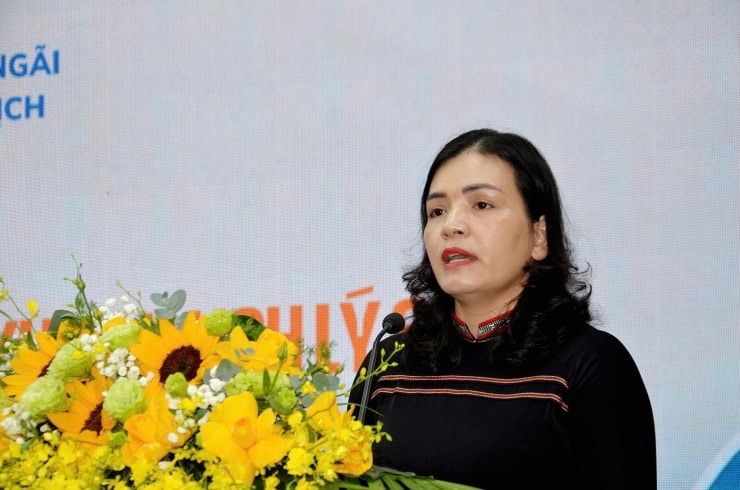
According to architect Nguyen Tien Sy, General Director of Hanoi Planning Joint Stock Company, Ly Son currently only meets about 70% of the conditions to be recognized as a National Tourist Area. The missing elements lie in key infrastructure and a high-quality service system.
To meet national standards, Ly Son needs to be able to serve a minimum of 500,000 tourists per year. Of these, the accommodation system must be able to accommodate approximately 300,000 tourists, and in particular, must have hotels and resorts that meet 4-star standards or higher.
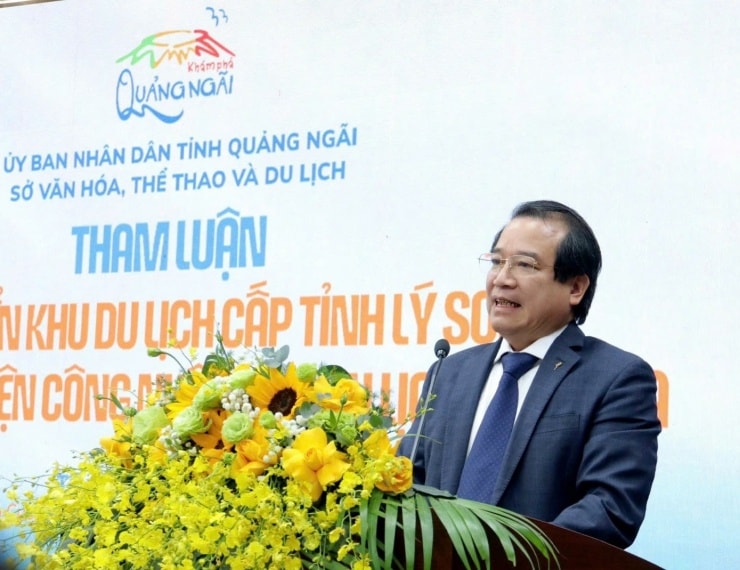
Strategies to attract 'eagles' and expand market share.
Mr. Ha Van Sieu, Deputy Director of the Vietnam National Tourism Administration, frankly shared that with the current state of services only at a "sufficient" level, Ly Son Island can hardly compete with other strong destinations. The proposed solution is to receive a boost from strategic investors.
Modern coastal urban planning
Many experts suggest that Quang Ngai needs to develop a sufficiently strong incentive policy package, focusing on land lease fee exemptions and support for connecting infrastructure. A bold approach is to expand urban space through controlled land reclamation to create commercial centers, squares, and public docks.
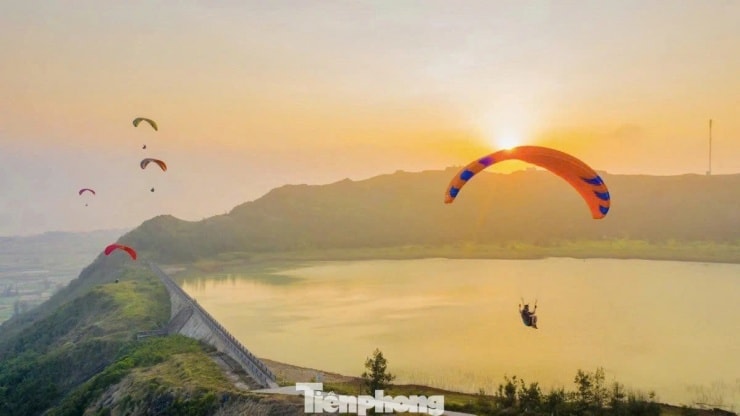
Urban spatial organization will adhere to the principle of "conservation - adaptation - expansion". The goal is to preserve natural values, volcanic geological heritage, and indigenous culture, while simultaneously increasing carrying capacity and synchronizing technical infrastructure such as electricity, water supply and drainage, and the environment.
Smart Tourism Vision 2030
Associate Professor Pham Trung Luong, Vice President of the Vietnam Federation of Tourism Training Associations, emphasized that the implementation of the Master Plan for the Development of Ly Son National Tourist Area until 2030, with a vision to 2045, is extremely urgent. This plan not only defines Ly Son's unique identity but also focuses on applying technology to transform it into a smart tourist destination.
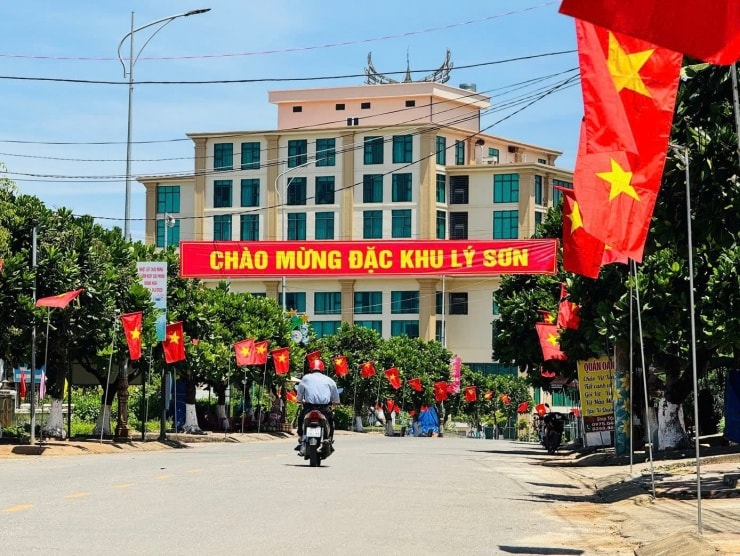
With a combination of unique mechanisms and local determination, the strategically important island of Ly Son is expected to soon become a new "magnet," attracting high-quality tourists and affirming the position of Vietnam's island and coastal tourism.


