
Ly Tuong talks about the L4 self-driving car: a 3-year goal.
Representatives from Ideal stated that they aim to introduce Level 4 autonomous vehicles within three years, likening it to a moment similar to the iPhone 4; L3 is a stepping stone, and AI+ is the strategic focus.
In an interview with the "Daily Economic News," a representative from Ideal Automotive stated that the company aims to bring Level 4 (L4) autonomous driving technology to market within the next three years. Ideal likened this milestone to the iPhone 4 moment of the automotive industry, where AI became central to shaping products, user experience, and business models.
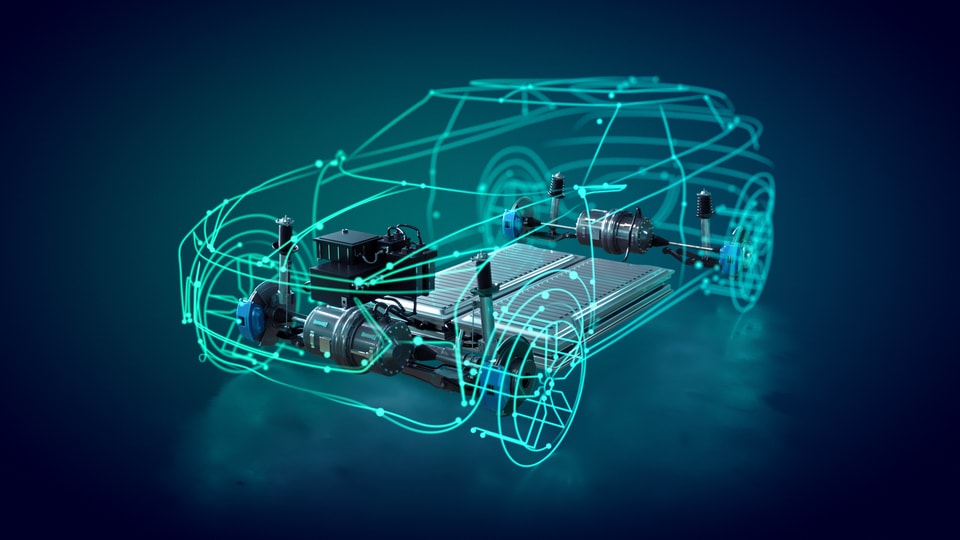
An iPhone 4-style moment in the AI+ era.
According to reports, the "AI+" wave, following the Chinese government's announcement of its promotional policies, is creating profound changes: from product form to user experience, from manufacturing to business operations. For automobiles, electrification is just one stage; the ultimate goal is AI, where the competitive advantage shifts from hardware to software capabilities and AI models.
To achieve breakthroughs, businesses must master a tightly integrated overall system: AI models, computing power, operating systems, and hardware. Ideal views this as the foundation for reaching L4 within their three-year timeframe.
From vehicles to "space robots"
The Ideal describes a car in the AI age as operating like a "space robot," where AI not only assists but also becomes a tool for value creation. The focus is on the VLA (visual-linguistic-action) model, aiming for driving capabilities similar to a human driver and natural interaction.
- Freeing up the driver: AI takes over all driving tasks, allowing users to work, rest, or enjoy themselves throughout the journey.
- Natural communication: giving commands using language similar to talking to the driver, reducing the complexity of operations.
- Safety and comfort: thanks to concepts like "hypersynchronization" and "world modeling," AI adheres to the law, synchronizing with human driving habits and values to prioritize safety and comfort.
L3 is the bridge, L4 needs data and computing power.
Answering a question about Level 3 (L3), Ly Tuong argued that L3 is not the ultimate goal but a necessary transitional stage to advance to L4. L3 is not fully autonomous; the driver must be ready to intervene when necessary. The leap to L4 requires breakthroughs in core technology, significant investment in computing power, and a sufficiently large fleet of vehicles to collect and train driving data on a large scale.
Redesigning the cockpit: when the steering wheel and pedals are gone.
According to the plan, Ly Tuong's first L4 model is expected to change the way the interior space is organized: the cockpit, steering wheel, and pedals may no longer be necessary, opening up a more flexible arrangement. However, the commercialization of this type of vehicle without a driver's seat will depend on the technical challenges, reliability, and legal framework in the market.
The technical, legal, and user acceptance issues.
Ly Tuong acknowledges that there are still many hurdles before L4 can truly operate at scale: ensuring safety and reliability throughout the sensing-decision-control stages; and meeting legal requirements and end-user acceptance. This is a prerequisite, alongside AI capabilities.
The computing infrastructure gap and the goal of narrowing it.
A company representative stated that the gap between domestic VLA technology and world-leading systems remains significant, particularly in computing and data processing infrastructure. Ly Tuong said they are working to build a robust AI platform and encourage innovation across the industry to close this gap.
Summary of the roadmap as shared by Ly Tuong.
| Category | Details as shared |
|---|---|
| Timeline | The goal is to bring the L4 to market within three years. |
| L3 role | Transition phase; the driver must be ready to intervene. |
| Technical platform | The overall system includes the AI model, computing power, operating system, and hardware. |
| Data – Training | A large fleet of vehicles is needed to collect data on this scale. |
| Targeted experience | VLA, natural language interaction, prioritizes safety and comfort. |
| Interior design | Towards a space without steering wheels and pedals (when legally permitted). |
| Challenge | Perceived reliability – decision-making – control; legal; user acceptance |
Conclude
Ly Tuong views AI as the ultimate goal for the automotive industry, and the L4 as a turning point comparable to the iPhone 4's moment. The three-year timeframe is an ambitious goal, requiring a computing platform, data, operating system, and hardware designed as a whole; it also depends on the legal framework and market consensus. If realized, the AI-powered car will move closer to becoming a mobile "space robot."


