Forever dedicated to the world is the love song of the Southern Land.
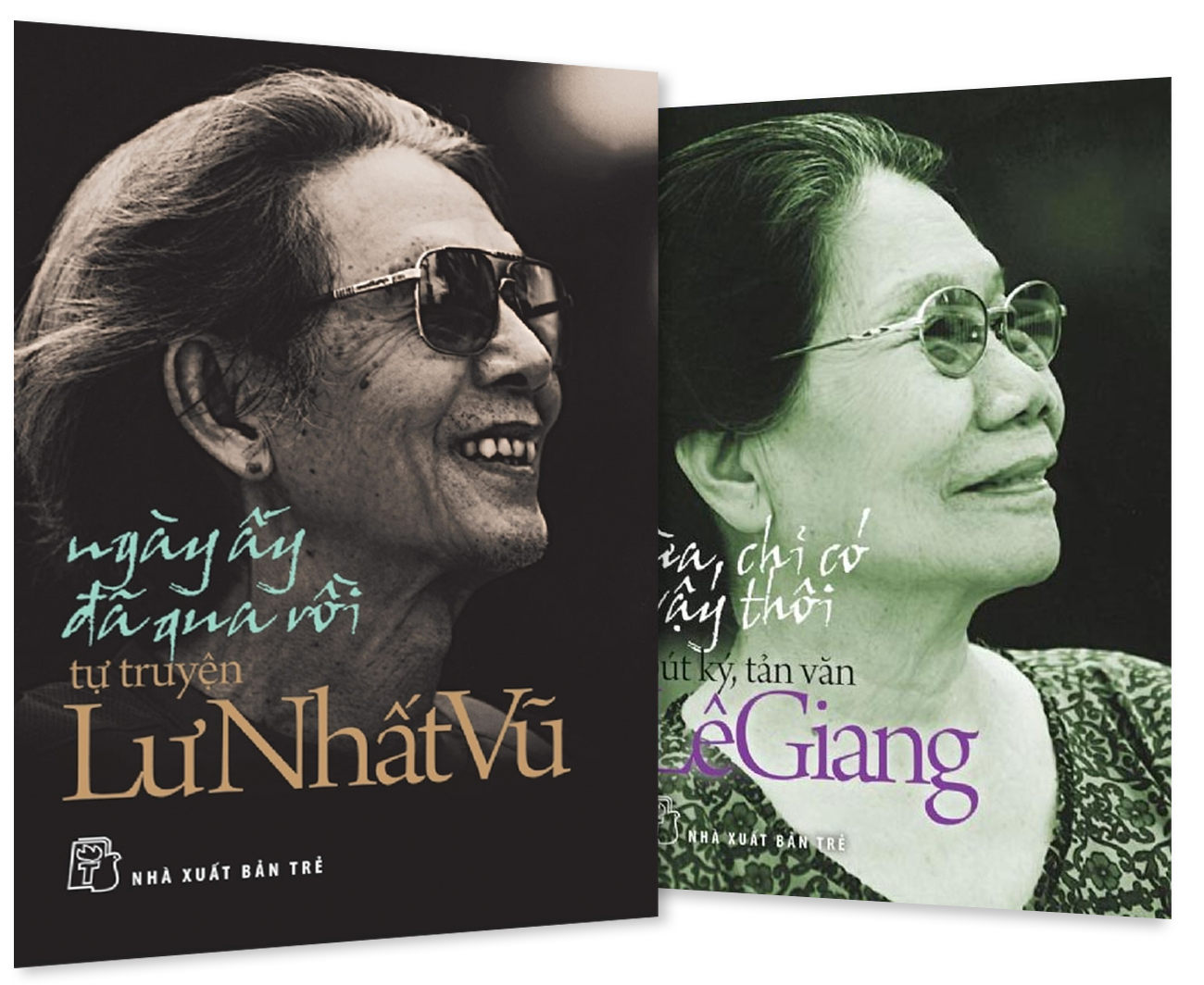
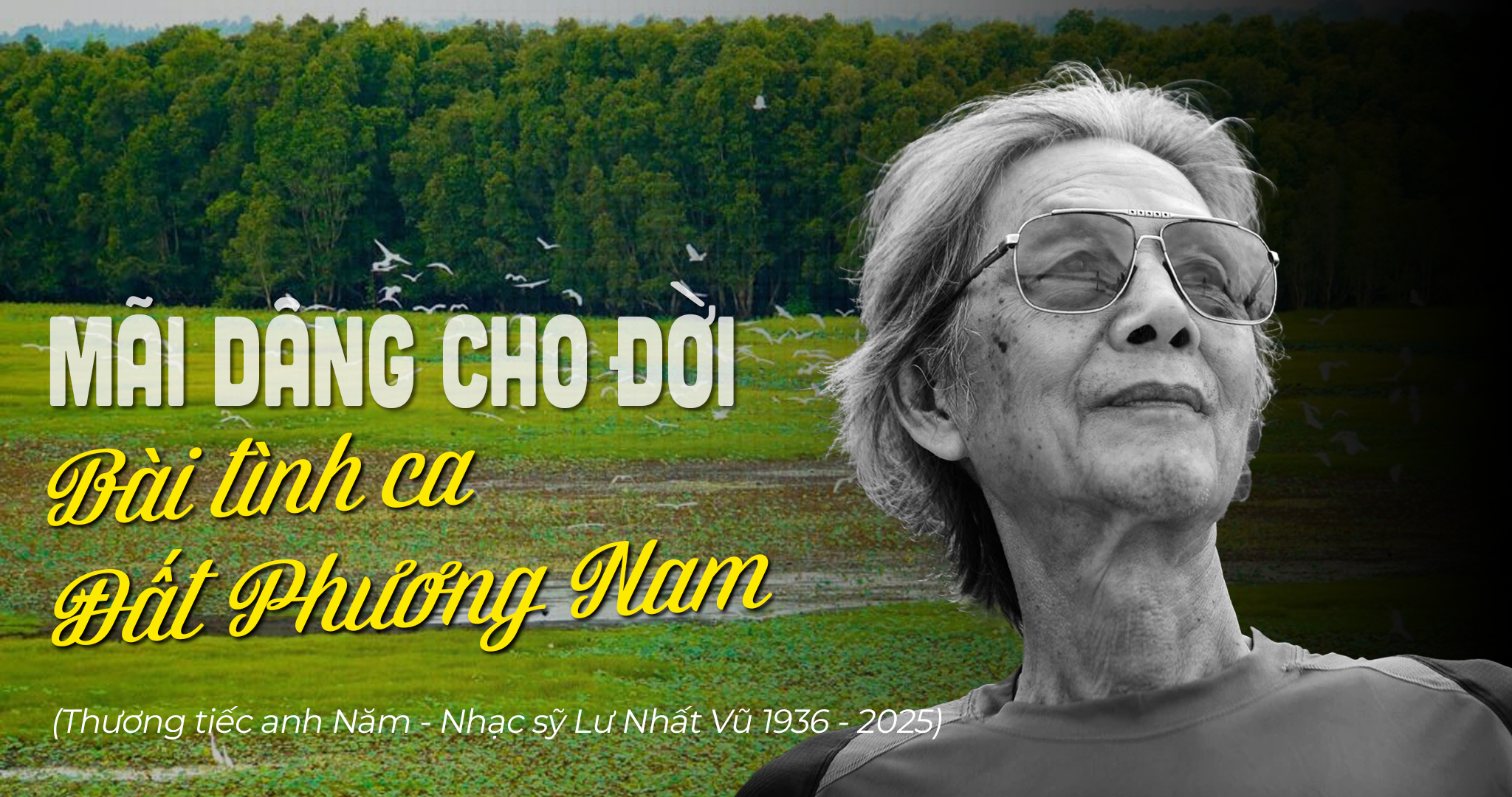
Composer Lu Nhat Vu (real name Le Van Gat), born in 1936 in Thu Dau Mot, Binh Duong, has composed over 200 musical pieces and written dozens of books on folk songs, lullabies, and more. He was awarded the State Prize for Literature and Arts in 2001 and many other prestigious awards.
Hien Anh• April 2, 2025
In the days leading up to the 50th anniversary of the liberation of South Vietnam and the reunification of the country, a friend from the Association of Retired Teachers in Ho Chi Minh City announced a reunion program called "Returning to the Roots" for a delegation of education and medical officials who had crossed the Truong Son Mountains to the Southern battlefield in early 1970. Half of the trip would be spent in Ho Chi Minh City, and the other half in Tay Ninh to revisit the old battlefields. My friend added that the city was preparing a poetry and music night dedicated to Le Giang and Lu Nhat Vu, and if it coincided with our reunion, we would try to find tickets to join. My heart was filled with anticipation for the day we could meet again the poet and musician couple whom we had admired and been close to in the Lo Go - Sa Mat war zone in Tay Ninh. But then, suddenly, I received news that musician Lu Nhat Vu had passed away on March 29th, after a seven-month battle with illness, and all the memories flooded back.
I still remember that in late 1970 and early 1971, up until April 30, 1975, in the base of R (Central Committee of the Southern Region), by the Cay stream - a small branch of the Vam Co Dong river, whenever we gathered, the brothers and sisters would tell each other the legendary love story of the poet Le Giang and the musician Lu Nhat Vu during the resistance war.
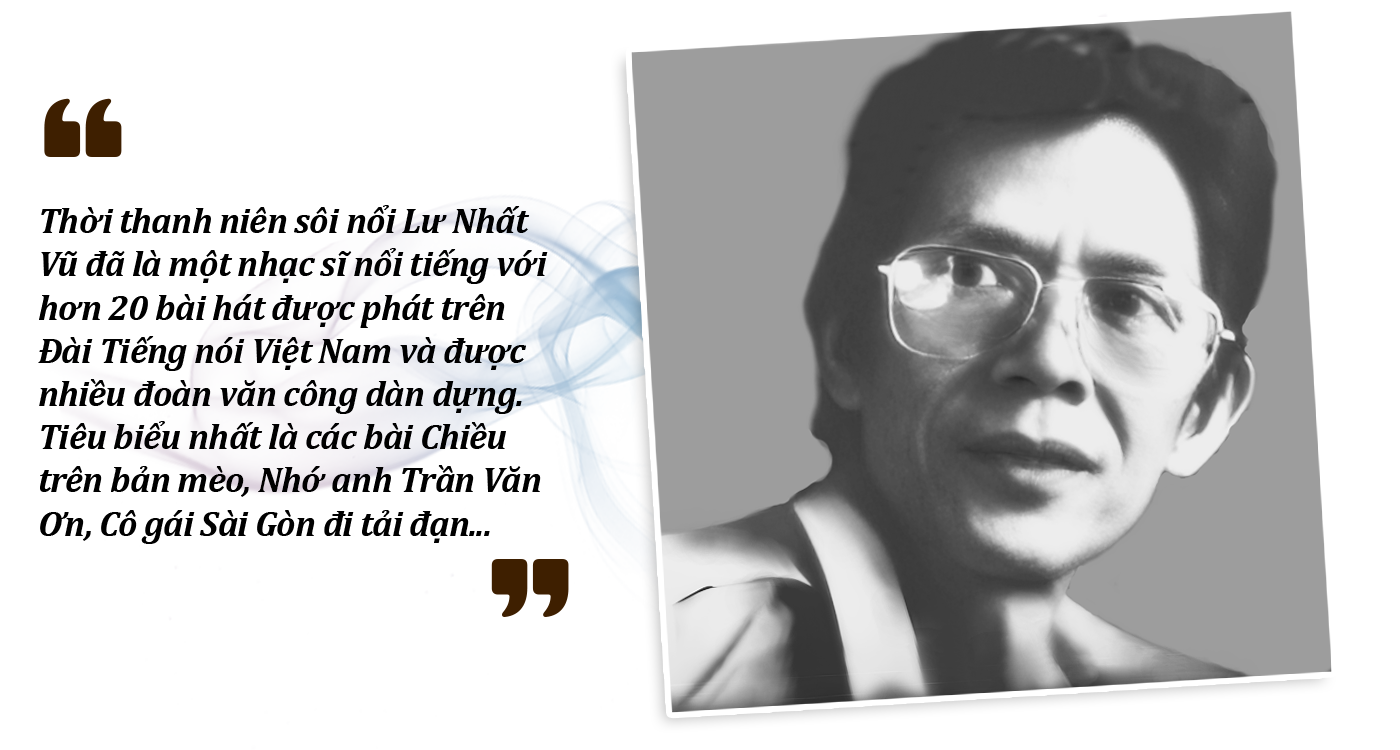
Composer Lu Nhat Vu (real name Le Van Gat), born in 1936 in Thu Dau Mot (Binh Duong), joined the student and youth struggle movement in Saigon-Gia Dinh early on. In 1955, the organization arranged for him to travel to the North by sea, on a fishing boat, crossing the Ben Hai River. Upon arriving in the North, he continued his studies at the School for Southern Students. Even while still in school, he showed early musical talent and had his first works broadcast on Vietnam Radio. In 1962, he graduated from the Vietnam Music School, the predecessor of the Hanoi Conservatory of Music, and was assigned to Youth Volunteer units and performing arts troupes, both gaining practical experience and composing. During his vibrant youth, Lu Nhat Vu was already a renowned composer with over 20 songs broadcast on Vietnam Radio and performed by various performing arts troupes. His most notable works include:An afternoon in the Hmong village, remembering Tran Van On, the Saigon girl carrying ammunition...
Lu Nhat Vu composed the song "Saigon Girl Carrying Ammunition" in 1968 in Kham Thien (Hanoi). At that time, he had just seen off his friends Diep Minh Tuyen and Le Anh Xuan as they left for the South to fight. Lu Nhat Vu often went to Hoan Kiem Lake to watch the news from the South. When he saw images of Southern girls carrying ammunition to the battlefield, he had the idea that he had to write something about the women who were directly fighting. So that night, he stayed up all night writing the song "Saigon Girl Carrying Ammunition." The next morning, he made two versions: one to the Arts and Culture Department of the Voice of Vietnam Radio, and the other to the Southern Song and Dance Troupe where he was working for production.
Just one week later, the Voice of Vietnam radio station broadcast the song "Saigon Girl Carrying Ammunition," sung by artist Vu Dau with female accompaniment. The song, with its Southern Vietnamese folk music style and lively, bright rhythm, depicted the optimistic revolutionary spirit of the female liberation army soldiers... and quickly spread among the public throughout both North and South Vietnam. In early 1970, Lu Nhat Vu and several other artists were sent to reinforce the Southern battlefield.
.jpg)
After four months of marching across the Truong Son Mountains to the Central Committee's base in the Tay Ninh war zone, Lu Nhat Vu was assigned to the Southern Arts and Culture Subcommittee, headed by musician Luu Huu Phuoc. Unfortunately, he was afflicted by a severe case of malaria, causing his body to weaken. At times, it seemed he wouldn't survive. During those critical moments, a female doctor not only monitored and treated him with Western medicine but also went into the forest to find medicinal leaves, which she then pounded and patiently fed him spoonful by spoonful, caring for him with each meal of porridge and vegetables. This female doctor also had an artistic soul, passionate about poetry since the nine-year resistance war in Ca Mau. She was Dr. Tran Thi Kim, born in 1930 on the banks of the Ghenh Hao River (Ca Mau). She had been involved in revolutionary activities since 1945, joined the Party in 1949, and relocated to the North. She had previously served as the Head of Department at the Viet-Duc Hospital. She returned to Southern Vietnam in 1963, when she met musician Lu Nhat Vu, a patient, at the Southern Civilian Hospital. At that time, she was serving as the Chief of the Office of the Southern Civilian Medical Board and also as a doctor at the hospital.
In the memorable final months of 1970, amidst the dense forest by the stream, a romantic relationship blossomed between Dr. Tran Thi Kim, a female doctor and poet (pen name Le Giang), and her patient, musician Lu Nhat Vu. Later, Le Giang, commonly known in the resistance zone as Sister Nam Kim or Sister Nam Le Giang, was transferred by the Central Committee to the Regional Arts and Culture Department, where she lived and worked alongside musician Lu Nhat Vu.
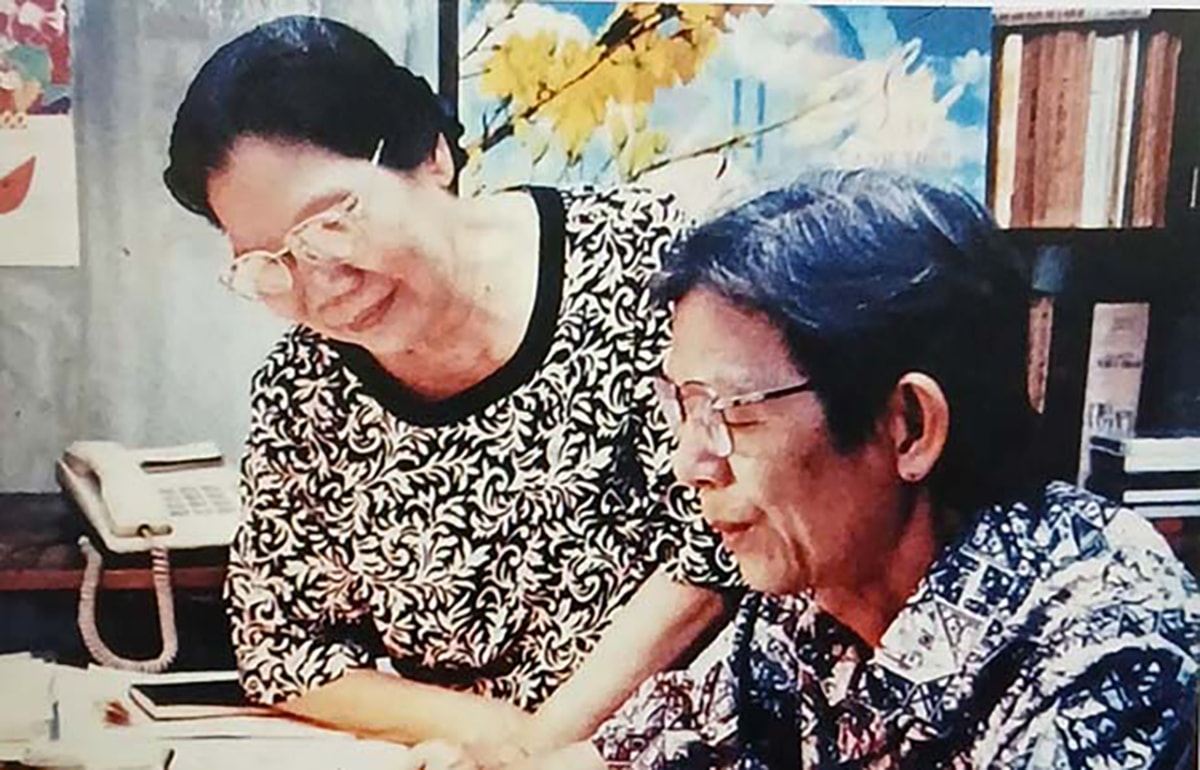
I was fortunate enough to be near Lu Nhat Vu and Le Giang during the final years of the war against the Americans. They were based at the Southern Region's Arts and Culture Department, codenamed B2, while we were at the Southern Region's Education Department, codenamed B3. The two bases were close together, separated by a forest by a stream and a 20-minute walk along a small trail. The leaders of both agencies were also members of the Central Propaganda Department, having known and been close friends since the nine years of fighting the French. On the Arts and Culture side were figures like Luu Huu Phuoc, Ly Van Sam, Thanh Truc... and on the Education side were figures like Nguyen Huu Dung, Nguyen Van Nhat... Whenever the Arts and Culture Department had a performance, a musical presentation, or a new program, they would inform the Education Department to come and watch. Even when someone on either side hunted deer or wild boar, they would share the spoils with each other. Once, Uncle Lưu Hữu Phước invited Uncle Tư Dũng (teacher Nguyễn Hữu Dũng, Head of the Education Subcommittee, from Nam Đàn) over for a meal. At that time, I worked in the Propaganda Department and Uncle Tư Dũng allowed me to accompany him. That time, I met the couple, Mr. and Mrs. Năm-Lư Nhất Vũ and Lê Giang, at the thatched-roof house of musician Lưu Hữu Phước. The meal included braised freshwater fish with a special sauce, a specialty of the Cà Mau region of Southern Vietnam, prepared by Mrs. Năm Kim. With just a few small fish like snakehead and catfish sent from the farm, and simple seasonings including coarse salt, palm sugar, pepper, and chili bought from Trại Bí border gate, along with a plate of wild banana blossoms mixed with sour giang leaves... Mrs. Năm arranged everything on the table in an appetizing way, and everyone praised how delicious it was.
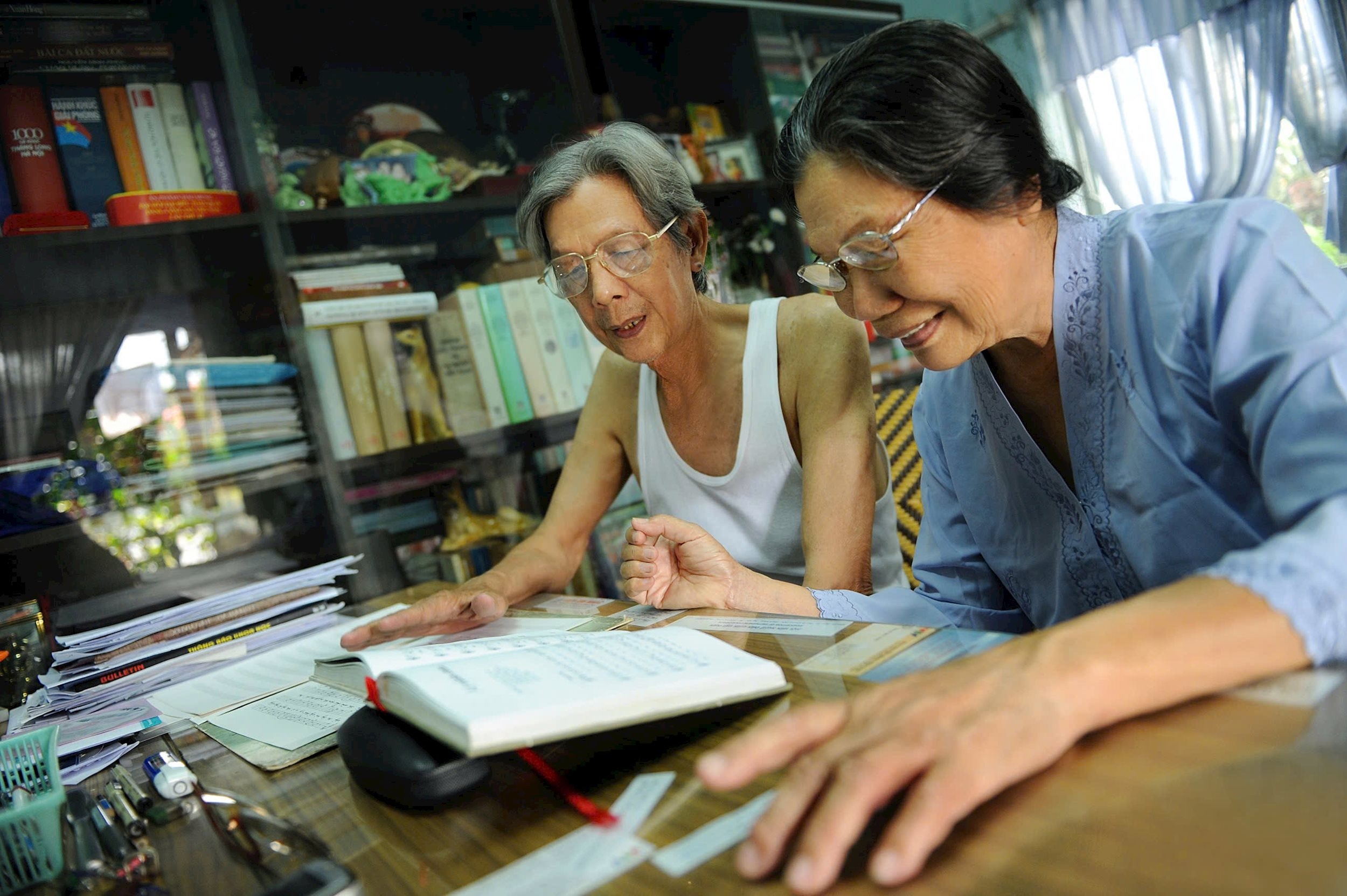
After the meal, we were invited to their house. Their house was a small, thatched-roof house with a cellar underneath and two hammocks strung together. An old guitar hung on the wall. Uncle Tư Dũng praised the musician couple's house, saying it was warm and beautiful. Apparently, the song "The Saigon Girl Carrying Ammunition" begins with this line..."Birds sing in the forest and by the stream, calling us to set out on our journey, our shoulders burdened with weight."The song was very popular in schools in the resistance zone, so teachers and students often said the song "Bird's Song" and affectionately called the composer Lu Nhat Vu "Bird's Song composer".
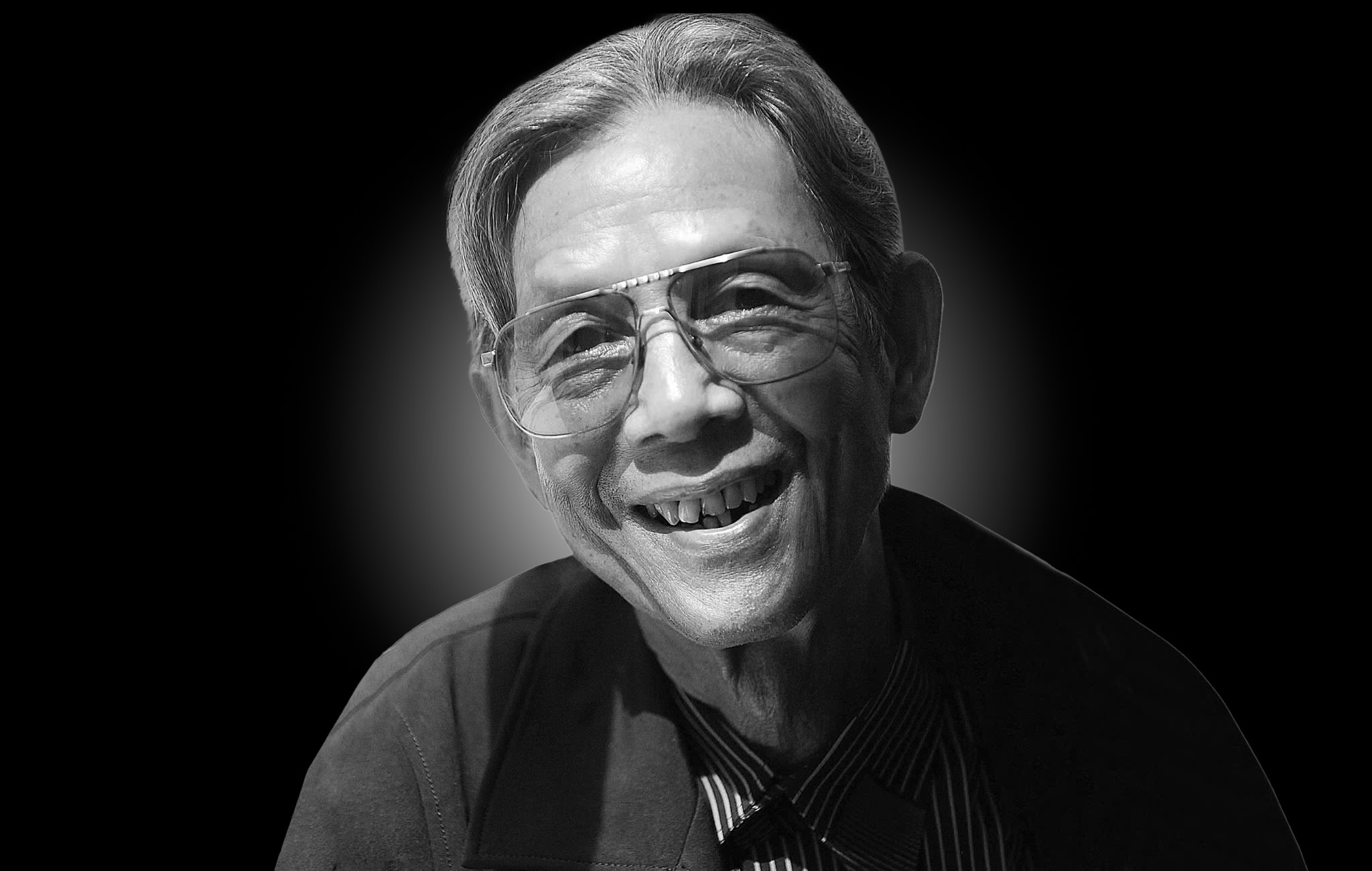
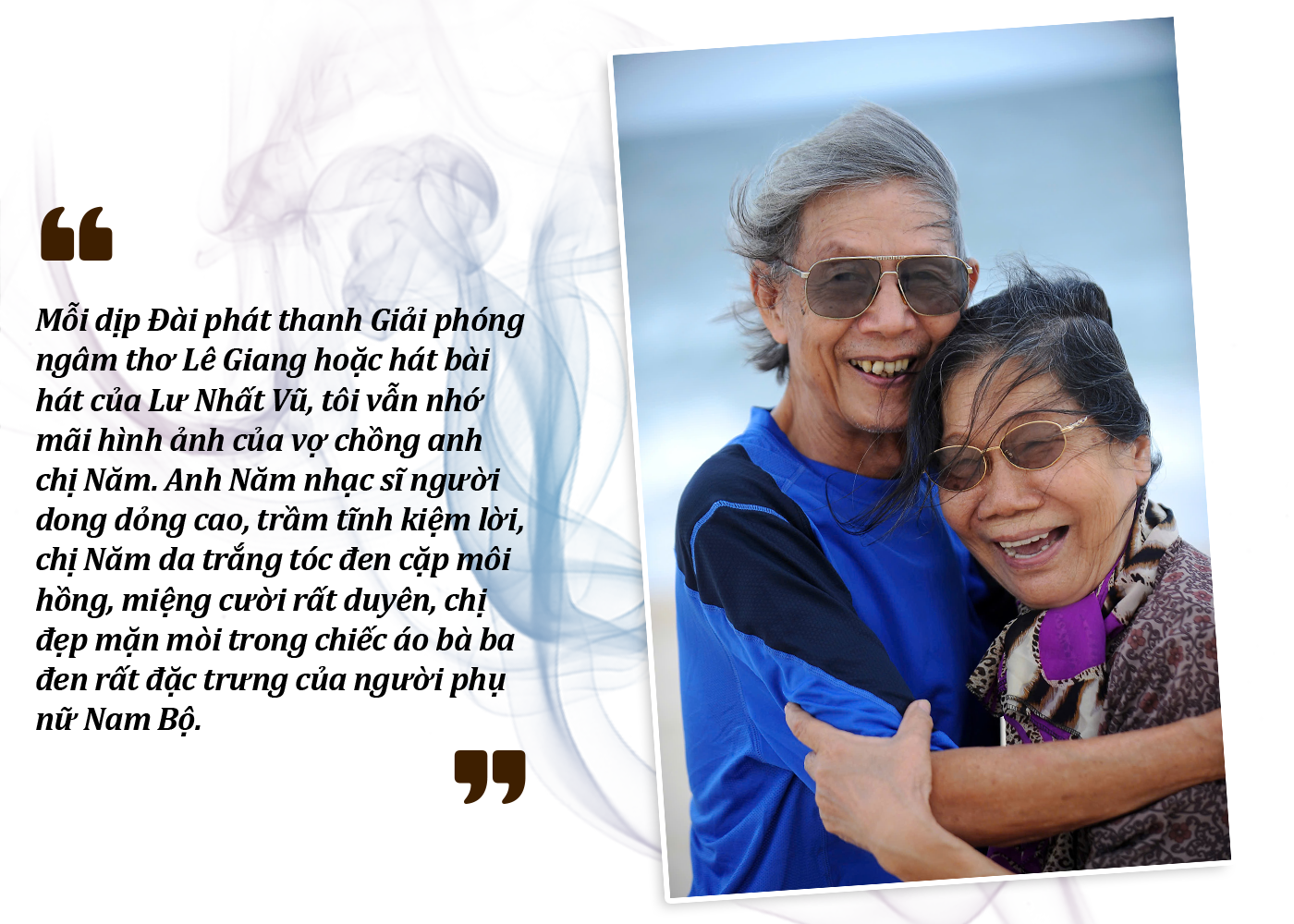
After that, whenever the Liberation Radio Station recited Le Giang's poetry or sang Lu Nhat Vu's songs, I always remembered the image of Mr. and Mrs. Nam. Mr. Nam, the musician, was tall, calm, and reserved. Mrs. Nam had fair skin, black hair, rosy lips, and a charming smile; she was strikingly beautiful in her black "ba ba" dress, a very characteristic dress of Southern Vietnamese women. During the historic Ho Chi Minh Campaign, musician Lu Nhat Vu joined the Military Governing Committee of Can Tho City, and later, he was transferred to the Arts and Culture Department of Ho Chi Minh City. The couple lived together in an apartment on the 6th floor of a building on Nam Ky Khoi Nghia Street.
In the early days after liberation, performing arts troupes from Hanoi often performed at the Grand Theater near the headquarters of the City Military Administration Committee (later the City People's Committee headquarters). At that time, we were at the Ministry of Education headquarters, 70 Le Thanh Ton Street. Thanks to personal connections and our shared passion for the arts, we got tickets to see them every night and had the chance to meet Lu Nhat Vu and Le Giang, our neighbors from the D war zone. Seeing her still simply dressed in a traditional Vietnamese blouse and checkered scarf, with her warm, resonant voice, and the couple sitting humbly in the back row, even though they were invited guests and, more importantly, the authors of the songs performed that night.
In early 1976, we returned to the North for work, and no longer had the opportunity to meet the poet-musician couple again. However, following the radio and newspapers daily, we knew that he held many important positions such as Deputy Secretary of the City Musicians' Association, Member of the Executive Committee of the Vietnam Musicians' Association, and Director of the Vietnam Institute of Culture and Arts in Ho Chi Minh City. In particular, we learned that the couple had spent more than half a century together, traveling throughout the three regions of North, Central, and South Vietnam to collect folk songs, rhymes, and lullabies... especially in the Southern delta region, searching for treasure, documenting, recording, photographing, and filming the invaluable spiritual heritage of their ancestors. They collaborated with film companies and publishers to print and distribute dozens of films and books about Southern Vietnamese culture, while simultaneously composing many musical pieces, choral works, operas, and film scores that captured the spirit and soul of Southern Vietnam.
In 1997, the song "Southern Land" was created (music by Lu Nhat Vu, lyrics by Le Giang). This song was written for the film of the same name, but it possesses a unique value of its own, has been performed by many famous singers, and quickly spread to become a timeless classic. With over 200 musical works and dozens of books on folk songs, lullabies, etc., poet Lu Nhat Vu was awarded the State Prize for Literature and Arts in 2001, and many other prestigious awards.
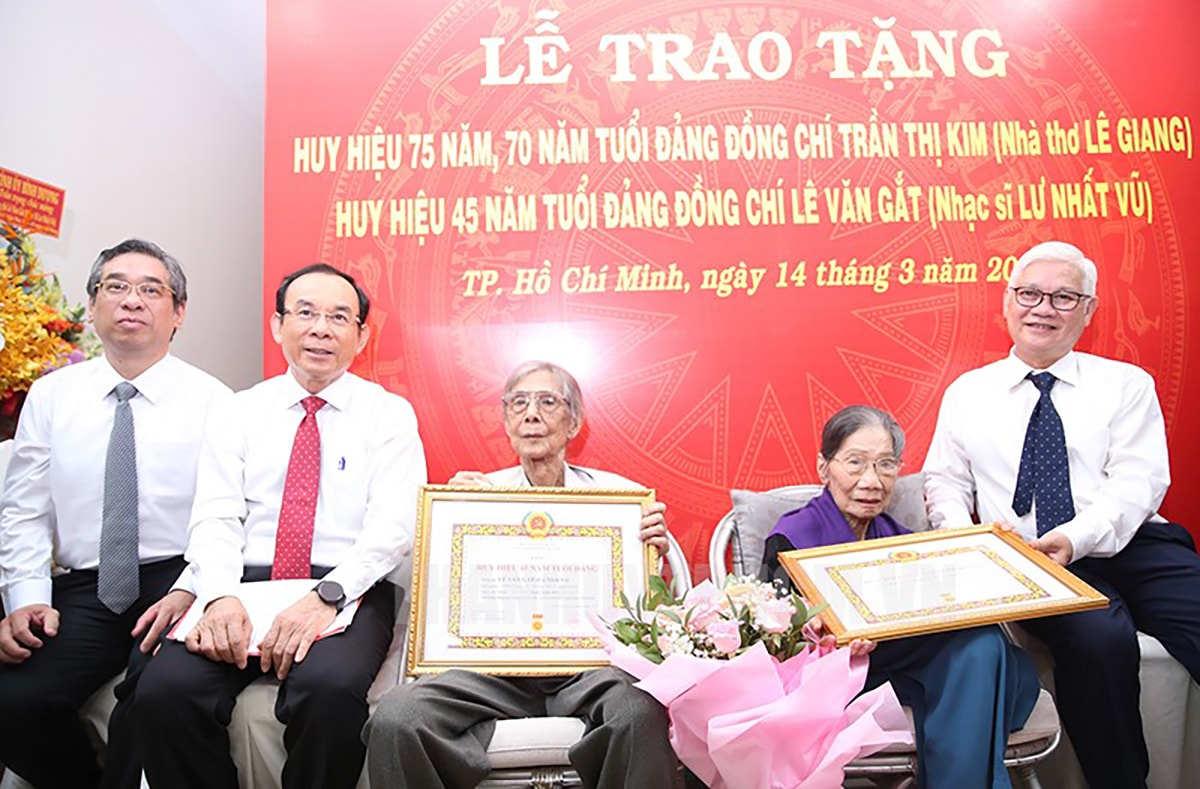
And every time we recall our memories with Mr. and Mrs. Nam Lu Nhat Vu - Le Giang, we remember the symbol of a steadfast love for the arts and culture of the resistance, bound together for more than half a century by fervent patriotism, profound love for literature and art, and even eternal love between a man and a woman. Together they created works of poetry and music, and conducted research that embodied the spirit and aspirations of the people, the nation, and the era.
Once, a journalist interviewed Mrs. Nam, and if asked to choose a folk verse to describe the faithful love between her and her husband, she would choose:We're like brothers, our thighs intertwined, embracing each other for life.This spring, he has returned to the land of "blue skies and white clouds beside the Mekong River," a parting of ways, while she, at 96 years old, still cherishes her unwavering love for her life partner, continuing to offer the world the love song "Southern Land."