
Fermented mudskipper paste - a specialty of the lower Lam River region.
Having been closely associated with the mudworm for generations, the people of the lower Lam River region in Hung Nguyen district have accumulated a wealth of experience in processing mudworms into delicious dishes, among which mudworm paste is a famous specialty.
For the people in the "worm-farming villages," rice paddies are primarily used for raising worms, while rice cultivation is secondary. Even if they don't grow rice during the summer-autumn season, they still plow and fertilize with plenty of manure. According to the locals, doing so makes the fields more fertile, especially during harvest. By removing the stubble and applying well-rotted manure, the soil becomes loose and porous, resulting in a large, plump, and golden-yellow worm population.
In the past, during the season when the mudworms arrived, people had to make torches and light lamps to collect them using bamboo baskets. Now, the fields are covered with nets, and people know how to make traps to catch the mudworms, making the work less strenuous. When the tide recedes, the mudworms emerge from the ground and swim freely in the fields, flowing into the traps with the current.
During each season when the river worms appear, each household with rice fields along the river can earn 10-30 kg of worms. Families with many rice fields can harvest 1-2 quintals of worms in a single season.
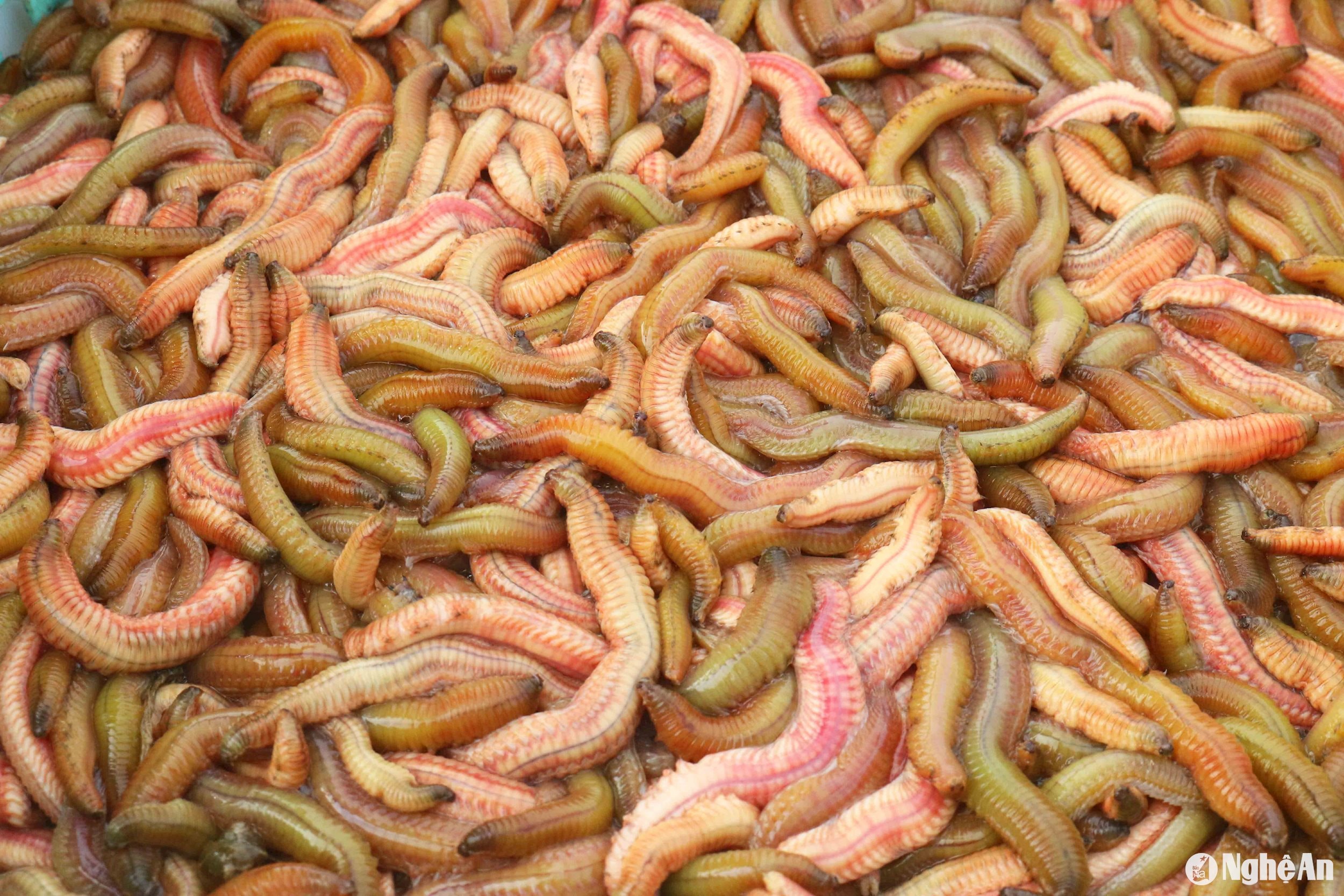
Hung Nguyen's mudworms can be processed into many nutritious dishes, such as mudworm patties, braised mudworms, mudworm sauce, etc. In the past, the locals here caught so many mudworms that they couldn't eat them all fresh. Without refrigerators to preserve them, they came up with the idea of making sauce to use gradually.
Previously, fermented mudworm paste was just a simple, rustic food, mainly made by locals for family meals. As market demand for fermented mudworm paste increased, many households focused on commercial production. In villages known for mudworms, such as Chau Nhan and Hung Loi, almost every household produces fermented mudworm paste. Some households make it for personal consumption, salting five to seven kilograms of mudworms; others make it for both personal use and sale, salting tens of kilograms.
Ms. Nguyen Thi Linh (48 years old), a woman with decades of experience in making fermented mudworm paste in Phu Xuan hamlet, Chau Nhan commune, said that each mudworm season, her family harvests hundreds of kilograms of mudworms. Most of these are sold to traders, with only about 30 kg kept to make fermented paste for family consumption and sale during the Lunar New Year.
According to Ms. Linh, making fermented mudworm paste is not difficult, but it requires meticulousness and skill in each step. To make a batch of delicious paste, according to the locals, the mudworms must be fresh, just brought in from the fields; stale mudworms should not be used. After being caught, the mudworms are washed thoroughly with well water and placed in a basket to drain completely. If the mudworms still contain a lot of tap water or get wet from rainwater during the fermentation process, the paste will spoil or not taste good.
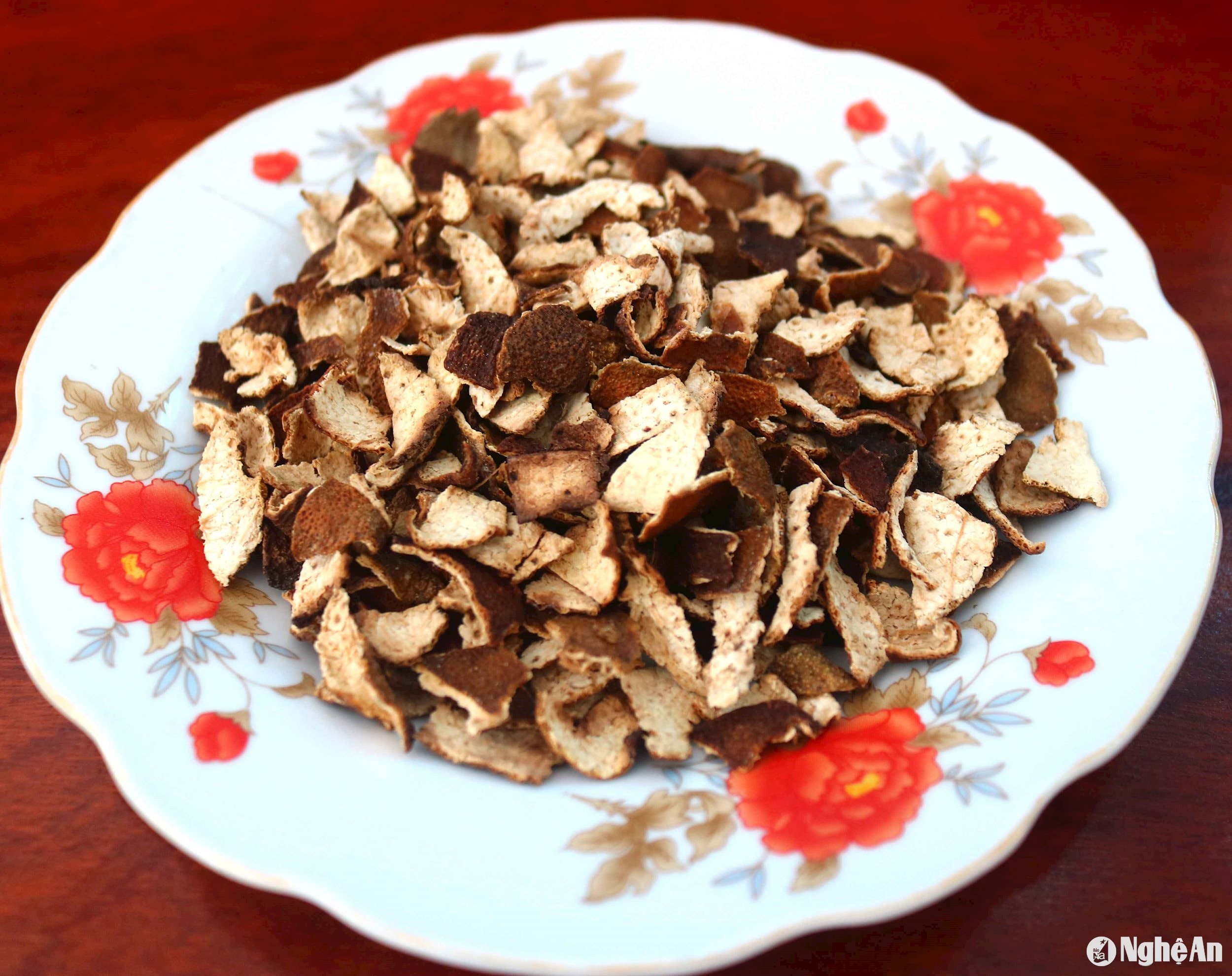
Unlike in the Southwestern region of Vietnam, people in Hung Nguyen don't salt whole mudworms, but instead grind them into a paste with spices like shallots, orange peel, ginger, and chili powder. In the past, before food grinders were available, people would put the mudworms in earthenware jars and use two large bamboo chopsticks to pound them until they were completely mashed. Now, with many multi-purpose machines, grinding mudworms has become much simpler.
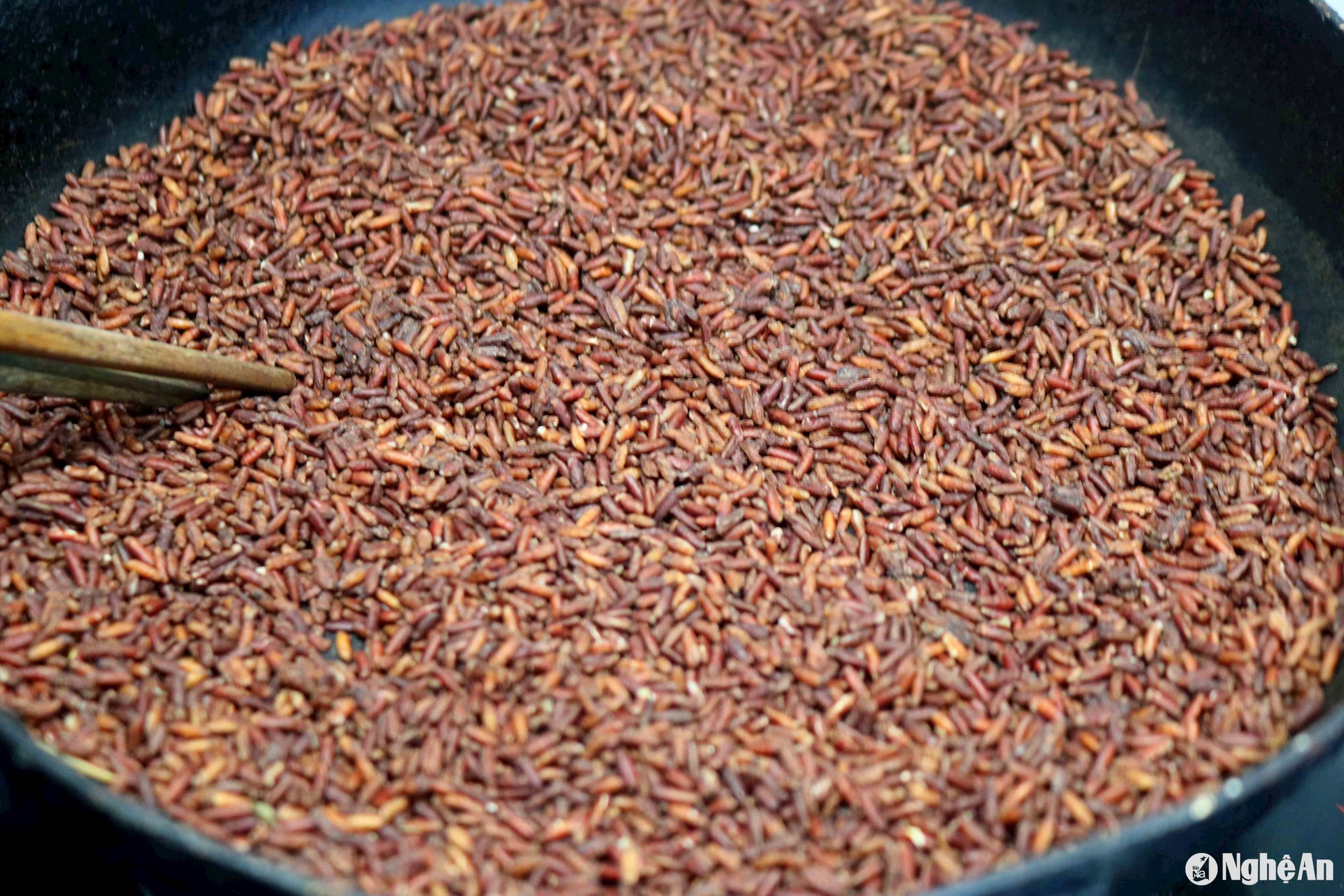
Depending on the household, the amount of spices mixed into the fermented mudworm paste varies. Ms. Linh's family usually makes fermented mudworm paste using a recipe of 10 kg of mudworms, 2 kg of salt, 1 kg of onions, ginger, 0.8 kg of roasted rice flour, and a handful of orange peel. The thick, smooth mudworm mixture, after being finely ground, is seasoned with a little salt and roasted rice flour, then poured into earthenware jars, glass bottles, or clean plastic containers, sealed tightly, and stored in a cool, airy place.
During the first week, every morning you must open the jar to add more salt and roasted rice flour, ensuring that all the salt and roasted rice flour have been added by 7 days. While fermenting the fish sauce, you must occasionally take the jar out and stir it thoroughly from bottom to top. After about a month, the fish sauce will turn reddish-brown and have a characteristic aroma, indicating that it is ready.
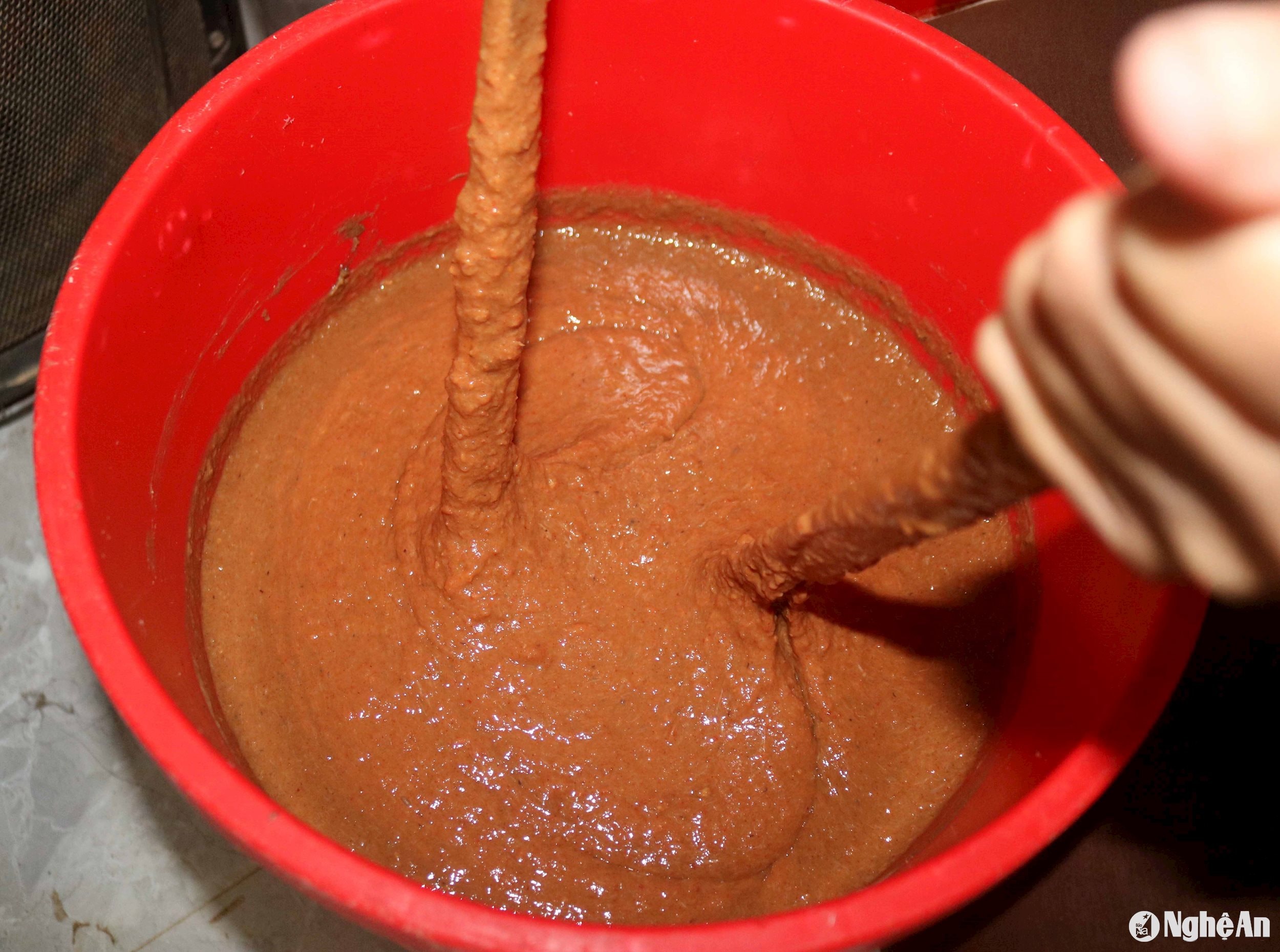
With its natural spices and unique fermentation method, Hung Nguyen's fermented mudskipper fish sauce has a distinctive color, aroma, and flavor that is unlike anything found in other regions.
On average, 10 kg of mudskippers yield 10 liters of fermented mudskipper paste (20 bottles, 0.7 kg of paste per bottle). Mudskipper paste can be eaten raw, meaning scooped from the jar and seasoned with spices like chili and galangal, or heated with fragrant onions and oil before eating. Mudskipper paste is often used as a dipping sauce for pork, goat meat, salads, rice rolls, pickled vegetables, and onions – all delicious and appealing.
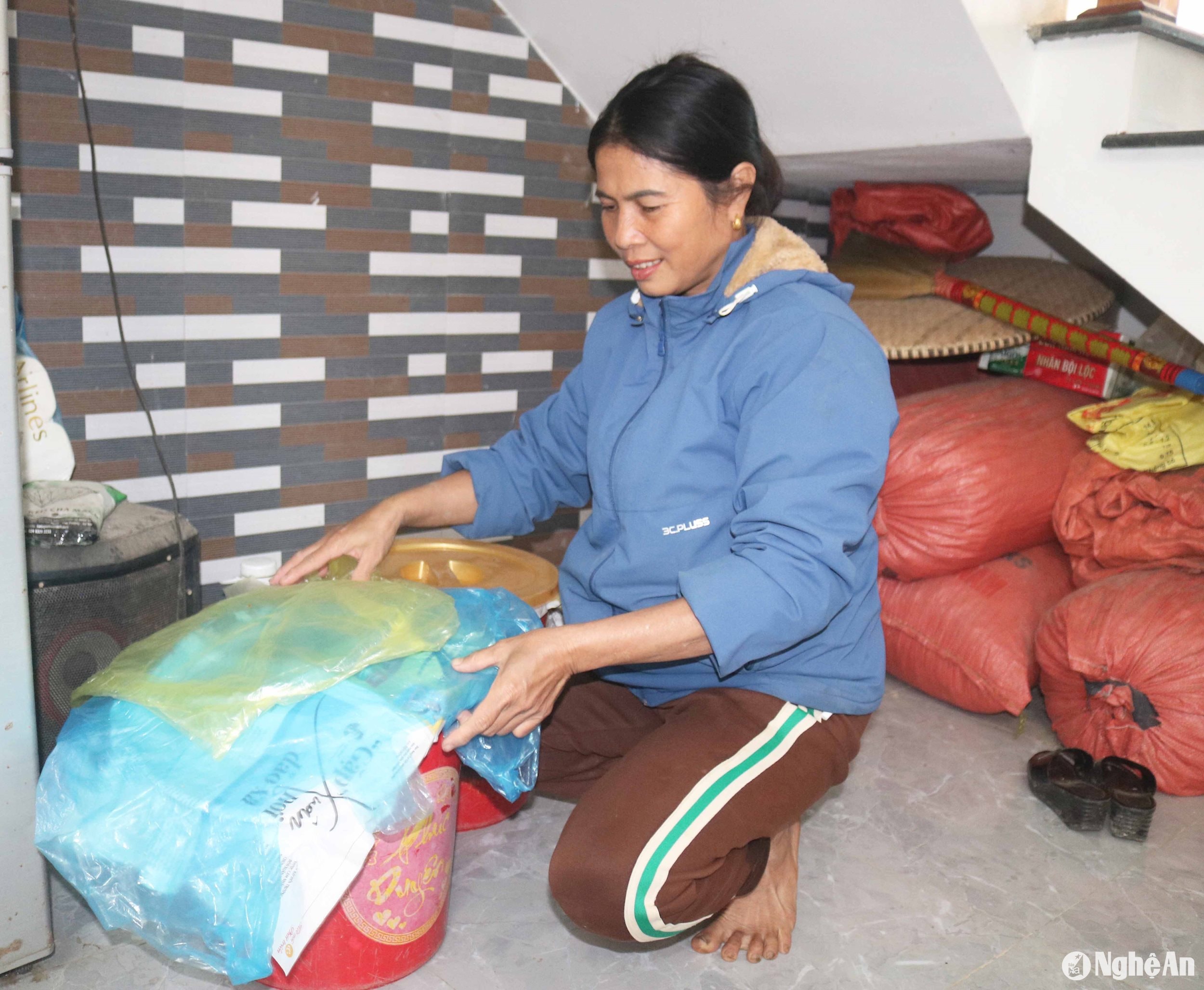
Previously, fermented mudskipper paste was just a simple, rustic dish, but now it has become a famous specialty, popular in markets everywhere. When the paste is ready, coinciding with the approaching Lunar New Year, locals bottle it, with each bottle selling for 500,000 to 600,000 VND.
Mr. Vo Trung Truc from Phu Xuan hamlet, Chau Nhan commune, shared: "Every season, my family uses about 50-60 kg of fresh mudworms to make fermented mudworm paste. Usually, we only make it to fulfill orders from acquaintances in our hometown and throughout the South and North. Every Tet holiday, it's always sold out; there's no mudworm paste left to sell."
It is known that there are currently many establishments producing fermented mudworm paste in Chau Nhan and Hung Loi communes. Each mudworm season, a facility processes hundreds of kilograms of mudworms to make paste. According to local people, the mudworm paste making business brings in a considerable income, with revenue potentially doubling the initial investment.


