
Man United drop points: lack of intensity, lack of decisiveness.
Leading West Ham but unable to finish, Ruben Amorim's Man United revealed problems with intensity, decisiveness, and personnel selection; Roy Keane criticized them.
Manchester United dropped points again despite leading West Ham, exposing two core weaknesses: intensity and decisiveness in crucial moments. Under manager Ruben Amorim, systemic and personnel issues remain unresolved, to the point where Roy Keane bluntly stated: “You can’t play calmly when you’re 1-0 up. Finish the game.”
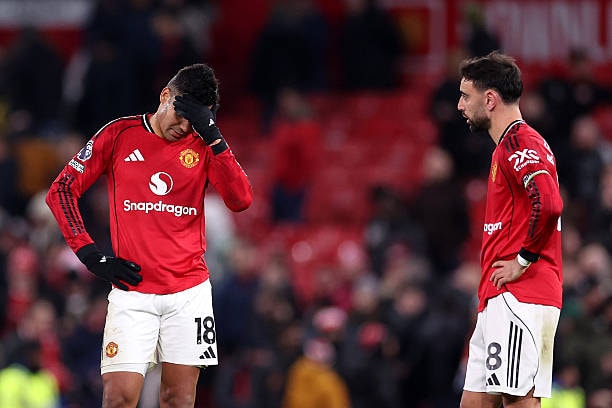
The decisive moment: taking the lead but failing to lock down the game.
Confidence often crumbles when a team capitalizes on its advantage. Against West Ham, Man United took the lead but failed to increase the tempo, control the tempo, or neutralize the opponent's counter-attacks. This is a sign of a team lacking the intensity and clear plan to control the remainder of the match.
Second-half pathology: falling tempo, open gaps
Man United often run out of steam after halftime. This pattern repeated itself against Nottingham Forest, Tottenham Hotspur, and West Ham: when the opposition increased the pressure, Man United lost their structure, allowing the gaps between the lines to widen and losing control. As a result, their fragile advantage was eroded.
Amorim's system: lacks cohesion, lacks a point of strength.
The style of play requires a consistent intensity framework to function: targeted pressing, a midfield anchor to control the tempo, and a second line of defense providing cover. At current Manchester United, these links are broken: when the attacking line fails to press effectively, the midfield is forced to retreat passively; when the midfield is slow to cover, the defense leaves space exposed.
In terms of ideas, Amorim wanted the team to be proactive, but on the pitch, there was a lack of cohesion: inconsistent ball approach speed, insufficient man-to-man pressing, and slow transitions that caused counter-attacking opportunities to slip away. As a result, Man United rarely managed to close out a game once they took the lead.
Personnel decision: Mainoo or Ugarte?
Sources indicate that Amorim doesn't really trust Kobbie Mainoo in situations requiring tactical changes, and prefers Manuel Ugarte. This choice has sparked debate: Mainoo provides connection and the ability to break down pressing, while Ugarte is more focused on tackling and disrupting play. When the team needs increased control to lock down the game, betting on a "stopper" rather than a playmaker could lead to a less secure advantage.
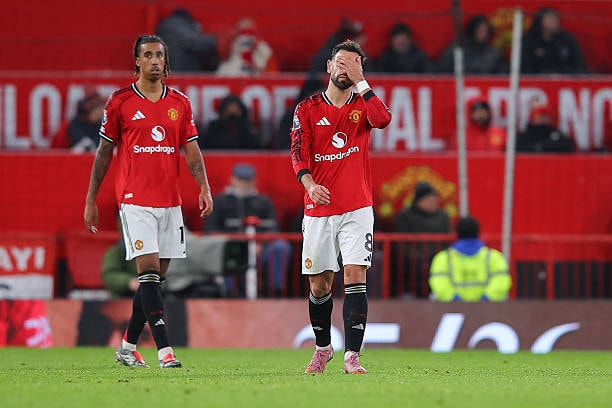
Individual brilliance, collective lack of brilliance.
Bruno Fernandes and Casemiro still showed their class in many moments, but systemic weaknesses negated their individual contributions. When team intensity dropped, Bruno lacked support moving between the attacking levels; when the defensive structure loosened, Casemiro's coverage was stretched too thin.
Roy Keane and his message about standards.
Roy Keane's criticism wasn't just aimed at mentality: "You can't play calmly when you're 1-0 up. Finish the game." It touched on the standard of a great team — knowing when to increase the pace, cornering the opponent, and deciding the game when the opportunity arises.
What needs to change
- Increase the intensity starting from the initial pressing block: clearly define the meeting point, the trigger, and the cover behind.
- Strengthening the midfield axis: choose a midfield configuration that suits the context — when control is needed, prioritize a player who can set the tempo and connect with others; when disruption is required, increase tackling ability.
- Second-half management: make substitutions based on intensity, not just position; maintain the tempo of the ball after taking the lead.
The future under Ruben Amorim will dim if Manchester United cannot resolve two major bottlenecks: intensity and decisiveness. When advantages are not converted into victories, fan confidence can only decline.


