
Man Utd keep Bruno Fernandes and the £100 million price tag.
Bruno Fernandes says he was "hurt" when Man Utd considered selling him after a £100 million offer from Al Hilal. His decision to stay makes rebuilding and figuring out how to utilize him under Ruben Amorim even more difficult.
Bruno Fernandes has publicly expressed his hurt feelings after Manchester United considered selling him last summer following a £100 million offer from Al Hilal along with a salary close to £750,000 a week. But the story is more than just the emotions of a captain: it exposes a strategic mistake Old Trafford missed, and how a single personnel decision can shape an entire rebuilding process.
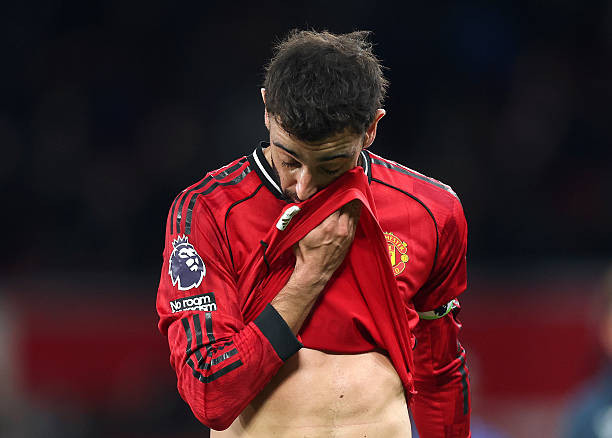
From admitting "wounds" to the management challenge.
In an interview with Canal 11 – a media channel owned by the Portuguese Football Federation – Fernandes said he was saddened because he felt the message from the club was: "If you leave, it wouldn't be so bad for us."
He said:“From the club’s perspective, I felt the message was: ‘If you leave, it wouldn’t be so bad for us.’ That hurt me. More than hurt, it made me sad. The club wanted me to leave, I always kept that thought in my head. I spoke to the directors, but I think they didn’t have the courage to make a drastic decision because the coach wanted me to stay.”
According to reports from ESPN, Manchester United have given Fernandes the final say on whether to stay or leave. In a summer dominated by financial pressure and the need for rebuilding, this is a crucial detail: instead of taking the initiative in the decision-making process, the club has put the ball in the player's court.
£100 million and a season that laid the foundation for all the pressure.
The context that makes Al Hilal's offer particularly noteworthy is Manchester United's recent run: the team failed to qualify for European competition, lost to Tottenham in the Europa League final, and finished 15th in the Premier League.
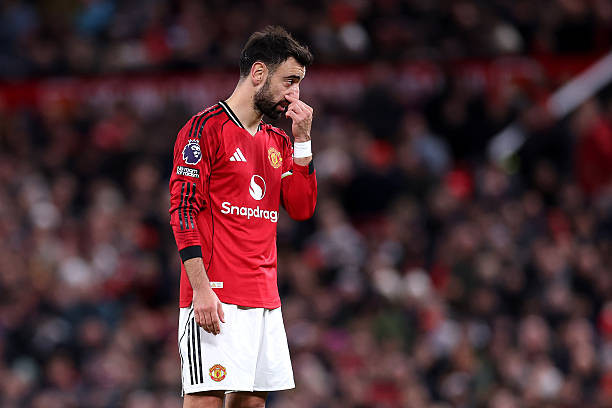
For a team that has just gone through a poor season in terms of results, a £100 million fee usually means the ability to "reorient" the personnel plan: replenishing the budget, reallocating resources to core positions, and reducing dependence on a single star during the transition period.
| Key indicator | Data by source |
|---|---|
| Al Hilal's proposal | 100 million pounds |
| The salary is stated. | Approaching £750,000 per week |
| Fernandes' contributions since 2020 | 103 goals, 93 assists |
| Manchester United's Premier League ranking | 15th |
Fernandes' value and the positional paradox
Fernandes remains a major source of goals and assists for Manchester United, as evidenced by the statistics.103 goals, 93 assists since 2020Recently, the free-kick in the draw.4-4The match against Bournemouth was another example of his quality in moments of pressure.
But Fernandes's role itself creates a tactical paradox that the team is facing: he is described as being underutilized.outside of one's area of expertiseHe plays in a deep midfield position alongside Casemiro. When Fernandes's attacking instincts become more frequent, gaps in the midfield are more likely to appear – and that makes the defensive structure more vulnerable.
From a purely tactical perspective, this is more of a "structural" issue than an "individual error": when the most creative player has to drop deep, the team loses an attacking threat in the final third and increases the risk of transitions. Meanwhile, the personnel problem in the central midfield is closely tied to transfer resources.
One scenario didn't happen: selling to rebuild.
Sources speculate that if Manchester United raise £100 million, they could look for young central midfielders such as...Carlos Baleba(Brighton)Adam Wharton(Crystal Palace) orHugo Anderson(Nottingham Forest). In that scenario,Matheus CunhaorMason MountIt can be used in the number 10 role to create a different balance for the team's formation.Ruben Amorim.
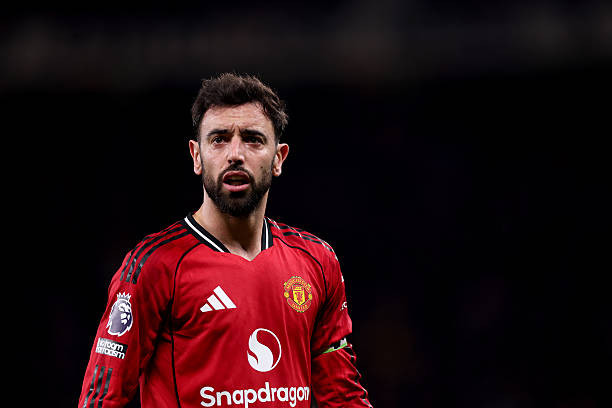
There's no guarantee every piece will fit. However, market logic is clear: selling a high-value star could open up opportunities for a more even redistribution of resources, reducing the risk of one person carrying the entire system.
The Coutinho lesson and the question of decisiveness.
The point of comparison mentioned is Liverpool: when Barcelona made an offer to buy them.Philippe Coutinhoat price146 million poundsThey sell and reinvest.Virgil van DijktogetherAlisson BeckerThis story is often seen as an example of transforming star power into the foundation for a new cycle of success.
At Manchester United, the situation is different. The CEOOmar Berradaand Director of FootballJason WilcoxFernandes was named in the context of the club failing to make a definitive decision. As a result, Fernandes stayed, but the question raised by those hurtful words remains: why would a team be willing to consider selling its most important player?
For Manchester United, the answer lies in the need for rebuilding. For Fernandes, it's a reminder that in top-level football, the emotions of a star player and the operational interests of the team sometimes don't align.


