
Man Utd avoid Big Six for 10 matches: opportunity to accelerate.
A run of 10 games without facing the Big Six allowed Ruben Amorim's Man Utd to accumulate points and test their 3-4-3/4-3-3 formation, despite the absence of Mbeumo, Diallo, and Mazraoui due to the 2025 Africa Cup of Nations.
Man Utd entered a 10-match run without facing any Big Six teams until their clash with Manchester City in mid-January. This period was considered the most favorable time of the season for Ruben Amorim to accelerate his points accumulation, but it also presented a personnel challenge as the club prepared to lose players due to the 2025 Africa Cup of Nations.
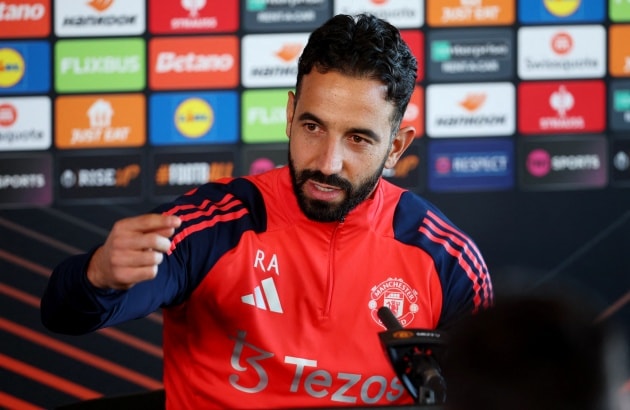
The form has stabilized, the acceleration door opens.
After a rocky start, United extended their unbeaten run to five matches with wins against Sunderland, champions Liverpool, and Brighton – an opponent that has often given them trouble recently. Two consecutive draws against Nottingham Forest and Tottenham were still enough to lift United to seventh place in the Premier League after 11 rounds, easing the pressure on Amorim.
10 "No Big Six" games: A crucial warm-up period.
For the first time this season, United will not face any Big Six teams in their next 10 matches, until they meet Manchester City in mid-January. This is valuable time for Amorim to solidify his squad, improve team cohesion, and accumulate points before the crucial period.
Upcoming competitors
- Everton
- Crystal Palace
- West Ham
- Wolves (two legs)
- Bournemouth
- Aston Villa
- Newcastle
- Leeds
- Burnley
These aren't the Big Six "mountains," but they all present challenges that demand discipline. Newcastle and West Ham have a frustrating style of play; Wolves and Bournemouth always know how to punish complacency. If United capitalize on these opportunities, they could make a leap up the table before the demanding fixture schedule returns.
Tactical test for Amorim
This period served as a benchmark for the flexible 3-4-3/4-3-3 system that Amorim developed, based on mid-range pressing and quick transitions. With a series of "manageable" opponents, United had the opportunity to refine their pressing mechanism, team spacing, and attacking triangles on the flanks – details that are often diminished when facing top teams.
The key lies in stability: by not constantly facing high-intensity pressing, United have more time to standardize the ball-receiving positions between the lines, thereby reducing errors in the initial build-up and increasing the speed of ball progression.
CAN 2025: A shortage of personnel, but an opportunity to measure depth.
United's biggest problem stems from the 2025 Africa Cup of Nations. From the end of December, the team will be without Bryan Mbeumo, Amad Diallo, and Noussair Mazraoui – players who could directly affect how Amorim rotates the squad during that busy period.
Amorim stated clearly: “In every training session, I see players who deserve to play. But because the team is stable, it’s difficult to make many changes. The upcoming period is when they will have the opportunity to prove their abilities.” This message emphasizes depth: the lack of players is a test, and also an opportunity for reserve players to step in.
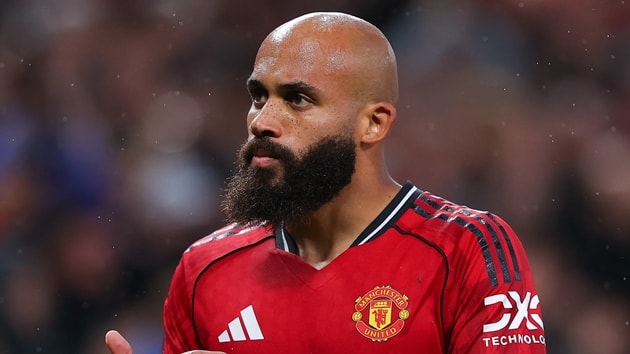
The pressure still exists.
Even without facing the Big Six, the pressure on United hasn't lessened. "Must-win" matches always demand strong risk control and consistent finishing. With a five-match unbeaten run and improvements in their game structure, United have reason to be optimistic, but it's these next 10 games – before facing Manchester City – that will truly reveal the limits Amorim needs to overcome.


