
Man Utd reveals their Achilles' heel: 14 goals conceded in the second half.
Opta notes that Man Utd conceded the most goals in the second half with 14, exposing their dependence on Casemiro; Amorim and Jason Wilcox need to buy midfielders in January.
According to Opta data, Manchester United are conceding the most goals in the second half in the Premier League, with 14 goals against. The pattern repeats itself as soon as Casemiro leaves the pitch: stability disappears, the midfield loosens, and the defense becomes vulnerable. In this context, the need to strengthen a defensive midfielder in the January transfer window becomes urgent.
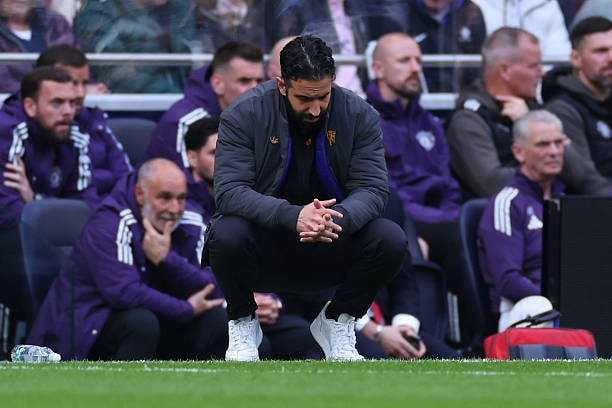
Statistics reveal weaknesses in the second half.
The fact that they conceded 14 goals in the final 45 minutes is no coincidence. It's linked to the moments Casemiro leaves the field – usually around the 60th minute – and the gaps he leaves in the midfield. When the defensive shield weakens, Man Utd lose control of the tempo and no longer have enough protection against the opponent's transitions.
Opta's statistics clearly show that Man Utd conceded the most second-half goals in the league. This is a quantitative indicator of their fragile defensive structure when Casemiro is absent.
Casemiro's role in Amorim's system
The impetus for Man Utd's resurgence stems from Casemiro's excellent form. In a system where the wing-backs provide support horizontally, the Brazilian midfielder is freed up to focus on intercepting, recovering the ball, and controlling the tempo. His presence brings the balance that Man Utd has long lacked.
In that context, Casemiro is not just a link in the chain; he is the tactical anchor. When he is on the field, the lines connect tightly, the team's formation is compressed well, and Man Utd can push the points of contact in tackles away from the penalty area.
When Casemiro leaves the field: the 60-minute mark and its consequences.
The problems emerged immediately after the substitutions. Manuel Ugarte was the direct replacement, but the decline in quality was evident. Defensive depth decreased, and the likelihood of opponents exploiting the space in front of the defense increased. In a system where the defensive anchor is the cornerstone, any imbalance in this position amplifies the risk.
This fact explains why most goals conceded come in the second half – a period where physical pressure increases and substitutions are made.
A demanding schedule and the risks of being 33.
Casemiro is 33 years old. With December ahead, Man Utd face two midweek matches – a frequency they haven't experienced since the start of the season. It's unrealistic to expect Casemiro to play in every game. Relying entirely on backup options like Manuel Ugarte or Kobbie Mainoo is a risky gamble given the statistics are against them.
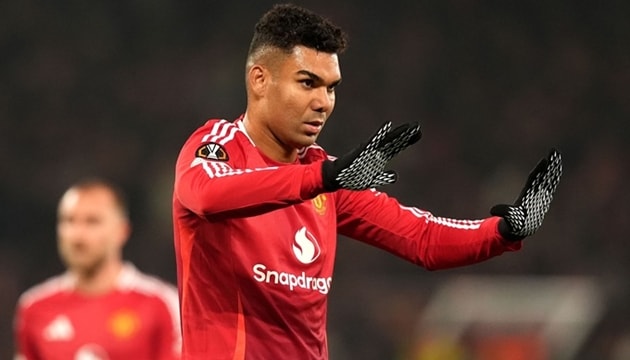
January: mandatory requirements in the market.
Adding a top-class defensive midfielder in the January transfer window is no longer an option, but a requirement. A quality anchor will help share the workload with Casemiro, maintain a stable structure throughout the 90 minutes, and limit the periods of poor performance after the 60th minute – a weakness that has been exposed statistically.
For a top-tier contender, every detail in fitness management and squad depth is crucial. Signing the right key players can be the difference between a sustained resurgence and a disjointed season due to last-minute lapses in concentration.
Jason Wilcox's role
Director of Football Jason Wilcox has been called upon to act immediately. The transfer priority is clear: a defensive midfielder capable of rotating with Casemiro, preserving the playing identity that manager Ruben Amorim has built, and addressing the second-half weakness before it continues to erode the team's achievements.


