
Mark Zuckerberg is spending $3 billion to prevent all diseases on the planet.
Humans didn't evolve to become more perfect; we evolved to adapt to our environment.
In late 2016, Mark Zuckerberg and his wife, Priscilla Chan, pledged to invest $3 billion in a grand goal: to cure, control, and prevent all diseases on the planet. At the same time, Microsoft also stated that it would contribute to this goal.handle"Let's conquer the dreaded disease of cancer by 2026."
It's not hard to see that once billionaires and their companies have made enough money, the next thing they want to do is leave behind long-term contributions. The most typical example is dedicating more time, effort, and money to investing in biomedical research.
Billionaires always want people to improve their health and have the ability to treat not only cancer, but all kinds of diseases. However, that's not a simple matter, not something that can be achieved just by saying it, even if you're a wealthy person, a billionaire.
Nature and evolution have their own rules. Defying these rules and creating perfect individuals might very well be the beginning of the process of extinction.
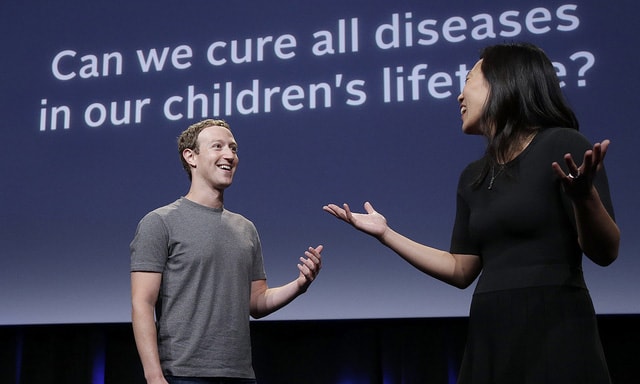 |
| Mark Zuckerberg and his wife, Priscilla Chan, have pledged to invest $3 billion to cure all diseases. |
Every individual and every disease plays a role in evolution.
There's a common misconception today that compares the human body to a machine. Illnesses are seen as its malfunctions, which can be repaired using gene-editing tools like CRISPR-Cas9, for example. But this comparison contradicts Darwin's theory of evolution. Machines and computers don't evolve, but a living organism like humans does.
Evolution is a crucial issue here because each gene, each trait in the problem of life and evolution, has complex linkages. For example, a gene that produces a function is often linked to another secondary function. That gene may improve the secondary function, or it may destroy it when the environment changes.
In all evolutionary processes, every component of the body has a guiding principle and a purpose. Even if something breaks or disappears, it might be for the better in the future.
Today, when it is said that all diseases can be cured, this argument still has flaws. Factors related to evolutionary time may have been overlooked by technologists who believe that more money and more research can solve and end disease.
For Darwin, the evolution of a species depends on natural selection. The discovery of DNA and subsequent advances in genetic technology have not affected this principle, that evolution revolves around natural selection in which each individual has a role to play. Therefore, influencing an individual also influences the process of evolution.
In 1966, evolutionary biologists Richard Lewontin and John Hubby further proposed a concept called “balanced selection"That is to say, rare versions of genes can exist within a population, since they were added and are present in a sea of genetic diversity."
In fact, a mutation, or a unique, rare form of a gene, can provide advantages to an individual, and therefore the mutation will persist in some species at low frequency.
Theoretical biologist Stuart Kauffman also argues that rare genetic variations are the basis of innovation, and may still exist in the genetic pipeline. This existence is not random, but represents a benefit to the system, at least to a small number of organisms in the population.
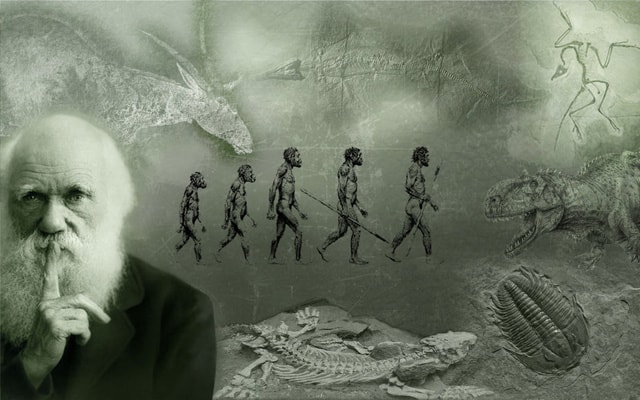 |
| For Darwin, the evolution of a species depends on natural selection. |
Creating an entire generation of perfect humans would be the beginning of destruction.
However, modern science has produced data-driven researchers who simply believe that more research, more analysis, and more data will solve the problem. In 1989, molecular biologist James Watson said:We used to think our destiny lay in the stars, but now we know it lies in our genes."
You might agree, but look, more than two decades after the human genome was decoded, we haven't found many new drugs or solutions. This forces us to reconsider whether we should return to the fundamental biological principles of evolution and time.
Instead of thinking of humanity as a closed system, we can do better by viewing it through the open lens of the ecosystem, where the system itself is affected by what is considered its input.
Throughout a lifetime, our bodies are constantly under attack from genetic mutations. Even at this very moment, hundreds of trillions of neural connections are present in our brains. Pathogens continuously bombard the body, penetrating organs and the blood-brain barrier, creating a microbiome that is always changing and evolving, enhancing or eroding each individual's health.
In the process of evolution, nothing is free. Just as stress can stimulate creativity but also cause chronic diseases, a genetic variant that causes cystic fibrosis may also help us fight cholera.
A variant in the PCSK9 gene can lower levels of bad LDL cholesterol, but it can also increase the risk of ischemic stroke. Gene transfer could effectively treat diseases caused by a single gene. But we've already discussed how one gene can be linked to many other problems. The gene disappears, but its associated problems don't go away.
 |
| Curing all diseases could stifle evolution and lead to extinction. |
Finally, consider a disturbing point Darwin once made: We humans haven't evolved into a more perfect being. Instead, we've adapted to our environment.
If humans were merely machines, we could repair them when parts broke. But when considered holistically, illness or malfunction can be a crisis for both life and the ecosystem.
Therefore, risk factors and life-threatening conditions like disease will always exist within us. Humanity now has to gamble: If genetic variation is the basis of evolution and biodiversity, creating overly perfect humans could be a marker of future extinction.
According to GenK


