Is honey that has been stored for a long time toxic?
Here's a story about someone who used aged honey to treat an illness, curing one ailment but nearly contracting another.
Hearing that my childhood friend, a retired teacher now nearly 80 years old, had been suffering from a persistent cough for over two months, with no cure despite numerous treatments, and that an 85-year-old traditional medicine practitioner had given him a family-inherited cough medicine and that he recovered after only 10 days, I went to visit him and find out what had happened. Hearing his clear, strong voice, no one could believe he was a long-term cough patient who had only recovered half a month ago.
Coughs go away with medicine containing honey.
He recounted: “After Tet (Lunar New Year), I developed a cough, especially at night. I used up 15 bottles of 100ml cough syrup, but it didn't help. I went to the hospital, and the doctor diagnosed bronchitis, admitted me for treatment, and gave me antibiotics for 15 days, but the cough persisted. Back home, I called a doctor for treatment and continued taking the medicine for another 15 days, but it only helped for two days before the cough returned, making my throat feel like it was going to burst. Coincidentally, an old student came to visit and told me that his father was a skilled practitioner of traditional medicine and very good at treating coughs. He promised to bring his father to see the doctor.”
“Two days later, the student brought his father to visit me. The old man told me about his family's long-standing tradition of practicing traditional medicine. Last year, both he and his wife suffered from coughs. He used honey, which had been distributed since the subsidy era and stored for 23 years, combined with 10 other ingredients such as Fritillaria cirrhosa, Stemona tuberosa, Ophiopogon japonicus, Platycodon grandiflorus, Loquat leaf... and especially dried tangerine peel (dried tangerine peel from their own garden and stored for 4 years), which his daughter-in-law, a pharmacist, extracted with 70% alcohol and then re-extracted with water to make this medicine.”
Since it's medicine for home use, it doesn't contain preservatives; it's simply bottled and stored in the refrigerator. I'm giving you one bottle (1000 ml) as a gift. Take the medicine three times a day: 7 AM, 2 PM, and 10 PM; 30 ml each time. You'll see improvement in just 5 days, and a full recovery in 10 days. There are no dietary restrictions; eating oranges, tangerines, or grapefruit twice a day would be beneficial.
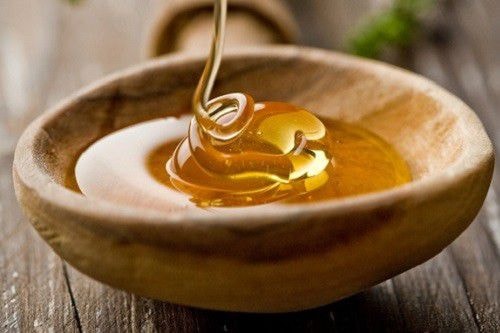 |
| Honey that has been stored for a long time can become toxic and harmful to health. |
"I used the old man's medicine until the 4th day when my cough subsided, by the 6th day it was just a slight cough, and by the 10th day it was completely gone and has remained so until now. I forgot to put the remaining medicine in the bottle in the refrigerator, so a few days later I noticed foam and a sour smell, so I threw it away."
Continuing his story, I said, "Listening to your story, I was particularly struck by the mention of 'honey distributed since the subsidy period,' which had been in use for 23 years by the time it was used in medicine. In the past, people believed that the longer honey was stored, the better it was, because archaeologists have found honey in Egyptian pyramids thousands of years old that was still beautifully golden and fragrant."
Since we started exporting honey to Europe and the United States, according to the standards of the importing countries, the HMF content is regulated at 10-15 mg/kg. Vietnamese exporters have only recently learned that honey contains Hydroxy Methyl Furfural (HMF), a toxic substance. This substance is produced by the dehydration of fructose when honey is stored at temperatures above 30°C, and the rate of HMF production increases at temperatures above 60°C (newly harvested honey has HMF = 1-5 mg/kg; after 100-200 days of storage at 30-35°C, HMF increases to 200-300 mg/kg. If honey is stored at temperatures below 20°C immediately after harvesting, HMF does not increase further).
"Tests on laboratory animals have shown that at a concentration of 200 mg/kg, HMF kills bees, causes genetic mutations in mice, and increases the rate of cancer. It hasn't been tested on humans yet. Furthermore, in Vietnam, even the national standard, the Vietnamese Pharmacopoeia VI 2009, doesn't include HMF as a standard, so it's understandable that traditional medicine practitioners are unaware of it."
"If we calculate the amount of HMF in the honey that my grandfather stored for 23 years (with the hot and humid weather of Hanoi, averaging 80 days above 30 degrees Celsius per year = 1,840 days), it would be 2,760-3,680 mg/kg."
"There were three people who used the honey-containing medicine mentioned above; he was the last to use it, and so far, he hasn't shown any adverse health effects. Therefore, let's check his liver and kidney function tests to see for ourselves."
But I nearly suffered kidney failure.
He said, "Since being discharged from the hospital, the doctor has given me one blood test, and I still have the complete record of the results. Coincidentally, this test was done 10 days after I started taking my grandmother's cough medicine. We will compare the results to see how HMF affects the liver and kidneys."
Our examination results are as follows: According to the discharge medical record dated March 15, 2013: liver (GOT=25, GPT=16); kidney (creatinine=107.2 umol/l) normal. Blood test results dated May 16, 2013: liver (GOT=30, GPT=26) normal; kidney (creatinine: 120.6 umol/l) slightly higher than normal.
I commented: it seems that medicine containing honey that has been stored for a long time is affecting the kidneys. He stopped taking the medicine 16 days ago, so he should have a blood test now to see if there are any lingering effects on his liver and kidneys.
He agreed and we went together to get blood tests at the Retired Doctors' General Clinic at the end of the street. After just over an hour, we knew the results: liver (GOT=25, GPT=17) normal; kidneys (creatinine 136.4 umol/l); the doctor concluded: stage 1 kidney failure.
Upon seeing the results, he turned pale, fell silent for a few minutes, and when he calmed down, he asked me, "What should we do to save him now? My cousin also suffered from kidney failure 10 years ago, and spent a lot of money on dialysis, but he still died in the end."
I said, "Doctor, please be strict. Kidney failure has 3 stages: 1, 2, and 3. Stage 1 kidney failure has a creatinine clearance of 150-300 umol/l. The treatment now is: increase detoxification by drinking 2-2.5 liters of water per day; avoid kidney-damaging drugs such as Tetracycline, Ibuprofen, Indomethacin, Metformin, Clofibrate... and use traditional Chinese medicine to strengthen the kidneys until the creatinine level reaches an average level."
It would be best for him to see a traditional medicine practitioner to have his pulse checked to determine whether a tonic for kidney yin or kidney yang would be more suitable for his constitution.
When practicing Qigong, please note: reduce daily walking time to 15 minutes, walk slowly, and avoid straining. Maintain exercises to improve energy levels after waking up in the morning, and avoid the handstand exercise.
Relieved by the words, he breathed a sigh of relief and said, "Tomorrow morning I'll go to the experienced traditional medicine practitioner at the end of the street to have him check my pulse and buy some kidney-tonifying pills to take."
Two months later, he came to my house to visit and brought his blood test results for me to see (creatinine had returned to 106.5 umol/l).
I'm glad he survived the ordeal and I'm writing this to inform readers: don't use honey that has been stored for many years, as it will produce toxins that are harmful to the kidneys.
According to Health and Life
| RELATED NEWS |
|---|