Economy

With honey prices plummeting for an extended period, migrating beekeepers in Nghe An province are struggling to survive.

Huy Thu August 5, 2025 06:15

For nearly three years now, honey prices have plummeted, with each kilogram of honey only worth half the price of a kilogram of sugarcane sugar. Beekeepers have migrated, and beekeeping operations in Nghe An province are struggling.
bna_1..jpg
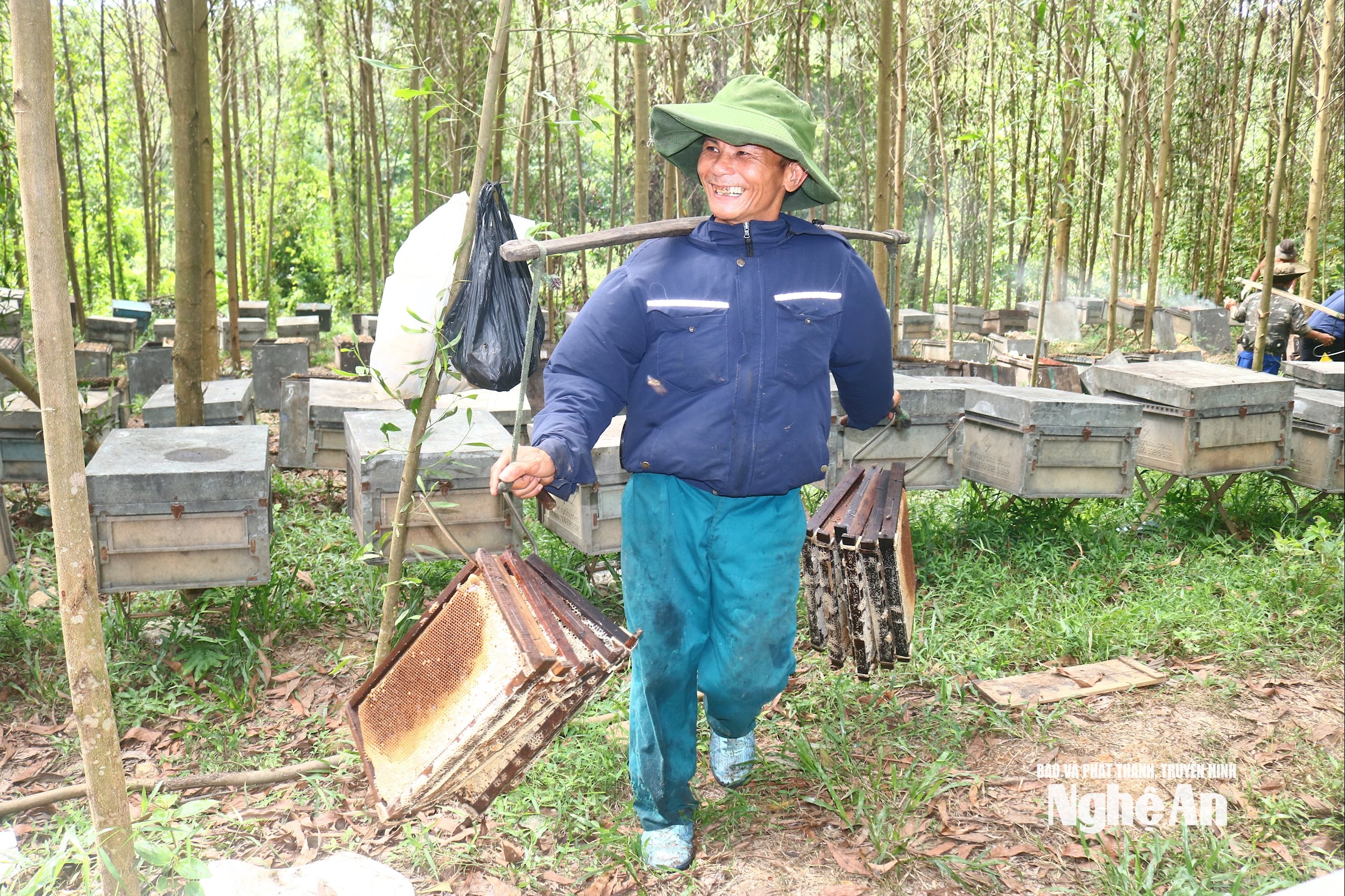
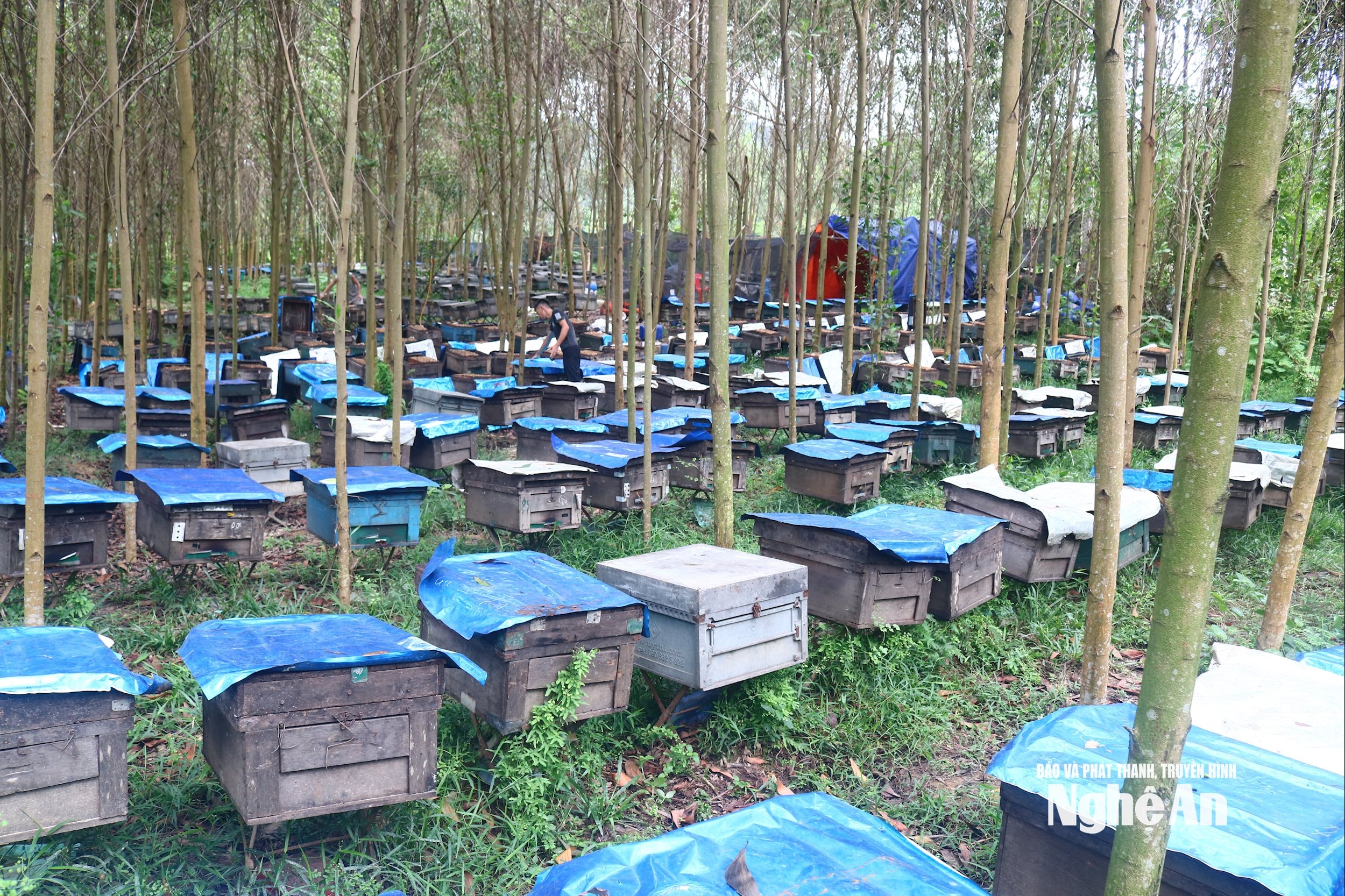
With natural conditions suitable for beekeeping, Nghe An province currently has thousands of migratory bee farms exploiting acacia honey, mainly concentrated in mountainous communes. On average, each farm has about 300-700 bee colonies. Photo: Huy Thu
bna_2.jpg
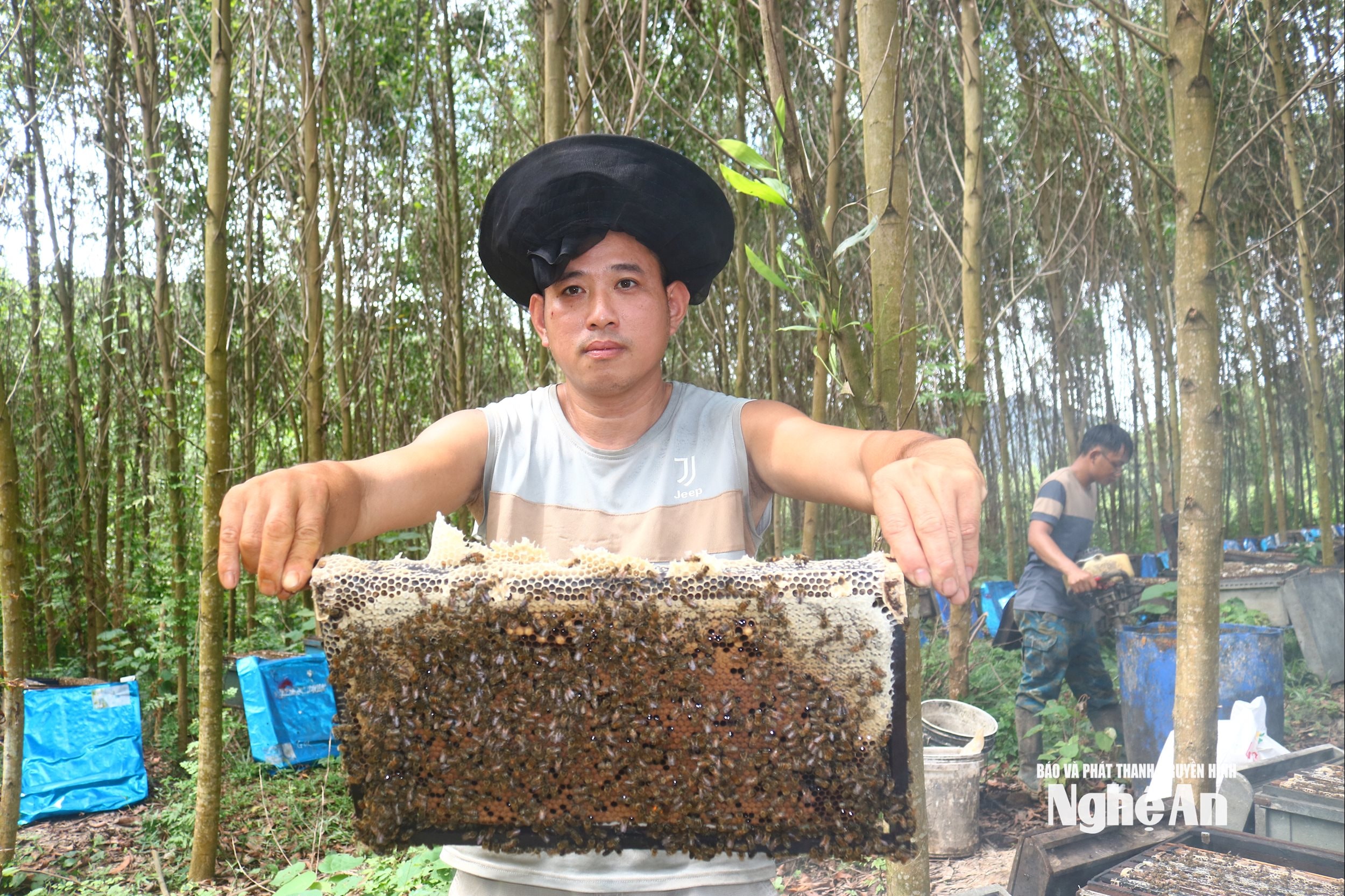
According to beekeepers, the bee breed currently being raised in bee farms is the Italian bee, which has the advantages of easily adapting to environmental changes, thriving, having good disease resistance, producing 2-3 times more honey than native bees, and ensuring the quality of the honey. Photo: Huy Thu
bna_3.jpg
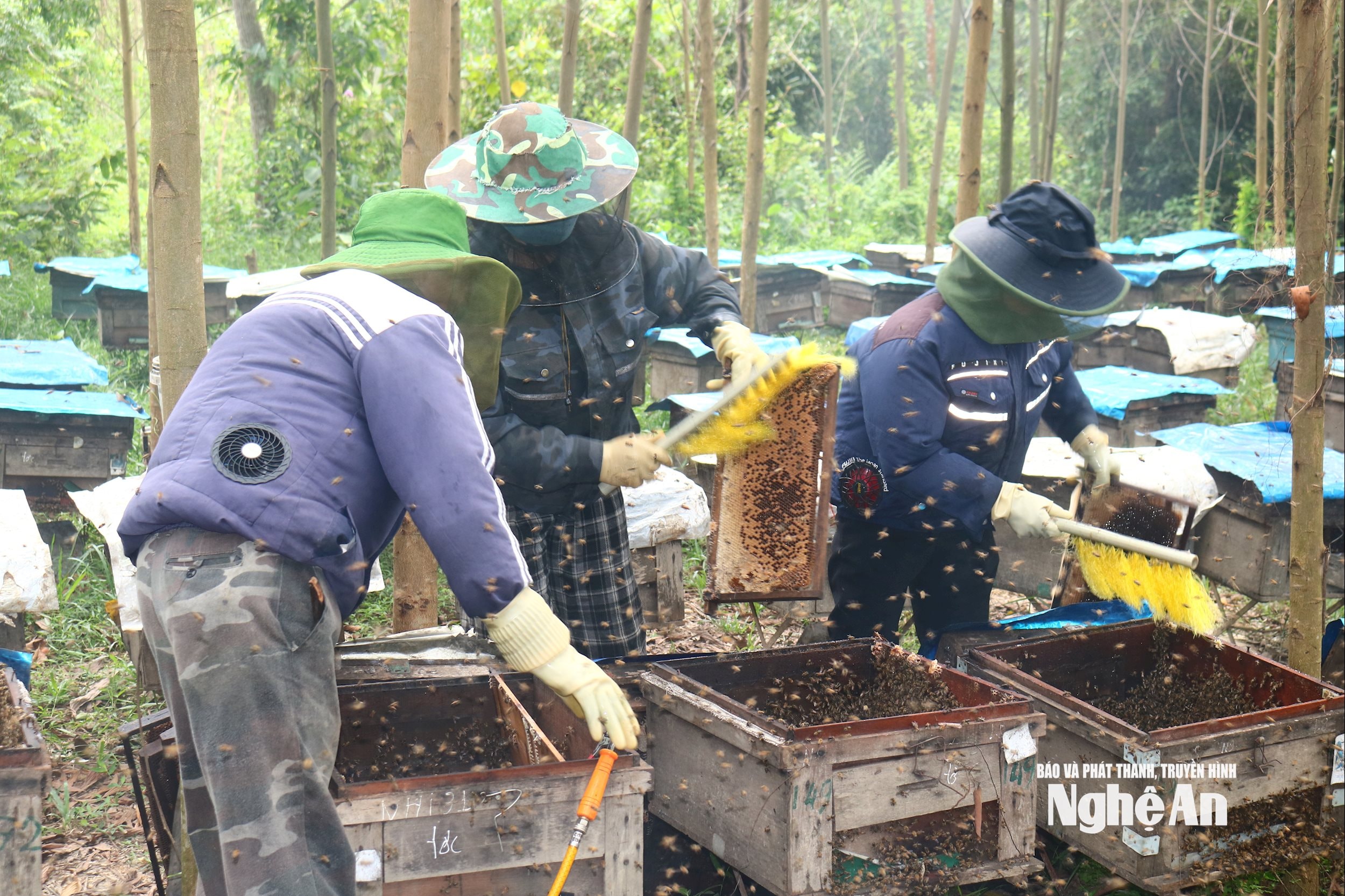
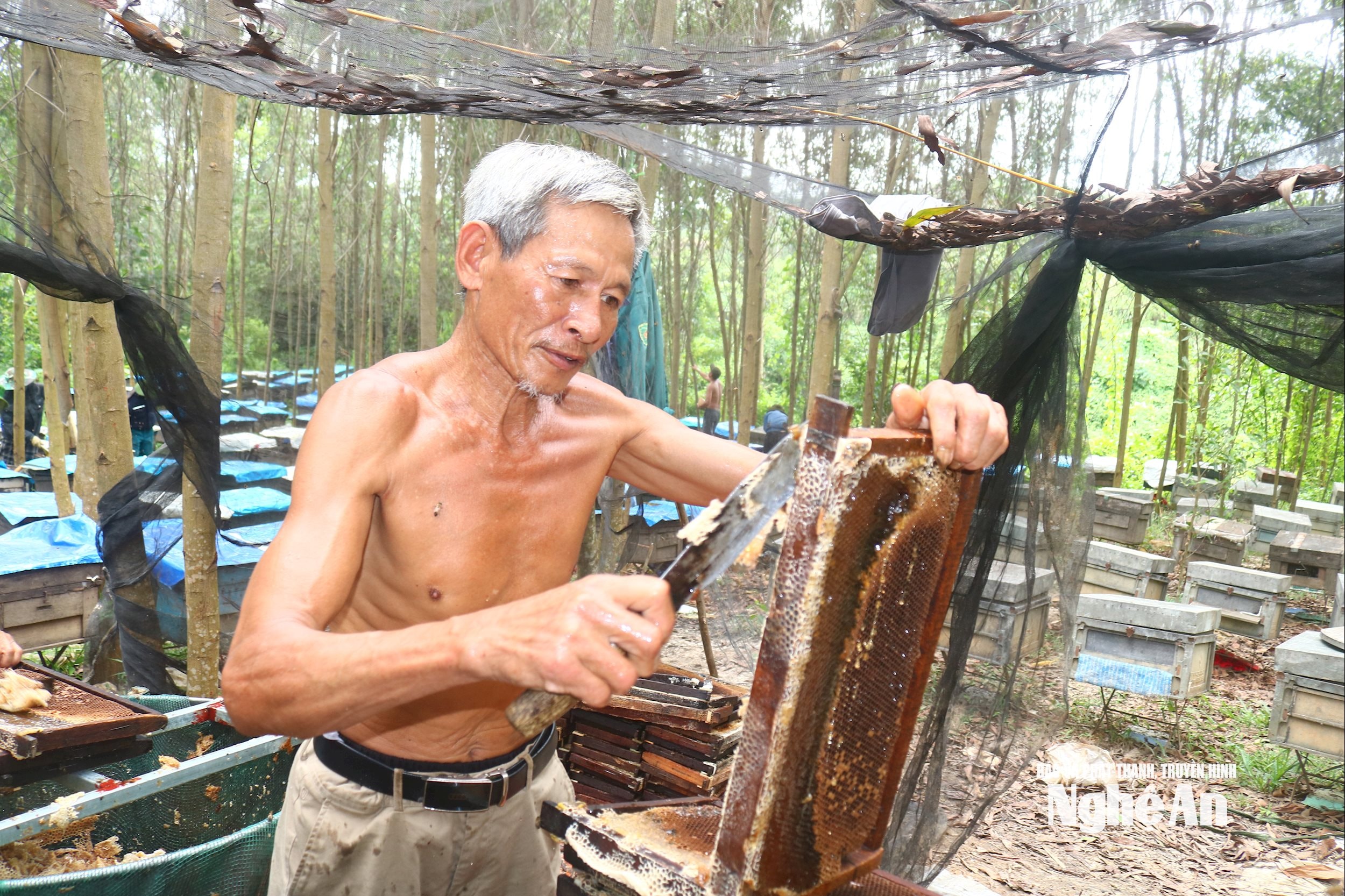
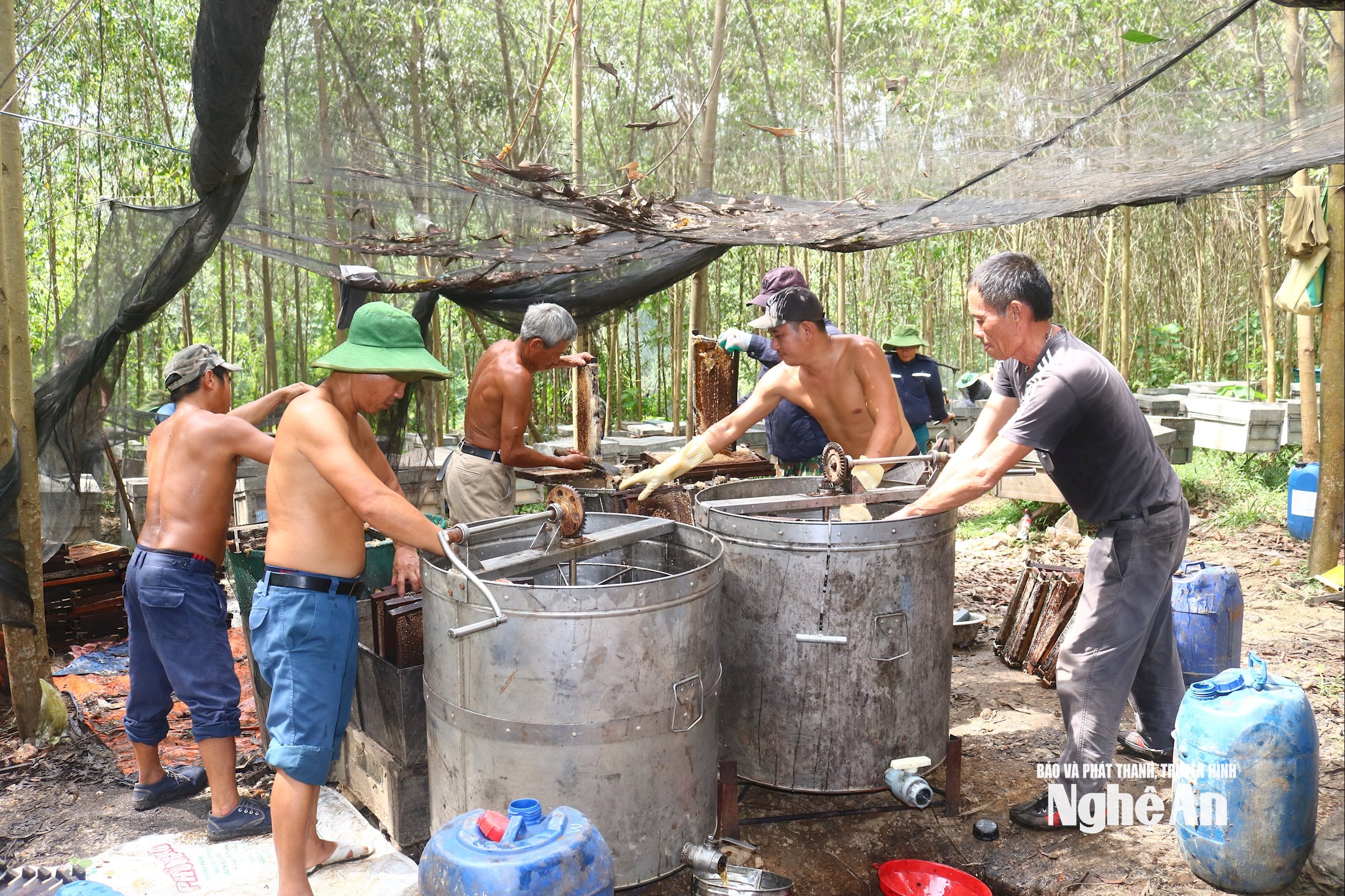
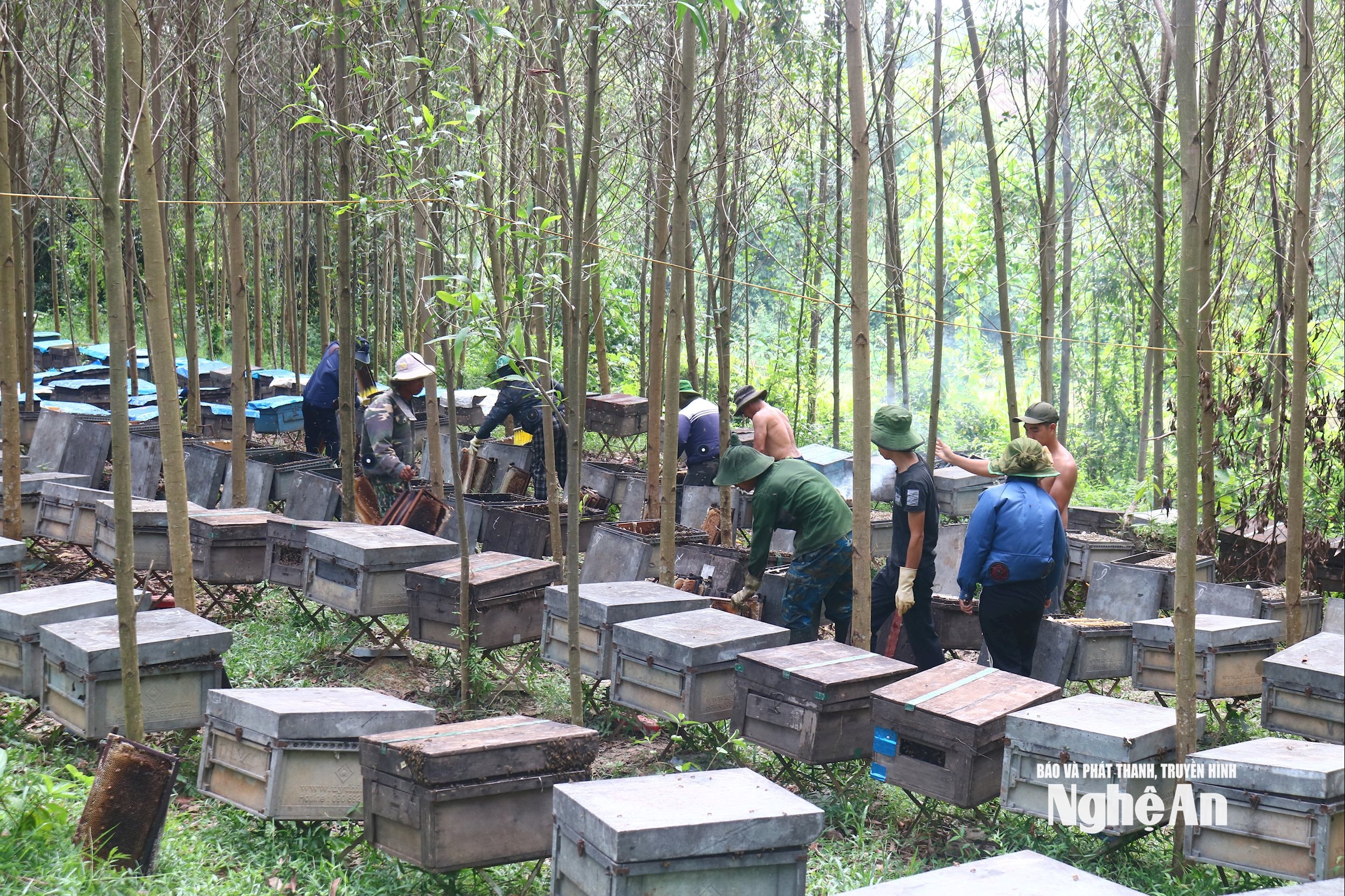
During the peak season, on average, farms extract honey once every 7-10 days. Each time they extract honey, the farm owner has to hire 5-10 workers to remove the honeycombs, carry them, cut the wax, extract the honey, stack the barrels, and transport the honey... Photo: Huy Thu
bna_4.jpg
According to beekeepers, good beehives with many frames and a large colony yield around 100 kg of honey per harvest. Mr. Dinh Van Thao, originally from Phu Tho province and currently raising bees in Kim Bang commune (formerly Thanh Thuy commune, Thanh Chuong district), shared: "This year's heavy rains are unfavorable for beekeepers to migrate. The rain affects the quality and quantity of honey, as well as the harvesting time." (Photo: Huy Thu)
bna_5.jpg
The honey season usually lasts from March to September, with the early months yielding better quality honey at higher prices. Pham Van Be (42 years old), a beekeeper in Thanh Binh Tho commune (formerly Thanh Son commune, Anh Son district), shared: "The honey at the end of the season is usually darker; the darker the color, the cheaper the price. This year, I sometimes had to sell honey for as low as 6,500 VND/kg. With 350 bee colonies, my bee farm currently has hundreds of jars of honey that haven't been sold yet." (Photo: Huy Thu)
bna_6...jpg
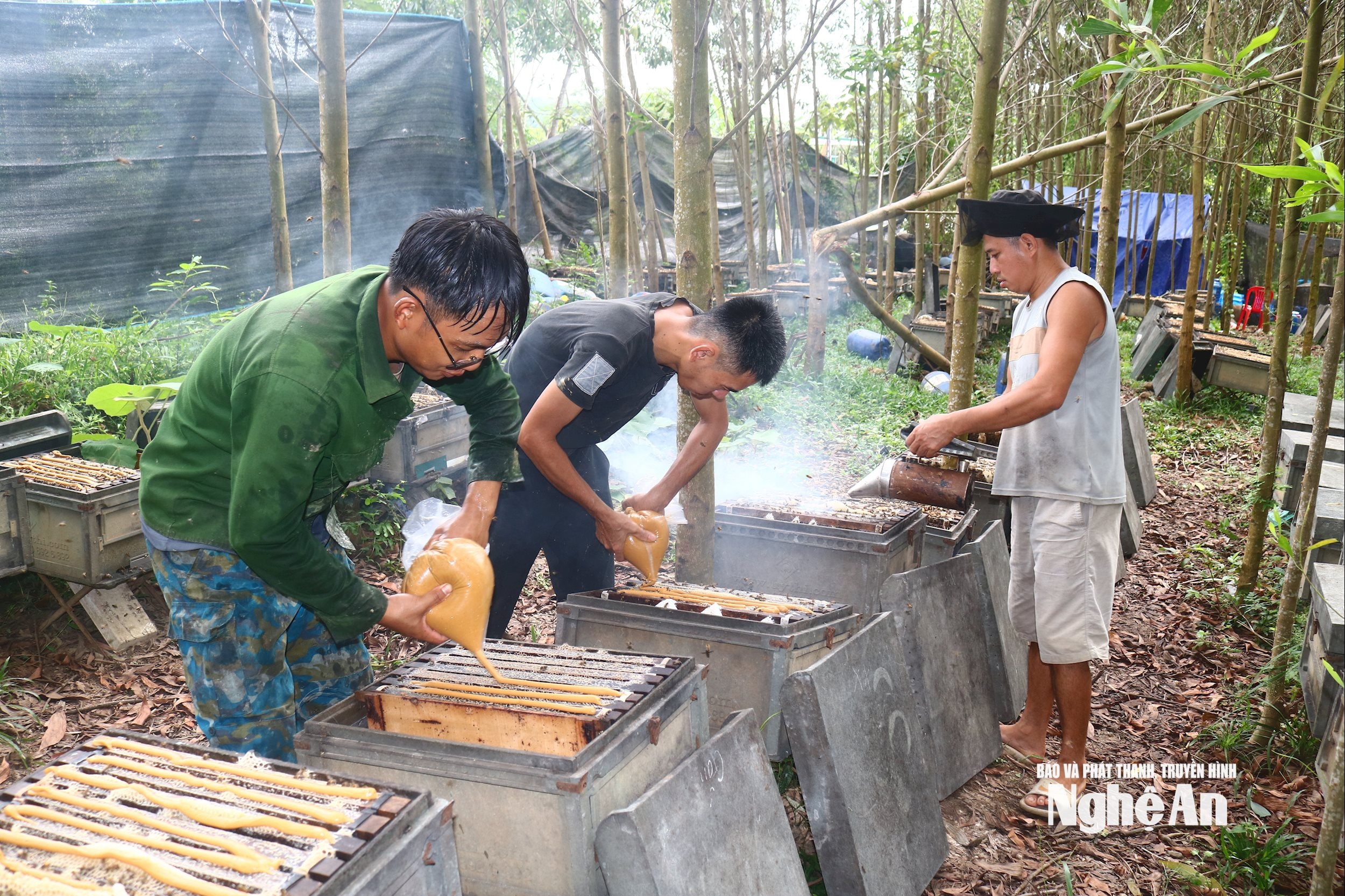
The honey harvesting season provides employment for many local laborers who are unemployed, from young people and women to the elderly. They often form groups to provide services to bee farms in the province. The wage for honey harvesting is approximately 250,000 - 280,000 VND per session per person. Photo: Huy Thu
bna_7.jpg
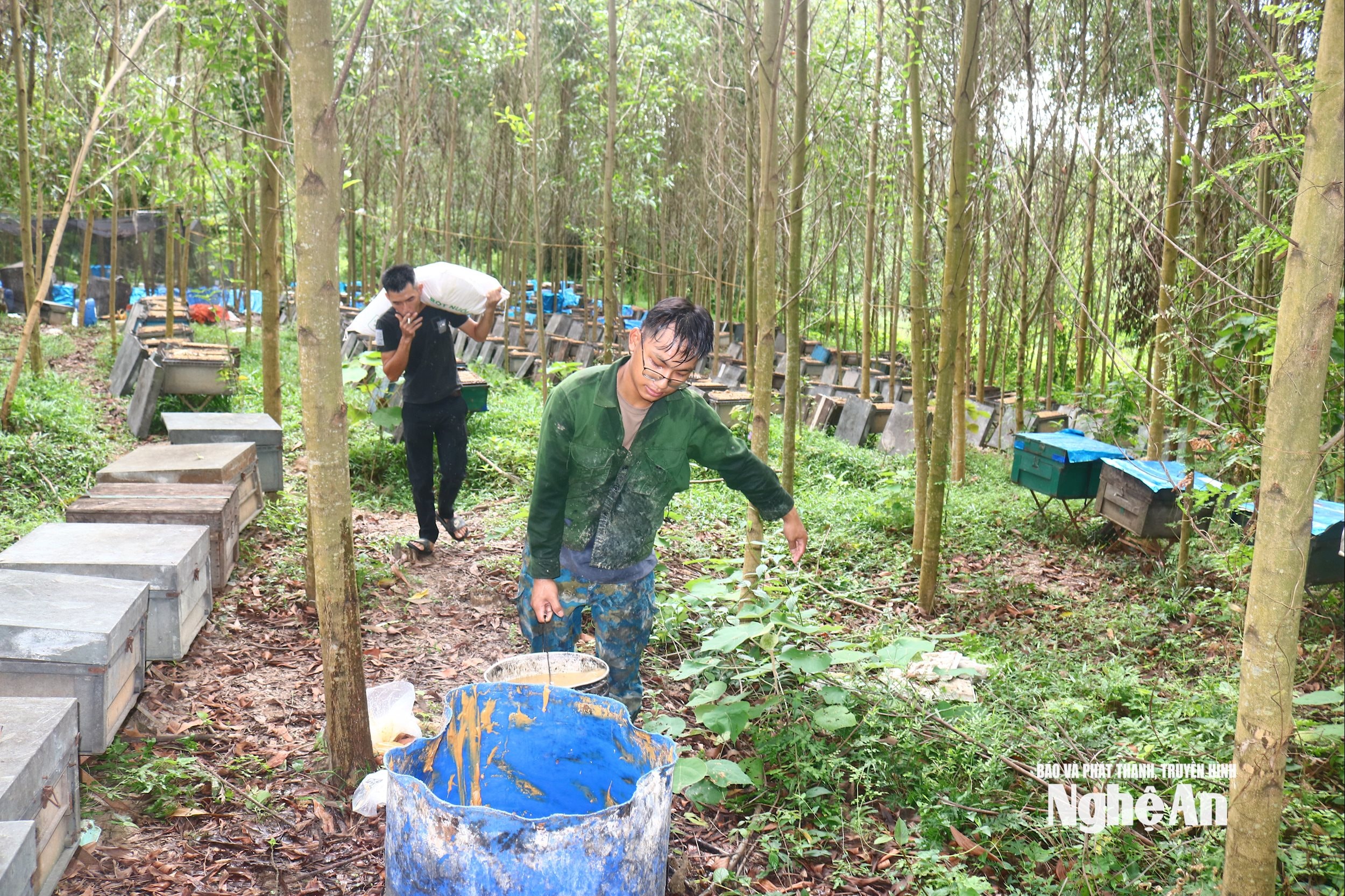
Mr. Dinh Van Liem (35 years old), originally from Phu Tho province, who is raising bees in Kim Bang commune, shared: To reduce production costs, in difficult conditions, besides hiring workers, beekeepers often support each other in tasks such as caring for and cleaning beehives, raising bees, and extracting honey... Photo: Huy Thu
bna_8.jpg
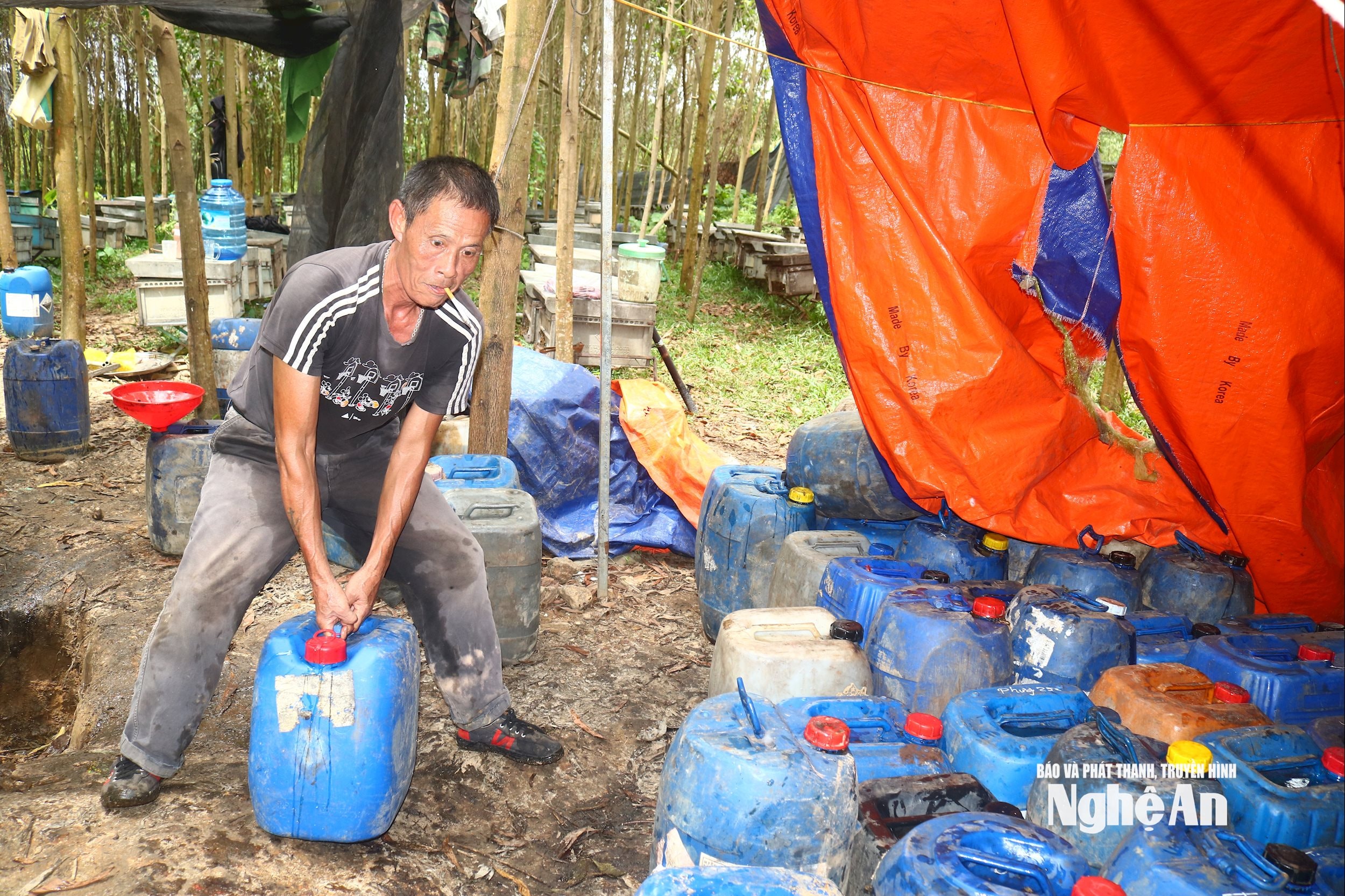
For nearly three years, the purchase price of Italian honey in Nghe An province has fluctuated between 7,000 and 9,000 VND/kg. This means that selling 1 kg of honey only buys enough to buy one loaf of bread. The plummeting price has caused many beekeeping farms to struggle, barely survive, or abandon the profession. To overcome these difficulties, besides consolidating colonies and reducing the scale of farming, beekeeping farms have had to find ways to sell their honey. Previously, most farms only sold wholesale to purchasing companies; now, some farms have shifted to entering the retail market, stockpiling honey, and extending its shelf life. (Photo: Huy Thu)
bna_11.jpg
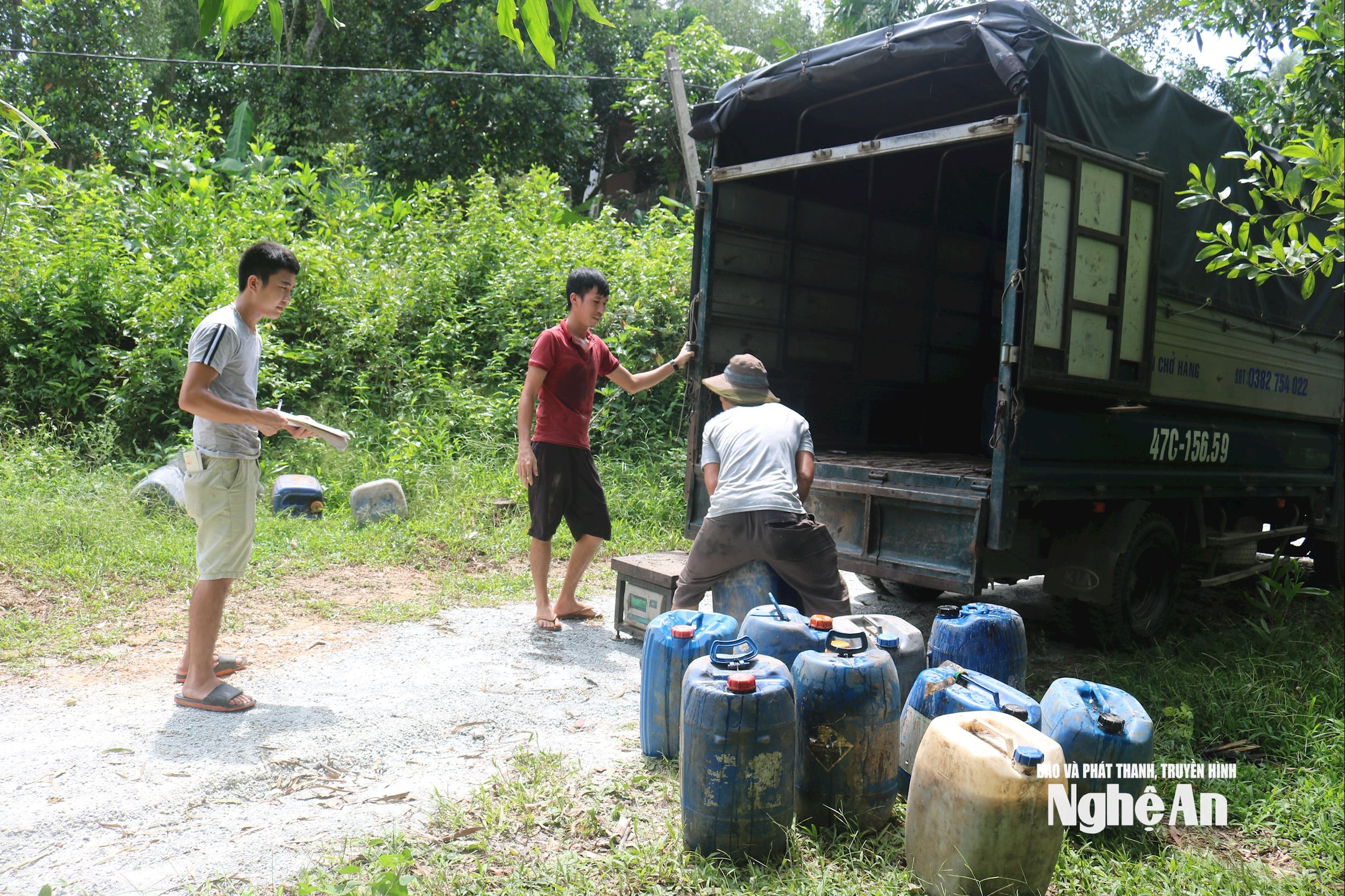
Mr. Le Van Luan, from Hoa Quan commune, who buys honey to supply a honey company in Dak Lak, said: "I came to Nghe An to buy honey for the company, but since the beginning of the season, the company has only allowed me to import two trucks, about 50 tons. Depending on the quality of the honey, the purchase price ranges from 6,000 to 8,000 VND/kg. Now that honey is cheap, I can't buy more because I don't know where else to import it from." (Photo: Huy Thu)
bna_10..jpg
It is known that the consumption of imported honey largely depends on the export market. In recent years, honey has been difficult to export, with stagnant procurement, resulting in low prices and difficulty selling. Mr. Tran Van Tien (30 years old), from Hoa Quan commune, who is raising bees in Kim Bang commune, said: He currently raises 700 bee colonies. In the recent honey harvest, his bee farm harvested 100 cans, about 4.5 tons of honey. Previously, he would sell the honey immediately to the company after harvesting, but now he has to bring it home for storage, both for retail sale and to feed the bees. Photo: Huy Thu
bna_9.jpg
According to Mr. Tien, currently, 1 kg of honey costs less than half the price of 1 kg of sugarcane sugar, so bee farms all use honey to feed their bees. To maintain a bee farm with hundreds of colonies, beekeepers have to spend a lot of money on bee care, transportation, migration, hiring workers to extract honey, etc. The low price of honey means beekeeping is unprofitable, or even unprofitable, forcing many to sell their bees. During the recent floods, some beekeepers in the province lost everything because their bees died due to flooding and their hives were swept away before they could be moved. (Photo: Huy Thu)

"

The prolonged drop in honey prices has caused many beekeeping farms in Nghe An province to struggle. With low selling prices and high costs, beekeepers are losing money the longer they keep their bees. In these difficult conditions, farms are having to find ways to survive by adjusting their scale of production, focusing on the domestic market, and experimenting with other sales channels (such as social media and livestreaming) to maintain and expand their honey product reach.

Ms. Dinh Thi Hai - President of the Nghe An Beekeeping Association

Honey harvesting in Kim Bang commune. Video: Huy Thu

Featured in Nghe An Newspaper

Latest

x
With honey prices plummeting for an extended period, migrating beekeepers in Nghe An province are struggling to survive.
Google News
POWERED BYFREECMS- A PRODUCT OFNEKO