
K-100 3D Printer: Analysis of Printing Technology for Professional Applications
The K-100 is marketed as a high-end 3D printer, utilizing technology different from mainstream models, aimed at producing components requiring superior quality and precision.
A completely different playing field in the 3D printing industry.
The K-100 3D printer is positioned as a groundbreaking solution targeting professional users and demanding industrial applications. Unlike conventional 3D printers that use filament or liquid resin, the K-100 is said to operate on a completely different technological platform, promising superior product quality.
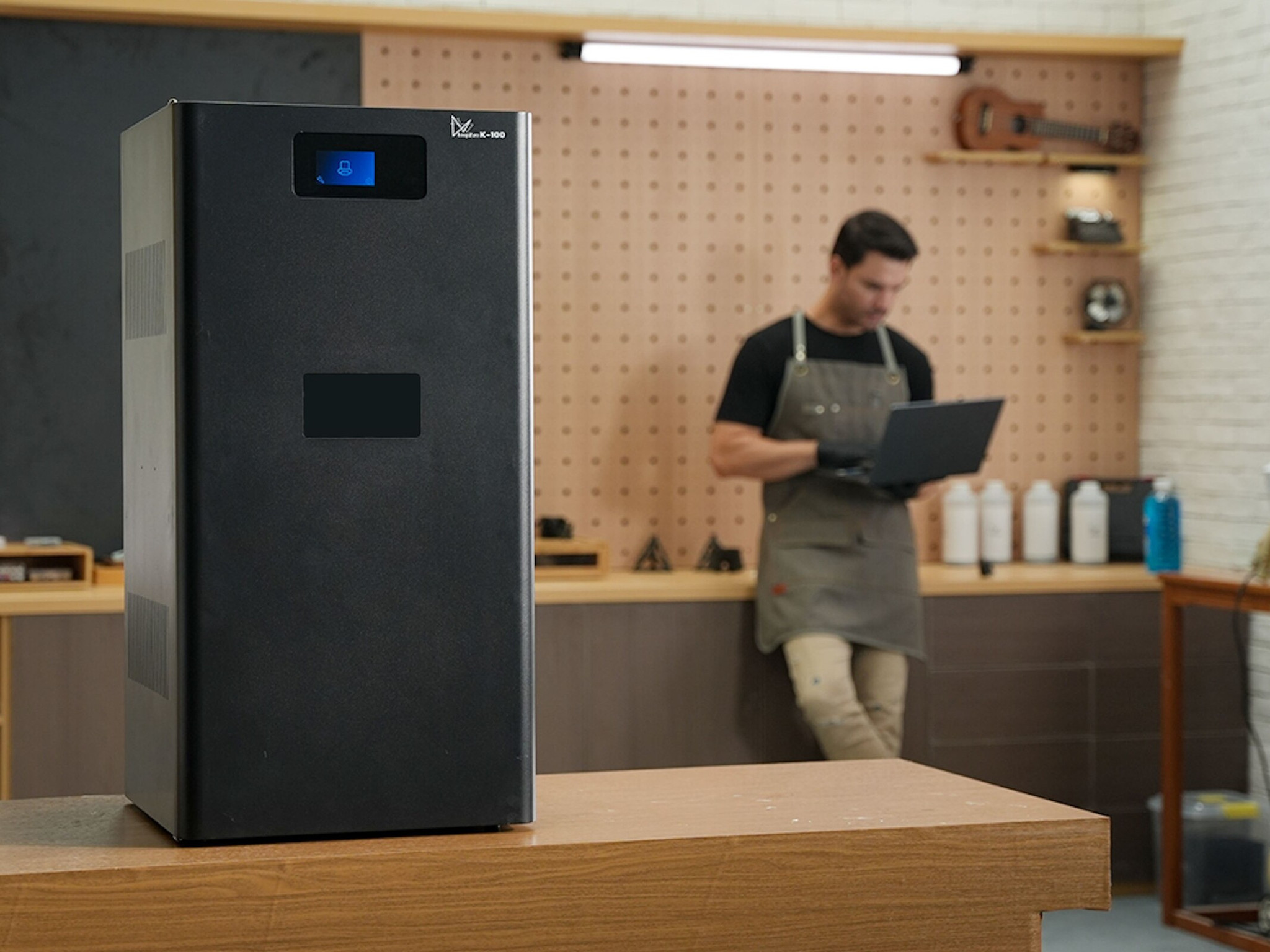
Overcoming the limitations of traditional technology
The 3D printers commonly available on the market today are primarily based on two main technologies: Fused Deposition Modeling (FDM), which uses plastic filament, and Stereolithography (SLA), which uses photosensitive liquid resin. Despite their significant advancements and reasonable cost, these technologies still face limitations in material strength, surface detail, and printing speed when producing complex parts.
The fact that the K-100 is described as "on a whole different level" suggests that the device may utilize more advanced technologies such as Selective Laser Sintering (SLS), Direct Metal Laser Sintering (DMLS), or another proprietary technology. These methods allow for the creation of objects with high mechanical strength, fine detail, and the use of a wide range of engineering materials, from high-performance polymers to metals.
Potential applications in manufacturing and engineering.
With its ability to produce high-quality components, the K-100 opens up many potential applications in specialized fields. Engineers can use the machine to create highly accurate functional prototypes, and manufacturers can print jigs, molds, or even final components in small quantities.
In industries such as aerospace, healthcare, or automotive, where components require extremely tight reliability and tolerances, a 3D printer like the K-100 can become a versatile and efficient manufacturing tool, significantly shortening the time from design to finished product. Information about the significant price reduction could be a strategy to penetrate this highly competitive market, attracting the attention of businesses and professionals seeking a more robust 3D printing solution.


