
Simple tips for choosing sweet, firm chestnuts that aren't tough.
Choosing delicious chestnuts isn't just about size; you should also pay attention to the color of the shell, the fuzzy layer, and the firmness to avoid buying spoiled, tough, or pale-colored nuts.
Chestnuts are a popular food due to their naturally sweet and nutty flavor, along with their high nutritional content, including fiber, antioxidants, iron, and B and C vitamins. However, because of their thick, hard brown shells, choosing good quality chestnuts that are not tough or spoiled is often difficult for consumers.
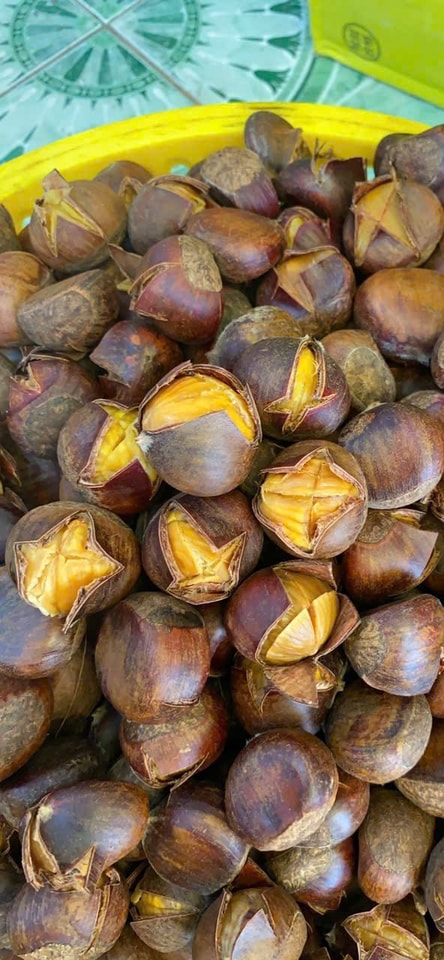
To select the best quality chestnuts for roasting, stewing, or baking, you can apply the following five observation rules:
1. Prioritize seeds with one rounded, curved surface.
Chestnuts typically come in two main shapes: one flat and one round, or both flat. Practical experience suggests prioritizing chestnuts with a distinctly curved, round side. These chestnuts, located on the outer edge and exposed to more sunlight, tend to be sweeter and richer in flavor than those in the center.
2. Observe the color of the seed coat.
Color is an indicator of chestnut ripeness. You should choose chestnuts with dark brown, smooth shells. These are mature, fully ripe chestnuts that will have a rich, sweet flavor and aroma when cooked. Conversely, chestnuts with a reddish-brown color are usually unripe and tend to be bland and tough after cooking.
3. Check the fine hairs at the tip of the seed.
The small, fuzzy hairs at the tip of a chestnut are an indicator of its ripeness. Chestnuts with too many hairs are usually freshly picked or not yet mature enough. Meanwhile, mature chestnuts usually have fewer hairs and are softer and richer in flavor when eaten.
4. Check for firmness by hand.
When buying chestnuts, try squeezing them with your hand. Good chestnuts should feel firm, with a hard shell that doesn't easily deform. If the shell feels soft or the kernel and shell seem to separate, it indicates the chestnuts have been stored for a long time, the kernel inside has shrunk, and they are prone to spoilage or crumbling.
5. Carefully observe the surface of the casing.
A good quality chestnut should have a smooth shell, free from tiny holes or signs of insect damage. Chestnuts with holes not only spoil quickly but are also unhygienic. Additionally, avoid chestnuts with unusual discoloration or signs of mold at the corners to ensure food safety.
Applying these tips will help you confidently choose delicious chestnuts without being overly dependent on their size.


