
Fuel-saving tips for cars
Avoiding sudden acceleration and braking, regular inspection and maintenance, and limiting the use of air conditioning are some basic tips for saving fuel.
Driving fuel-efficiently not only benefits you economically but also protects your vehicle. Below are some tips to help drivers improve their driving skills for optimal fuel economy.
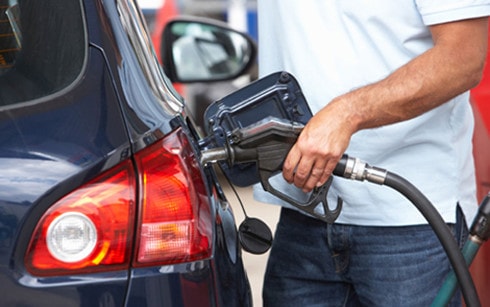 |
| Driving fuel-efficiently not only benefits you economically but also helps protect your vehicle. |
Just the right speed
Driving at around 90 km/h instead of 105 km/h will save fuel. The U.S. Environmental Protection Agency (EPA) estimates that using this tip will improve fuel efficiency by 10-15%. Use cruise control whenever possible on the highway to maintain speed and conserve fuel.
Press the accelerator and brake gently.
Many people still have the habit of pressing the accelerator hard to suddenly increase the car's speed, and then maintaining a high speed before suddenly braking before parking. While this may give the driver a thrill, it's also the culprit that "drains" a small amount of money from your wallet when added up.
Therefore, try to accelerate gradually when starting off, and before stopping, maintain a safe distance between vehicles and assess traffic conditions to be able to accelerate and brake smoothly.
No need to start the engine and wait.
Modern engines with advanced technology no longer need to be idled before starting. Prolonged idling increases emissions and wastes fuel. Turn off your engine if you stop for more than 30 seconds.
Turn off the engine when not in use.
When the vehicle stops or is temporarily inactive, the engine should be turned off to reduce unnecessary fuel consumption. Avoid warming up the engine for too long (e.g., 30-45 seconds) and avoid letting the engine run idle.
Check the tires.
Always maintain your tires at the recommended pressure. When tires are properly inflated, they help your vehicle run better, more smoothly, and save fuel. Using this simple tip can reduce average fuel consumption by 3-4%.
Regular maintenance
Users should adhere to the vehicle maintenance schedule, except in cases of unusual malfunctions. If you are unable to visit a service center, you can also perform some minor tasks yourself, such as checking the air filter by holding it up to a light source. If it is clogged and heavily soiled, replace it. Air filters are inexpensive and readily available at stores.
Reduce the weight of the vehicle.
Besides engine factors, vehicle weight is a direct determinant of fuel consumption. The simplest way to reduce unnecessary fuel consumption is to remove all unnecessary items from the car and only keep what is truly essential.
Use cruise control.
This is an automatic speed control system that has appeared on many modern cars today. For example, when set to 112 km/h on the highway, the computer will calculate and adjust the throttle to maintain that speed, helping to save fuel. Even more effective is the Adaptive Cruise Control system, which uses radar to maintain a safe distance from the vehicles in front and behind.
Minimize the use of air conditioning.
Using air conditioning properly and at the right time will reduce the load on the engine. Reducing air conditioning use when the temperature is above 26.6°C can save 10-15% on fuel. Use the vents whenever possible. Park in the shade to keep the car cool.
Close all windows when traveling at high speeds.
You shouldn't open your car windows when driving above 80 km/h because this will increase aerodynamic drag and reduce fuel efficiency.
Choosing the right fuel
Pay attention to the type of fuel your car uses, as this will not only help you save fuel but also protect your engine.
A clear travel itinerary
Plan your trips in detail, as this will help you navigate more easily, avoid traffic stops and congestion, and save fuel.
Clean the air filter regularly.
A clogged air filter in your car will cause increased fuel consumption. Experts estimate that a clogged filter can increase fuel consumption by 10%. Air filters are easy to remove. Clean them and dry them in the sun; if you can't see light passing through them, it means the filter needs replacing. If the filter is repeatedly clogged, it should be replaced to ensure proper air filtration and fuel efficiency.
Refuel as soon as the fuel gauge is nearly empty.
You shouldn't let your car run completely out of gas before refueling. This is bad for the fuel pump and filter system, not to mention that replacing these parts is quite difficult. The best solution is to refuel when the fuel gauge is less than half full and hasn't reached the "red" mark.
According to VOV
| RELATED NEWS |
|---|


