
Mexico beat South Africa 2-0: A historic record and a flurry of red cards at the 2026 World Cup.
Hosts Mexico beat South Africa 2-0 in a dramatic opening match of the 2026 World Cup. The game marked a record-breaking performance from Gilberto Morata and saw three red cards.
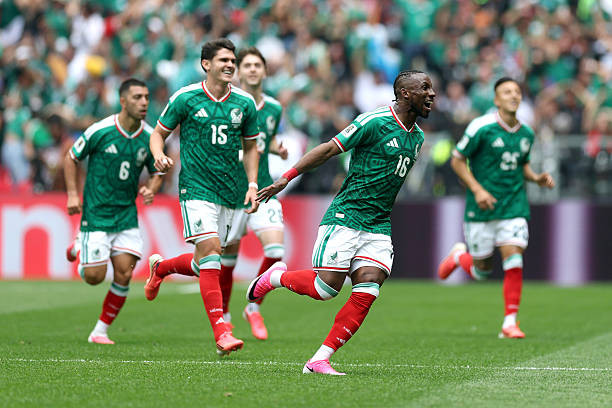
Amidst the vibrant festive atmosphere at Mexico City Stadium, the home team broke the opening match "curse" with a convincing 2-0 victory over South Africa. This was the perfect start to the 2026 World Cup campaign for coach Javier Aguirre's team, despite the match unfolding in a bizarre manner with three red cards shown.
Variables from red cards
The match's quality was significantly affected by the referee's disciplinary decisions. South Africa quickly fell behind in the second half when Sphephelo Sithole received a red card in the 49th minute for fouling Brian Gutierrez in a one-on-one situation with the goalkeeper. Being down a man completely thwarted coach Hugo Broos's counter-attacking strategy.
The drama escalated further in the 84th minute when Themba Zwane was sent off for swinging his arm at Roberto Alvarado's face. Despite leading and playing with a man advantage, Mexico couldn't maintain their numbers until the end of the match when Cesar Montes received a late red card. However, in the harsh conditions of playing at an altitude of over 2,200 meters, patience helped the North American team hold onto their lead.
Gilberto Mora and his historic milestone at the World Cup.
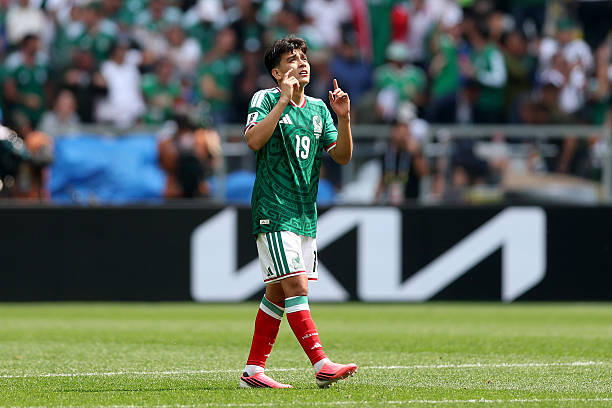
The most notable personnel change was Gilberto Mora's substitution in the 66th minute. At 17 years and 240 days old, Mora officially became the youngest player in Mexican and North American history to participate in a World Cup.
Notably, this young talent is the first player born after the 2006 World Cup final to experience the atmosphere of the biggest football event on the planet. This is a very positive sign for the future of regional football, as Mora is currently being targeted by many top European clubs.
The power of the 'trident' in attack.
Coach Aguirre's personnel adjustments proved highly effective. Julian Quinones, the Colombian-born striker, repaid the trust placed in him with the opening goal and his wide-ranging movement, creating space for his teammates. Quinones' versatility allowed veteran Raul Jimenez more room to operate in the penalty area.
It was Raul Jimenez who sealed the 2-0 victory with a powerful header from Roberto Alvarado's cross. The goal not only confirmed the striker's killer instinct but also carried immense morale. The chemistry between the trio of Quinones, Jimenez, and Alvarado is seen as a solid foundation for Mexico's ambitions to go far in this year's tournament.
The control problem and the forward objective
Despite securing all three points, Mexico still has areas for improvement, particularly in terms of ball circulation when controlling possession. Erik Lira performed well in his pivotal role in midfield, but the team needs more sharpness in the final third to effectively counter experienced opponents.
Following this round of matches, Mexico will travel to Guadalajara to prepare for their clash with South Korea. Meanwhile, South Africa will have to struggle against the Czech Republic in Atlanta, missing several key players due to suspensions.


