
Microsoft Surface Pro 2026: Will the Snapdragon X2 Elite deliver the performance expected?
The Surface Pro 2026 launched with an OLED screen and the latest Snapdragon X2 Elite chip, but Microsoft's choice of a lower-spec version meant that its actual performance wasn't outstanding.
Microsoft has officially updated its Surface Pro hybrid tablet line to the 2026 version with the introduction of the new generation Qualcomm Snapdragon X2 processor. Despite boasting a premium OLED display and hardware upgrades, the American tech giant's choice of the lowest-speed Snapdragon X2 Elite variant raises questions about the actual value of the upgrade for users.
The power of Snapdragon X2 Elite: Improvements, but not a breakthrough.
On the 2026 Surface Pro OLED version, Microsoft equips it with the Snapdragon X2 Elite chip, model number X2E-78-100. This is the lowest-end version in Qualcomm's Elite series, featuring a 12-core CPU architecture, including 6 high-performance cores clocked at 4.0 GHz and 6 power-efficient cores clocked at 3.4 GHz.
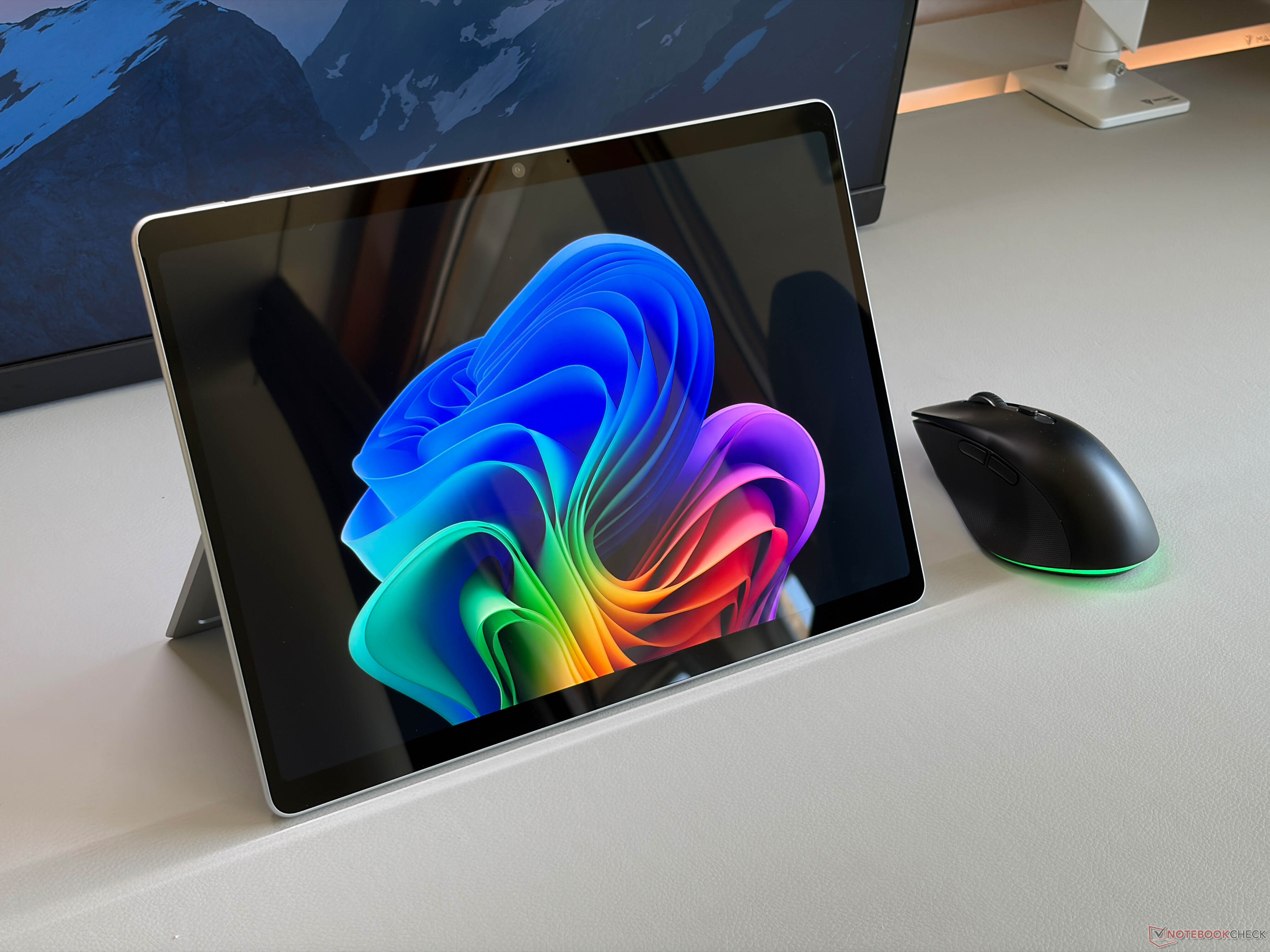
Notably, the overall performance of this CPU is only slightly better than the X1E-80-100 series chips in the previous generation Surface Pro. This not-so-significant difference makes it difficult for users to notice a speed improvement in everyday tasks. Below is a table of the device's basic specifications:
| Parameter | Detail |
|---|---|
| System-on-a-Chip (SoC) | Qualcomm Snapdragon X2 Elite (X2E-78-100) |
| CPU core count | 12 cores (6 cores at 4.0 GHz, 6 cores at 3.4 GHz) |
| Graphics (GPU) | Adreno X2-85 (1.35 GHz clock speed) |
| Screen | OLED Touchscreen |
| Connect | Wi-Fi 7, 5G option (Business version) |
Graphics performance and Microsoft's optimization problem.
The graphics performance on the Surface Pro 2026 is considered a mix of improvements and limitations. The X2E-78-100 chip uses an Adreno X2-85 graphics core but is limited to a clock speed of 1.35 GHz, significantly lower than the 1.7 GHz on higher-end variants. This results in the GPU not being much more powerful than the Snapdragon X2 Plus chip (which uses an Adreno X2-45 running at 1.7 GHz).
Although its graphics processing capabilities are still superior to the older Adreno X1-85 generation, the lack of a higher clock speed version of the chip has caused the Surface Pro 2026 to miss out on achieving even more impressive performance. In general, this power is only equivalent to the enterprise version running the Intel Panther Lake chip, which also only has a GPU with 4 new-generation Xe cores.
User segmentation strategy and shopping advice
One notable aspect of this launch is Microsoft's distribution strategy. While individual users are limited to ARM (Qualcomm) chip options, enterprise customers have the additional choice of Intel Panther Lake processors with integrated 5G modems. Maintaining a strategy of only offering ARM devices to individual customers is seen as Microsoft's attempt to promote the ARM ecosystem, rather than allowing users to freely choose according to their needs.
Overall, the Surface Pro 2026 is a minor update with a price that tends to increase. For users who aren't overly concerned with OLED displays or the latest AI features, purchasing older Surface Pro models at a more affordable price is considered a more economical and reasonable option at this time.


