
Expanding the creative space through a separate decree for literature.
Decree 350/2025/ND-CP, which regulates the encouragement of literary development and takes effect from February 15, 2026, for the first time places literature within a comprehensive policy framework, encompassing creation, recognition, promotion, and expanding its reception space in the context of digital transformation and integration. This was discussed with Associate Professor Dr. Dinh Tri Dung - Standing Vice Chairman of the Nghe An Union of Literature and Arts Associations...
Content:Phuong Chi/Present:Hong Toai• January 15, 2026
------------o0o------------
Decree 350/2025/ND-CPThe regulations on encouraging literary development, effective from February 15, 2026, for the first time place literature within a comprehensive policy framework, encompassing creation, recognition, promotion, and expanding its reception space in the context of digital transformation and integration. In an interview with Associate Professor Dr. Dinh Tri Dung, Permanent Vice Chairman of the Nghe An Union of Literature and Arts Associations, this discussion goes beyond policy; it delves into fundamental concerns: where does literature stand in today's spiritual life? What paths need to be opened so that Nghe An literature not only preserves its valuable traditions but also finds new vitality within the mainstream of Vietnamese literature?

PV: Decree 350/2025/ND-CPThis decree places literature in a position where its development is encouraged by the State, with a system of policies supporting, promoting, digitizing, and honoring works of high value. Could you share your initial impressions upon reading this decree?
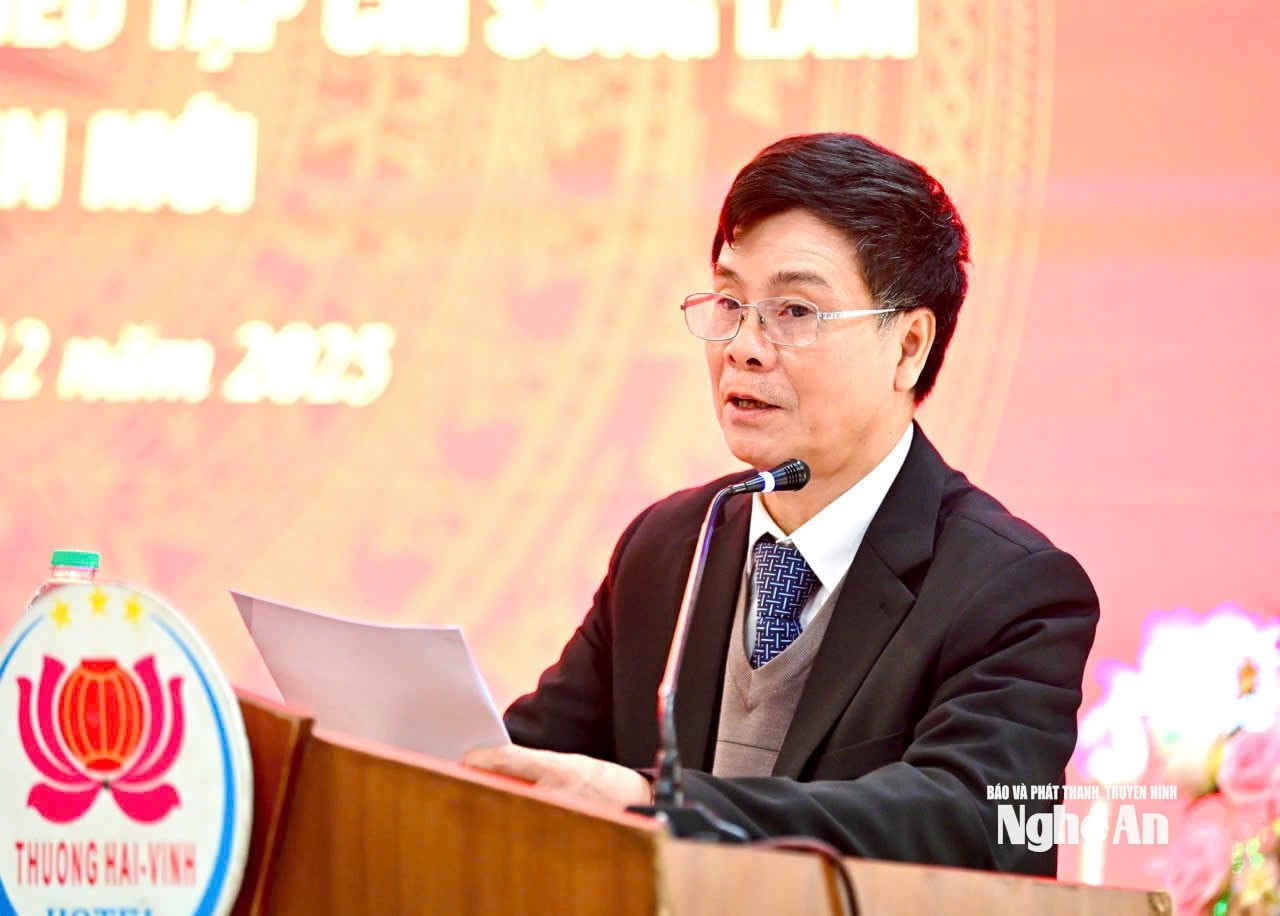
Assoc. Prof. Dr. Dinh Tri DungWe are delighted to say that this is the first time a Government Decree has clearly and comprehensively regulated and updated the practical requirements for encouraging literary development. Decree 350/2025/ND-CP has placed literature within a comprehensive policy framework, encompassing encouragement of creation, investment, recognition, promotion, and expanding the space for literary reception in the context of digital transformation and integration. The Decree has met the long-awaited expectations of the creative community and facilitated the management of literary activities.
PV: A notable new point in the Decree is that the State creates conditions for organizations and individuals, and encourages private enterprises to participate strongly in literary creation activities, and for businesses to participate in the development of literature both domestically and internationally. In your opinion, what changes in current thinking about literary development does this approach reveal?

Assoc. Prof. Dr. Dinh Tri DungFor a long time, literary and artistic creation has received great attention from the Party and State, and the government at all levels. Policies have been implemented to support investment in the creation, publication, and dissemination of works. In recent times, investment in literary creation has been based on regulations of the Government and the Ministry of Culture, Sports and Tourism, such as Government Decision No. 558/QD-TTg dated April 8, 2021, approving the program for creating literary, artistic, and journalistic works at the central level and local arts and culture associations; supporting high-quality journalism in local journalists' associations for the period 2021-2025; and Government Decree 18/2014/ND-CP regulating the remuneration system in the fields of journalism and publishing. Decision No. 3572/QD-BVHTTDL of the Ministry of Culture, Sports and Tourism approving the total budget for the program to support the creation of works, art projects, and journalism at the central level and local arts and culture associations for the period 2021-2025. Higher-level documents also consistently encourage the partial socialization of literary and artistic activities.
However, this is the first time the Decree addresses the issue of "the State encouraging and creating conditions for organizations, individuals, technology enterprises, and professional associations to participate in building and developing literature; promoting public-private cooperation in research, application of science and technology, innovation, and digital transformation in literature…". This is a new, groundbreaking point, reflecting a renewed mindset on literary development in the current context.
This is also consistent with the Party's recent resolutions and policies on developing the private economy and encouraging private individuals and businesses to invest in cultural and social activities, including literature and art.
PV: Literature is often more closely linked to profound spiritual life than to statistics or awards... In the context of the new decree establishing many support mechanisms, what, in your opinion, is the role of literature in shaping current social thinking and values?
Assoc. Prof. Dr. Dinh Tri DungLiterature and art are important and refined parts of culture. With the unique characteristics and advantages of verbal art, literature has the strength to deeply express, nurture, and cultivate the human soul, guiding people towards the values of truth, goodness, and beauty. True literature is the art of time; it will endure alongside the spiritual life of humanity. Numbers and awards are merely recognitions of literary achievements on that journey.
In the context of the new Decree establishing many support mechanisms, I believe this creates favorable conditions for writers to have more advantages in investing in and publishing their works. However, to have great literary works worthy of the nation and the times, contributing positively to building the cultural values and character of the Vietnamese people, other conditions are still needed: the talent and dedication of the writers, mechanisms for managing and promoting the works, and the reception of the readers…
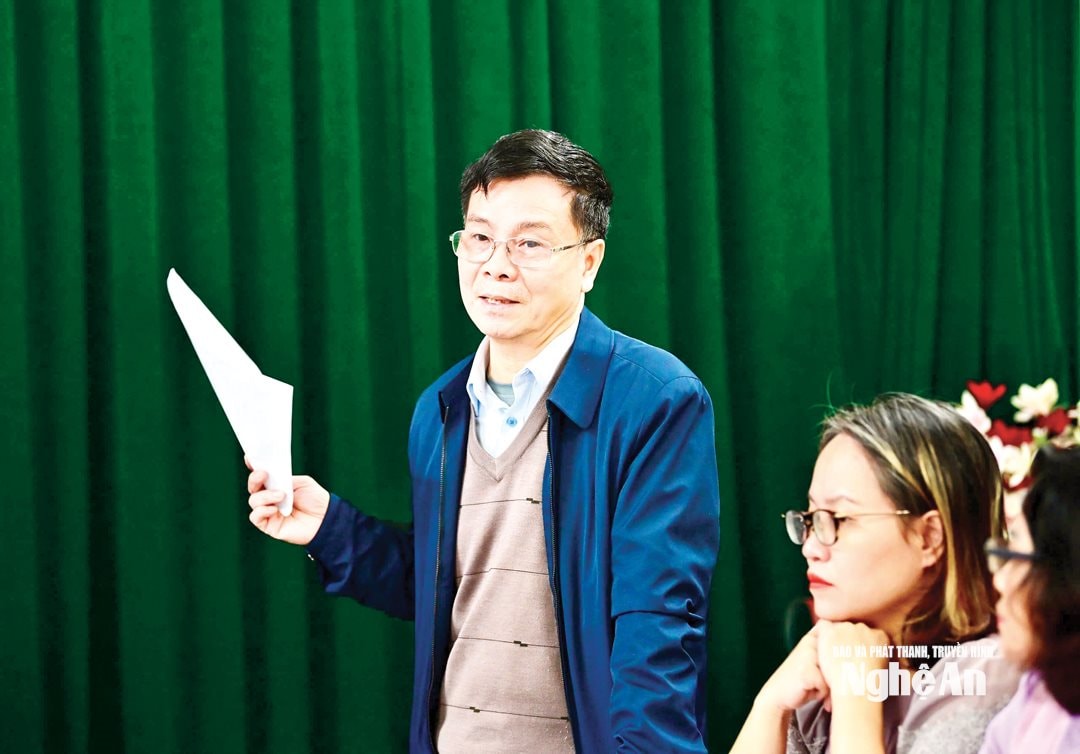
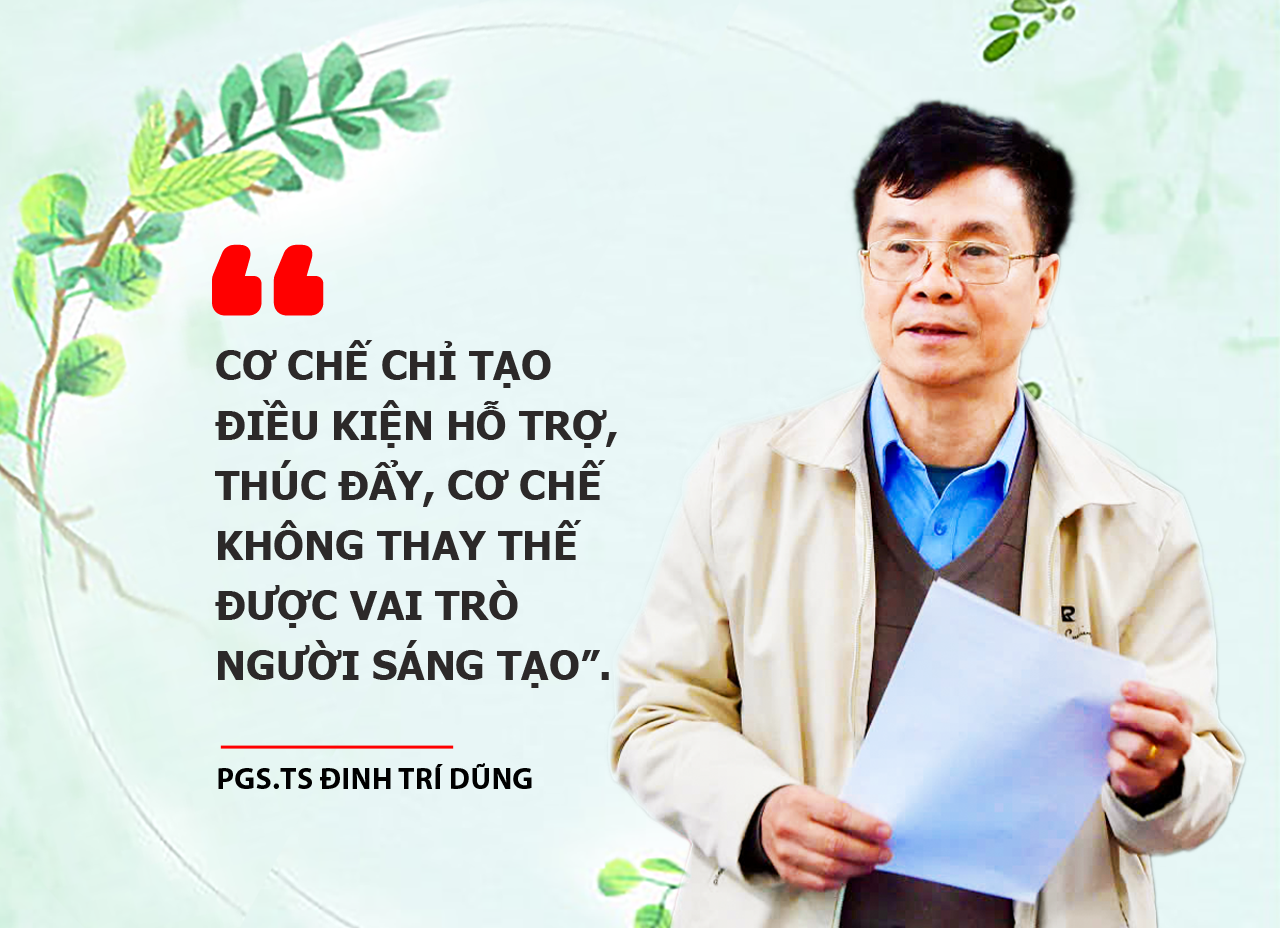
Many people say that creative activity is always a process linked to individual creativity, talent, and personal reflection and emotion. But those reflections and emotions must be connected to and represent the cultural and moral values of the community. Mechanisms only provide support and encouragement; they cannot replace the role of the creator.
.png)
PV: One of the conditions for receiving support under the decree is that the work must "have high value in terms of ideological and artistic content." According to you, how should this criterion be understood and implemented, especially at the local level? Is there a risk of "quantifying" literary value?
Assoc. Prof. Dr. Dinh Tri DungEvaluating the value of literature and art has always been a challenging issue. As I mentioned above, literary works always live on in the hearts of readers and are tested by time. Some works create temporary public attention but are quickly forgotten. Conversely, some works may not be suitable for today's "level of acceptance" but will be affirmed in the future.
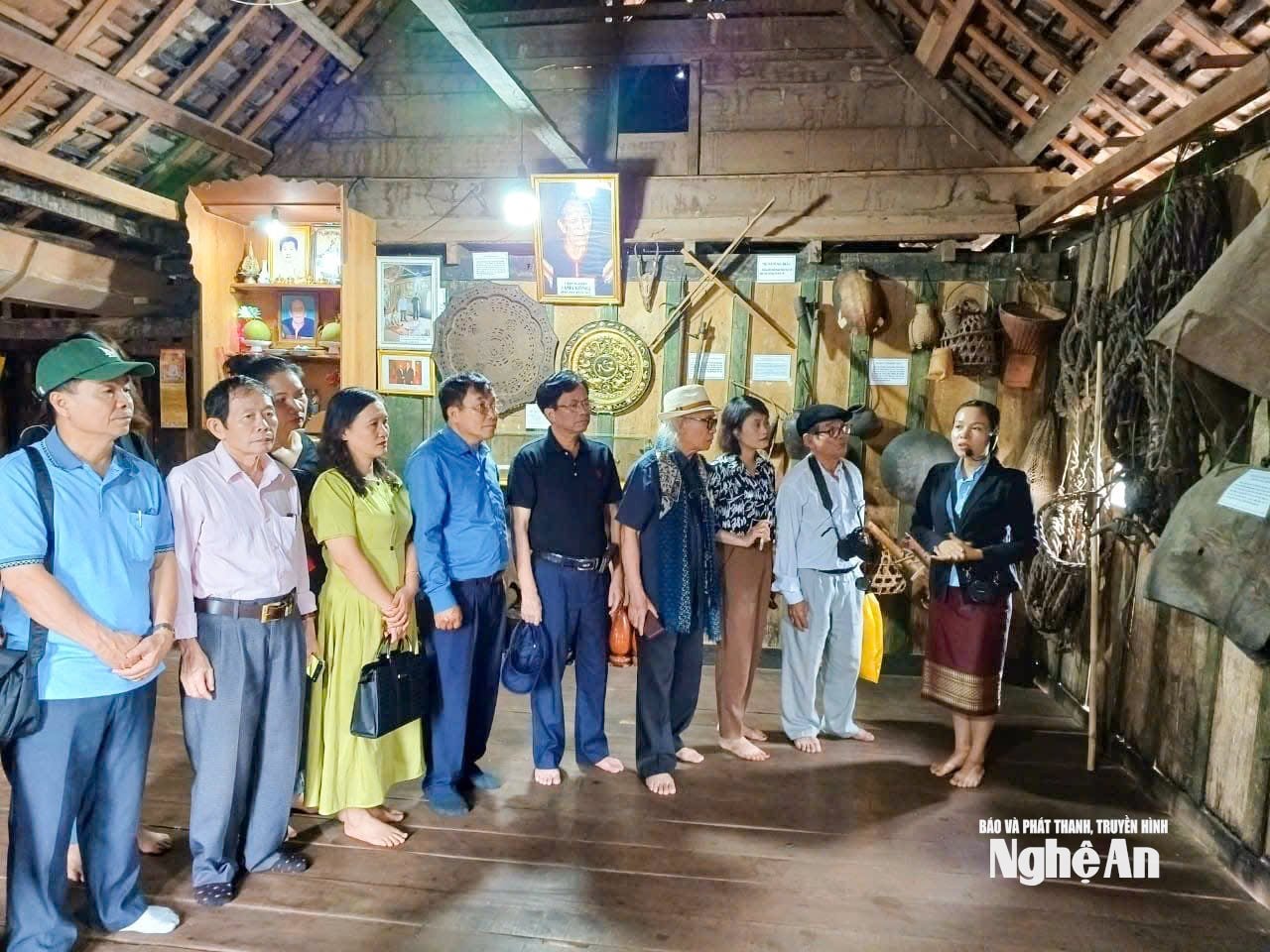
But here we are talking about the conditions for receiving creative support. This has been clearly explained in Article 9, Chapter II of the Decree. Works eligible for support “have high value in terms of ideological and artistic content, are rich and diverse in genre and language, have value in guiding aesthetics, shaping personality, morality, and lifestyle, and contribute to building a comprehensively developed Vietnamese person.” At the same time, Clause 2, Article 9 also clearly specifies the topics and themes for writing, creating, and translating that are eligible for support.
Thus, the criteria are quite clear, facilitating the selection, evaluation, and acceptance of works by relevant agencies and review boards.

PV: In Nghe An, a land rich in literary traditions, is there a gap between its creative potential and the current reality? Has Decree 350/2025/ND-CP addressed that gap?
Assoc. Prof. Dr. Dinh Tri DungNghe An is a land of "spiritual and talented people," a homeland rich in revolutionary spirit and also rich in cultural, literary, and artistic traditions. It is the birthplace of many heroes, outstanding figures, and great writers and poets. This tradition is being preserved and promoted by generations of artists and writers in Nghe An.
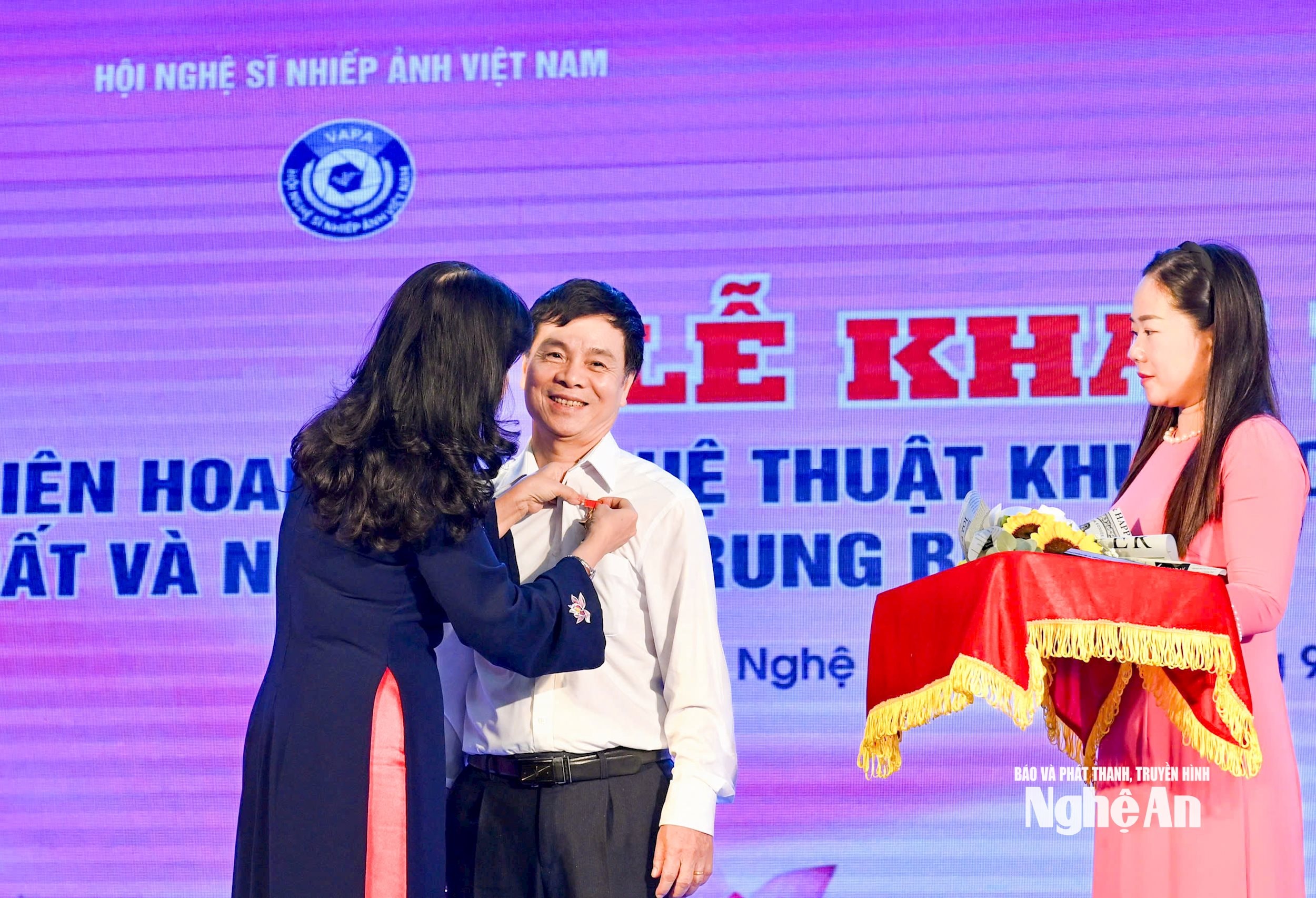
Throughout its development, especially in recent years, Nghe An literature has flourished, with many works recognized through provincial-level awards, awards from central ministries and agencies, and ASEAN literary awards…
However, overall, literature has not developed in proportion to its creative potential and the demands of the public. Nghe An literature lacks major works that vividly portray the renewal process in the homeland, or that deeply reflect the portrait, identity, and stature of the people of Nghe An.
Achieving this goal requires significant effort from both the creative team and the management and investment mechanisms. Hopefully, Decree 350/2025/ND-CP will alleviate some of the difficulties and create a boost, providing writers with more favorable conditions in their creative journey.
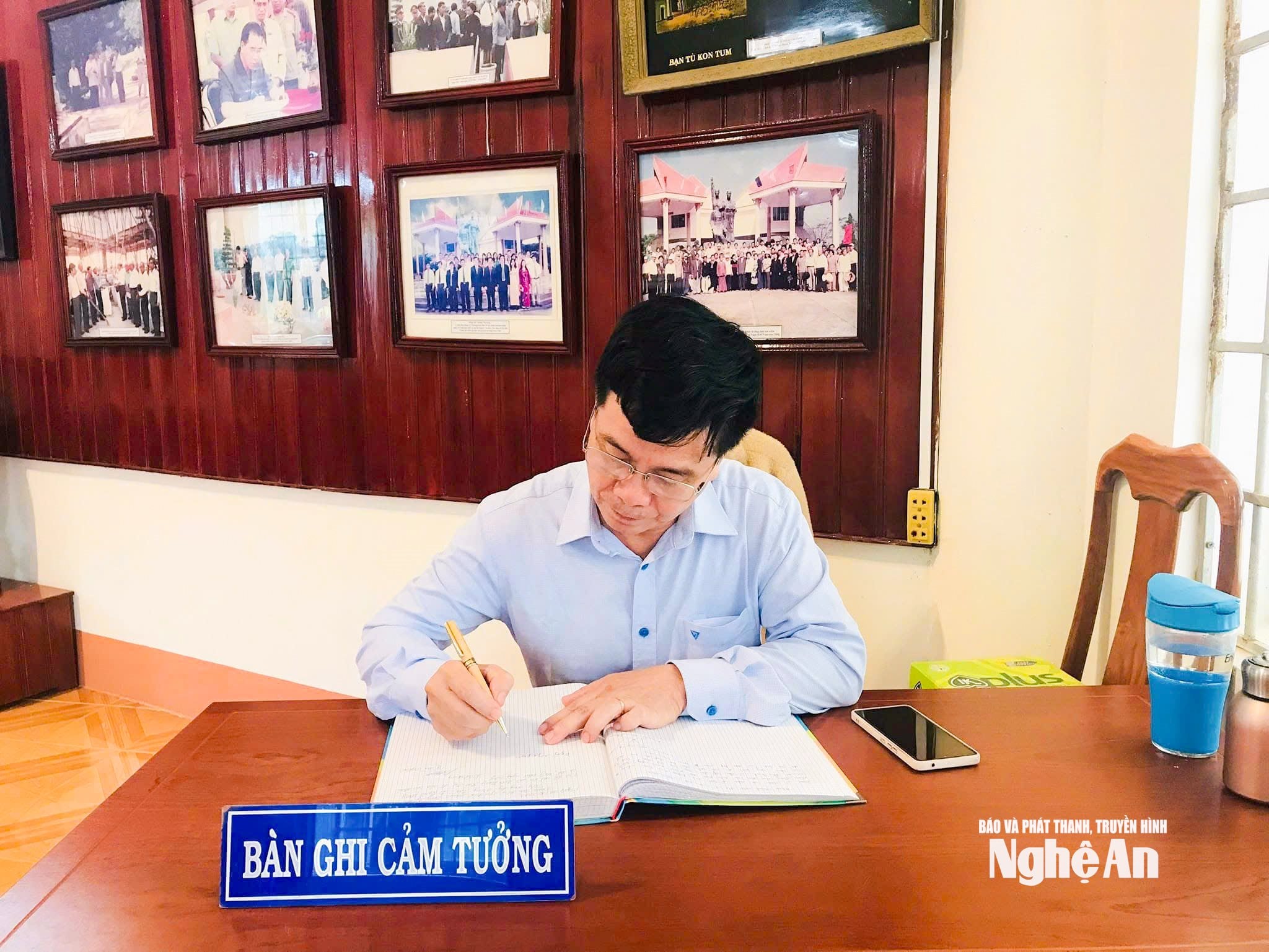
PV: The decree encourages the promotion, digitization, and distribution of literary works abroad. Could you elaborate on the current state of Nghe An literature in light of this opportunity to expand creative space? And what preparations do we need to make to avoid missing this opportunity?
Assoc. Prof. Dr. Dinh Tri DungIn recent years, many writers from Nghe An have also made significant efforts to create and circulate their works online. Some literary works have been translated into English and published in online newspapers and magazines in the United States, South Korea, India, Pakistan, etc. Besides its print edition, Song Lam Magazine also has an online version, promptly publishing many new works.
However, to take advantage of this opportunity, writers in Nghe An also need to overcome limitations and shortcomings such as: the ability to use information technology, especially for older writers; understanding and compliance with the Intellectual Property Law, the Cybersecurity Law, etc.
PV: What are your greatest expectations for this decree in the future? Can you share a heartfelt message with today's young writers – those who will continue to write the literary story of Nghe An?
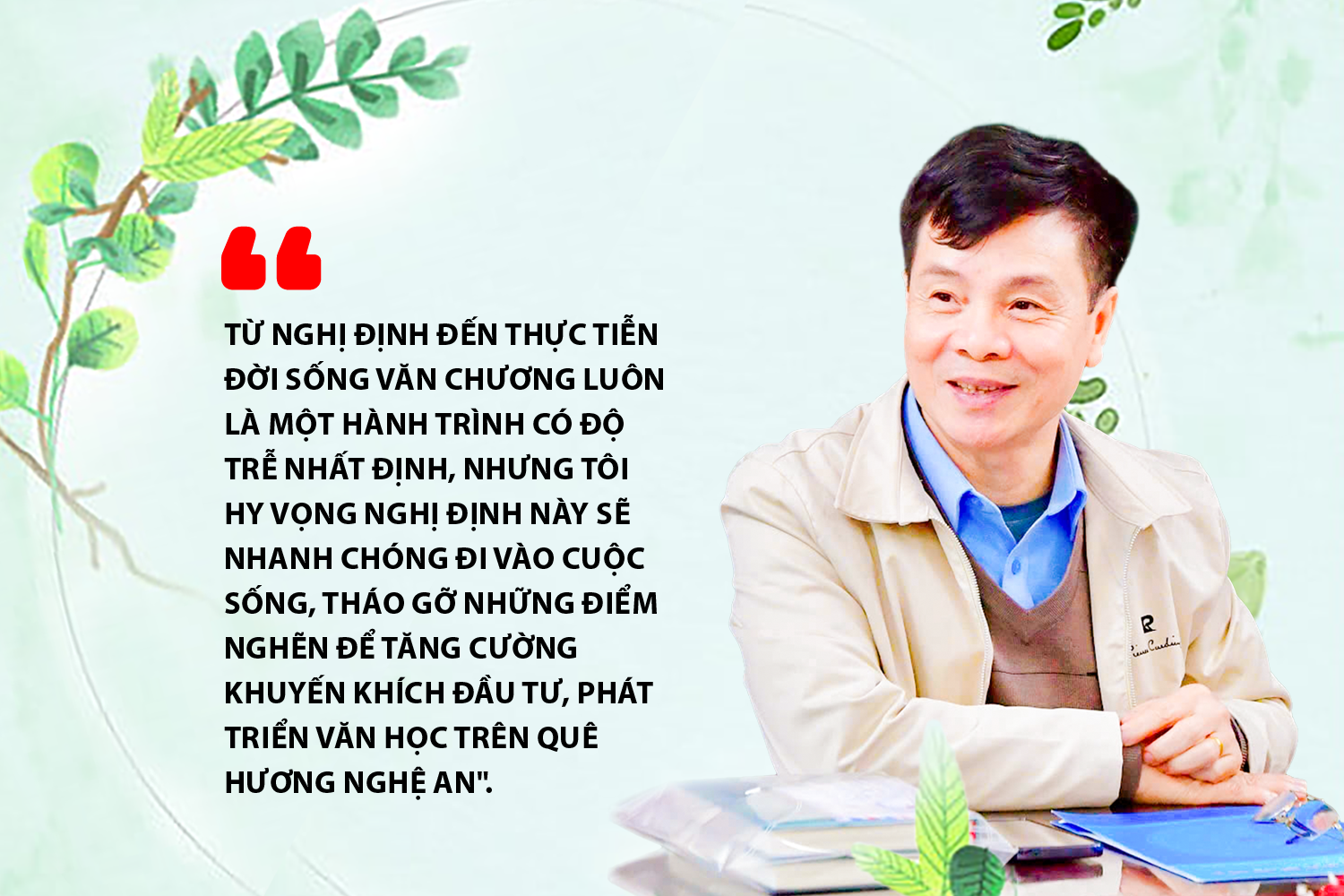
Assoc. Prof. Dr. Dinh Tri DungFrom a Decree to the practical implementation of literary life, there is always a certain delay, but I hope this Decree will quickly come into effect, removing bottlenecks to further encourage investment and development of literature in my homeland of Nghe An.
Among the many difficulties and challenges facing the development of literature in Nghe An, the aging of the literary workforce is a major one. This decree stipulates "priority support for young authors and ethnic minority authors under 35 years old to write and create their first literary works." Some current literary awards also have special prizes for young authors, and writing camps allocate a percentage for young writers. But I think for young authors, including those from Nghe An, these "priorities" only create additional opportunities and cannot replace talent and the passion for contributing and creating. Literary talent is innate, but it is also the accumulation of knowledge, life experience, and understanding of the writing profession. This is also a great responsibility of young writers, those who will continue to write the story of Nghe An literature today and in the future.
PV: We sincerely thank Associate Professor Dr. Dinh Tri Dung for this open conversation!


