
The technical connection between the Oreshnik missile and the Russian RS-24 Yars system.
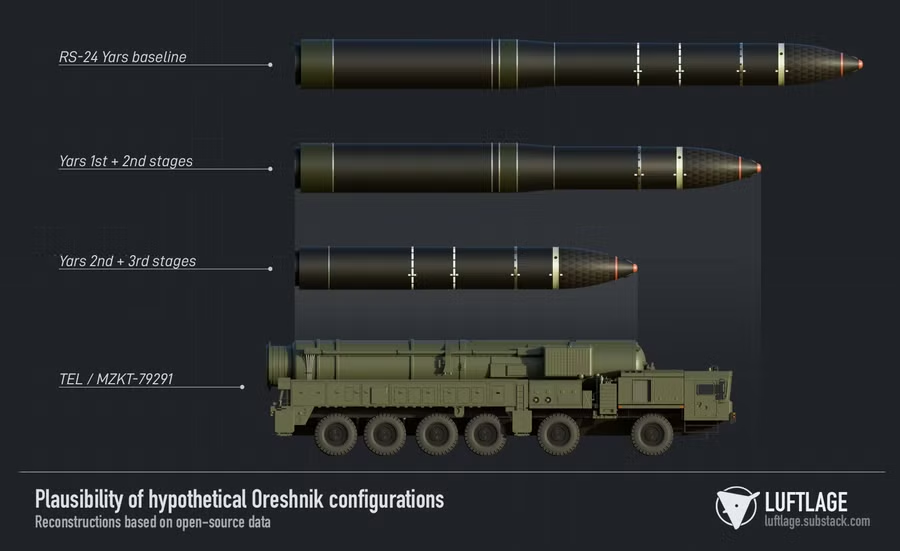
Ukrainian military experts believe that the Oreshnik medium-range ballistic missile was developed based on the booster stages of the RS-24 Yars intercontinental ballistic missile, along with a specific guidance system.
Recent analysis by the LUFTLAGE project and Ukrainian military experts has revealed important details about the structure of the Oreshnik – a medium-range ballistic missile that Russia is expected to put into service in 2024. According to the researchers, this system is not an entirely new design but was developed based on existing components from the Russian Federation's strategic weapons arsenal.
The design originated from intercontinental ballistic missiles.
Based on a comparative analysis of missile systems, researchers concluded that the Oreshnik could be built using the second and third stages of the RS-24 Yars intercontinental ballistic missile (ICBM). This is an optimized approach to shorten development time and utilize existing production lines.
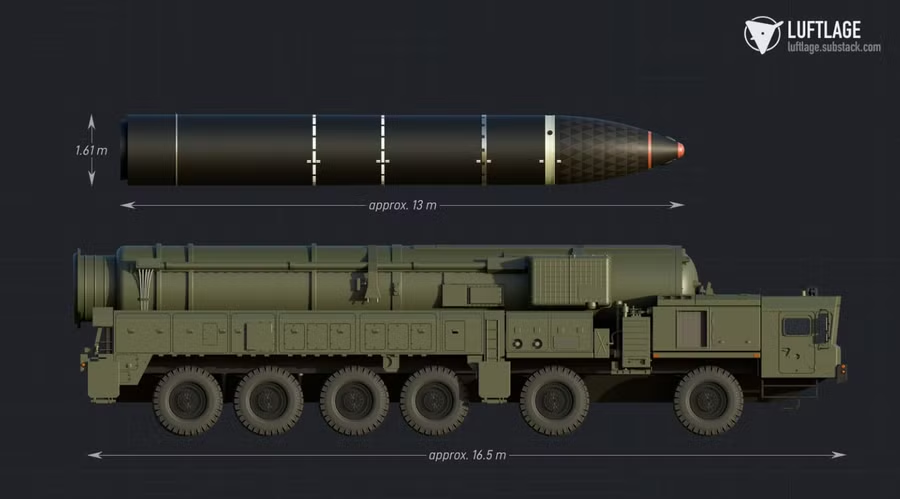
Since its first appearance on the battlefield, the Oreshnik has remained a major mystery as Russia has never released official images of the missile body or mobile launch platform. However, reports from the Pentagon in November 2024 indicated that the Oreshnik is an experimental variant developed from the RS-26 Rubezh prototype. Notably, the RS-26 Rubezh itself is a system built on the RS-24 Yars platform but with a smaller mass.
Technical evidence from the fragments
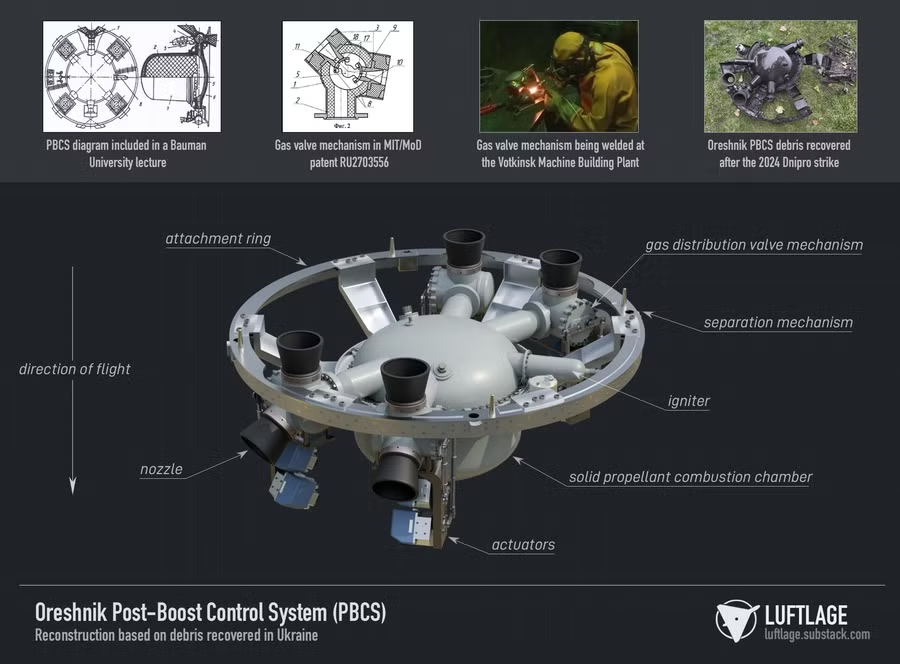
Specific details about the Oreshnik's architecture only began to emerge after Ukrainian experts collected and analyzed debris at the site. The artifacts revealed the remains of a rocket propulsion control system using a solid-fuel gas generator. This system continuously supplied gas to the control engine assembly through specialized valves.
In addition, investigators discovered a sealed compartment containing equipment. This was identified as the area where sophisticated guidance and navigation systems were installed, ensuring the missile's accuracy during high-speed flight.

Warhead characteristics and combat payload
The most controversial issue currently is the Oreshnik's warhead payload. Video footage shows 36 glowing objects falling in 6 separate groups, leading to the hypothesis that the missile carries 6 warheads, each containing 6 sub-warheads. However, experts believe this configuration has significant physical limitations. If divided in this way, the diameter of each sub-warhead would only be about 10-13 cm.
Notably, analysis from the Ukrainian Ministry of Defense revealed that the projectiles were not kinetic energy projectiles made of steel or tungsten as is typical. Instead, they were solid cast iron ingots. The use of this material instead of more expensive alloys is a surprising technical detail, possibly related to testing purposes or optimizing mass production costs in Russia at this stage.
Further evidence of the similarities between Oreshnik and Yars emerges through logistical support vehicles. Images from a deployment site in Belarus in 2026 show that the Oreshnik operating unit's support vehicles have a design and features identical to those of Yars missile units.


