
Sino-Korean relations: A journey to dispel the clouds.
After more than a decade, Chinese President Xi Jinping's visit to South Korea marked a significant shift in the diplomatic landscape of Northeast Asia.
Diplomacy is pivotal.
It is evident that, after years of stagnation due to strategic disagreements and the influence of US-China competition, relations between Beijing and Seoul are showing signs of warming up. From 2024 onwards, a series of diplomatic, economic, and people-to-people exchanges have somewhat "broken the ice" that had enveloped the two countries since the THAAD missile defense system crisis in 2017 (the US deployed THAAD in South Korea). Chinese President Xi Jinping's official visit to South Korea for the APEC Summit was the first in 11 years, marking a significant step forward and clearly demonstrating the determination of both sides to restore political trust and expand strategic cooperation.
The context of Xi Jinping's visit is highly significant. After a long period affected by the pandemic, global supply chain disruptions, and tensions in US-China relations, both Beijing and Seoul have an urgent need to reposition their foreign policy. For South Korea, maintaining a balance between its security ally, the US, and its largest economic partner, China, has always been a difficult challenge. For Beijing, fostering stable relations with Seoul is seen as a strategic move to reduce geopolitical pressure in Northeast Asia, especially in the context of Washington's intensified Indo-Pacific strategy.
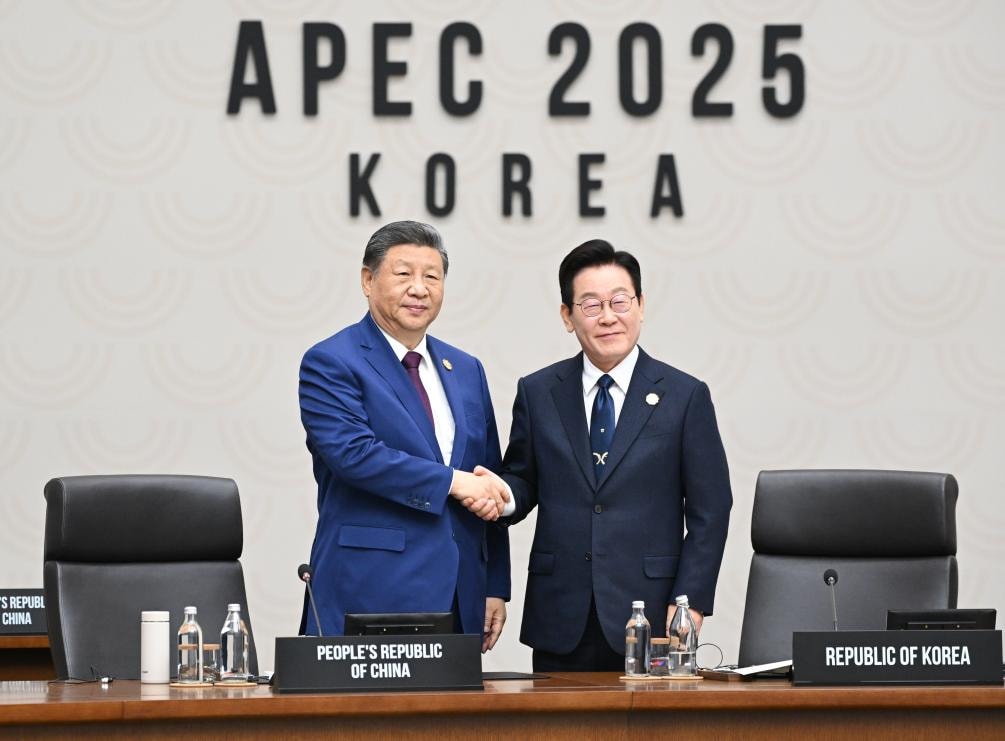
The results of the meeting between President Xi Jinping and President Lee Jae-myung in Gyeongju showed that efforts to maintain bilateral stability had yielded concrete results. The two sides signed several memoranda of understanding on cooperation in areas such as combating cybercrime, currency swaps, and especially promoting the second phase of the bilateral free trade agreement. China and South Korea also agreed to expand cooperation in emerging fields such as artificial intelligence, biotechnology, green energy, and the "silver economy" (an economic sector for the elderly). A notable highlight was the commitment to strengthening people-to-people exchanges and cultural cooperation, which serves as a soft foundation for bridging the psychological divide between the two nations. Seoul's temporary visa waiver policy for Chinese tourist groups, announced just weeks before the visit, clearly demonstrated South Korea's goodwill in promoting mutual understanding.
According to Professor Hwang Jae-ho, Director of the Institute for Global Strategy and Cooperation (Hankuk University of Foreign Studies), President Xi's visit "is a journey to dispel the clouds and see the sunshine." Professor Hwang believes that while Sino-Korean relations have fluctuated in recent years, this visit has contributed to restoring political trust between the two sides, and this is the most outstanding achievement of the trip.
Observers also believe that the positive shift in Sino-Korean relations stems from shared economic and regional security interests. China is currently South Korea's largest trading partner, accounting for over 20% of its import and export trade, while Seoul is a crucial link in Beijing's high-tech supply chain. Furthermore, both sides share a common interest in maintaining stability on the Korean Peninsula – a necessary condition for regional growth and cooperation.
Both competition and cooperation.
Despite the positive atmosphere following President Xi Jinping's visit, Sino-Korean relations operate within a structure of both cooperation and competition, reflecting the delicate "strategic balance" that both sides are pursuing. First and foremost, South Korea and China understand that they need each other economically. China has been South Korea's largest trading partner for over two decades, accounting for nearly a quarter of Seoul's total exports. Conversely, South Korea plays a crucial role in the global technology supply chain – particularly in semiconductors, electronic components, and batteries – sectors in which China is striving to localize production to reduce its dependence on the West. This intertwined interest compels the two countries to maintain dialogue, even as political trust has been repeatedly tested.
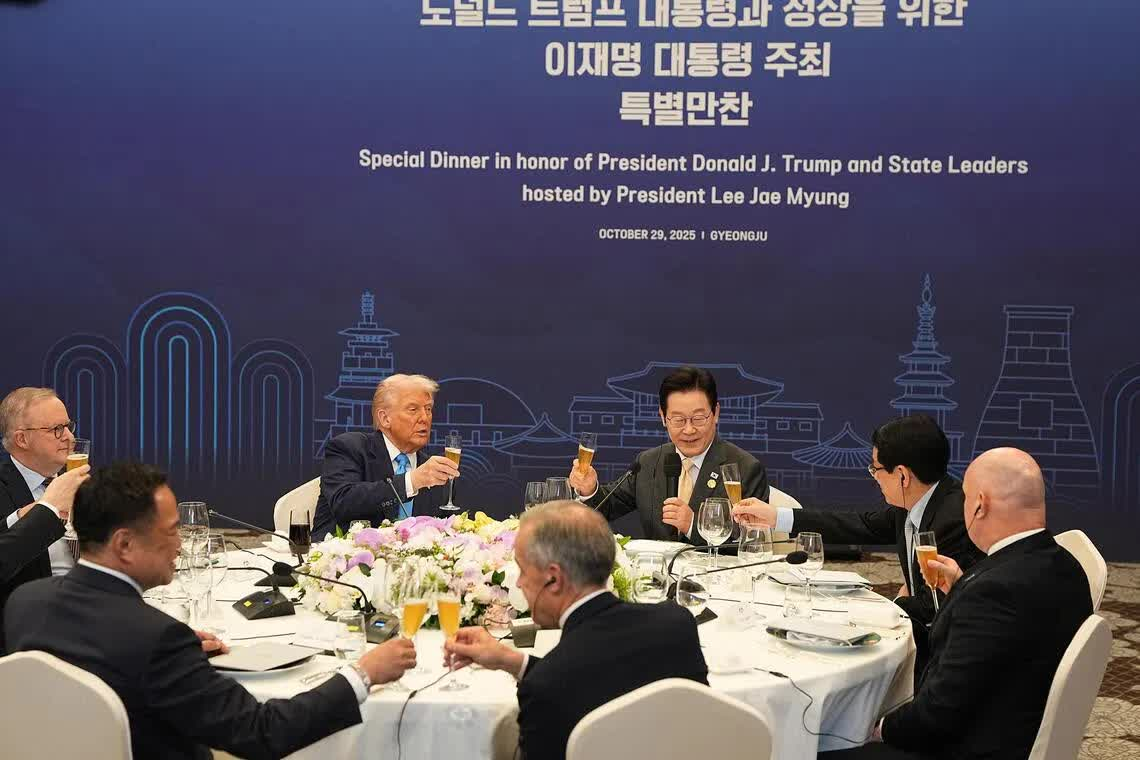
However, behind these handshakes lies a strategic rivalry that is not easily resolved. South Korea is walking a precarious tightrope between two superpowers. President Lee Jae-myung frankly admitted this in an interview with the newspaper.DateSeoul stated that it would “stand alongside the U.S. in the new global order and Washington-led supply chains, but must be cautious to avoid damaging relations with China.” That statement clearly reflects the reality: Seoul cannot choose one side absolutely, as its vital interests are tied to both. The U.S. is a key security ally, while China remains its leading trading partner.
However, this “balanced diplomacy” is becoming increasingly difficult to maintain as Washington promotes its Indo-Pacific strategy and strengthens alliances such as AUKUS, QUAD, and the trilateral security alliance between the US, Japan, and South Korea. Washington's green light for Seoul to develop nuclear submarines after the recent Lee-Trump summit demonstrates the elevating US-South Korea alliance, but also fuels skepticism from Beijing. China views this move as an expansion of its strategic “encirclement,” even though Seoul insists its defense capabilities are solely aimed at “deterring Pyongyang.” China has long strongly opposed South Korea’s deeper involvement in US-led military structures, while Seoul is increasingly concerned about the military relationship between Beijing and Pyongyang.
Nevertheless, a positive aspect is that both sides appear willing to manage differences and seek common interests, rather than allowing conflicts to escalate as they did after the THAAD deployment. Statements from leaders on both sides, such as "respecting each other's development paths" and "promoting trust and people-to-people exchanges," show that the two governments are trying to redefine bilateral relations towards "managed competition" amidst many changes.


