
One roof, many screens
Vietnamese Family Day reminds us each year of the meaning of "home," of love, responsibility, and sharing. A home may become larger, more comfortable, and brighter, but a family doesn't grow in square meters or modern equipment. A family is sustained by the presence of its members in each other's lives.
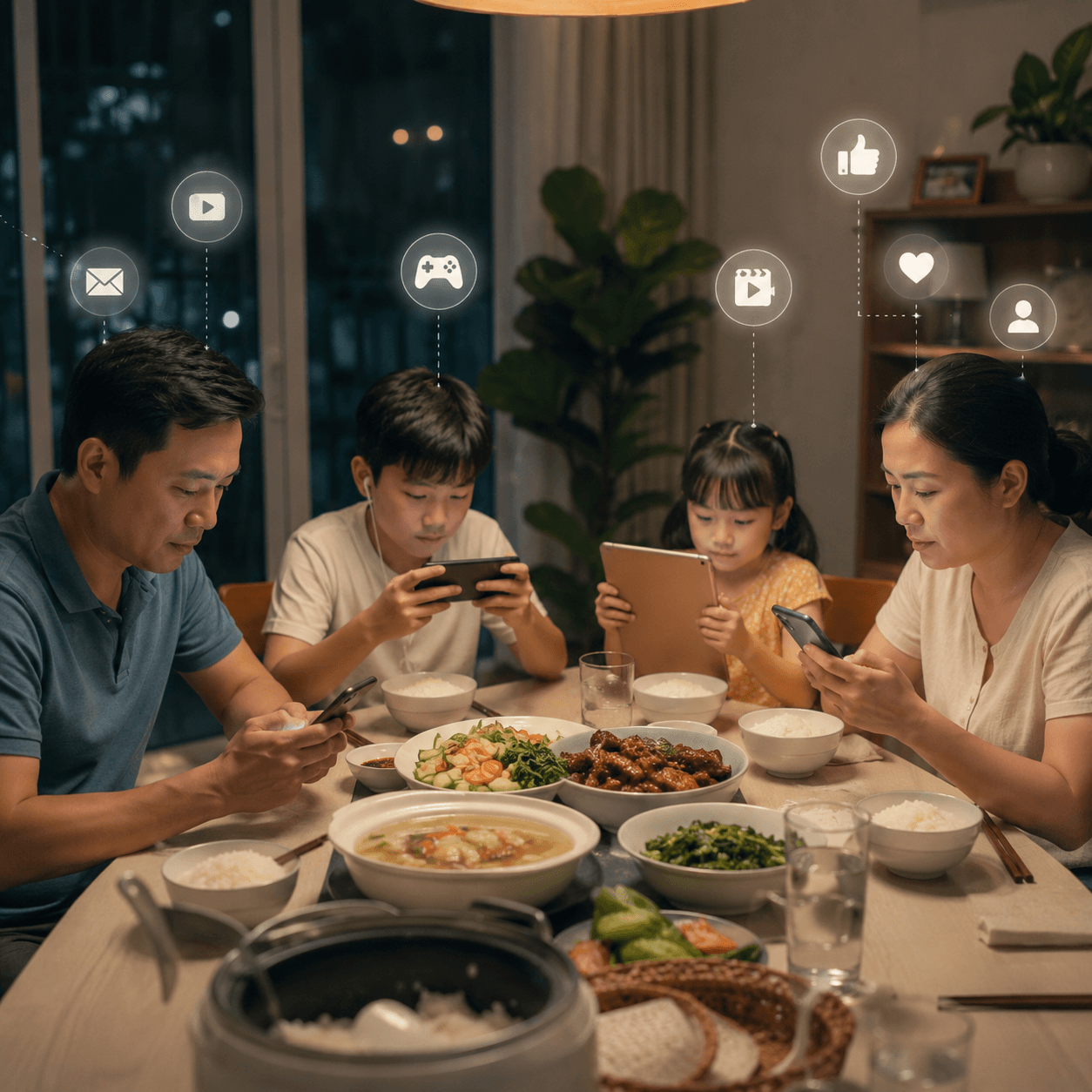
On a weekend evening, the restaurant was packed. At a table by the window, a family of four sat together for quite some time before their food arrived. The father had barely sat down when he opened his phone to make a work call. The mother was busy watching an online sales event. The eldest son wore headphones, his fingers rapidly scrolling on his phone. The younger sister, after calling out to her parents several times without a response, also bent down to watch cartoons. Throughout the meal, the sounds of spoons clinking against bowls, the waiter taking orders, and the traffic outside were more audible than the conversation of the four family members. They sat together, but the feeling of "being together" seemed to have faded somewhere between the four bright blue screens on the table.
That scene is no longer unfamiliar. It can appear in a restaurant, a living room, a car ride, or even during dinner, which was once considered "family time." Many homes still have their lights on every evening, with parents, children, and grandparents present; the dinner table is still neatly set, and the room is still fully equipped. Only one thing has quietly changed: people are closer in space, but increasingly distant in attention, dialogue, and the ability to listen and share. Each person embraces a device, as if embracing their own world.
What will a child learn first when they grow up in a home where parents are preoccupied with their phones? Perhaps not moral lessons, but the feeling of having to compete with a screen for the adults' attention. When the child excitedly tells stories from school, and the mother responds with a few "oh, really?" while her eyes remain glued to her phone, the child will understand that their story is less important than what's happening on the screen. When the father constantly checks messages during meals, the child will learn that family meals are not cherished gatherings, but merely spaces interspersed among other streams of information. And when adults themselves bring their phones to bed, to the dinner table, to every conversation, it becomes difficult to ask children to be moderate with digital devices.
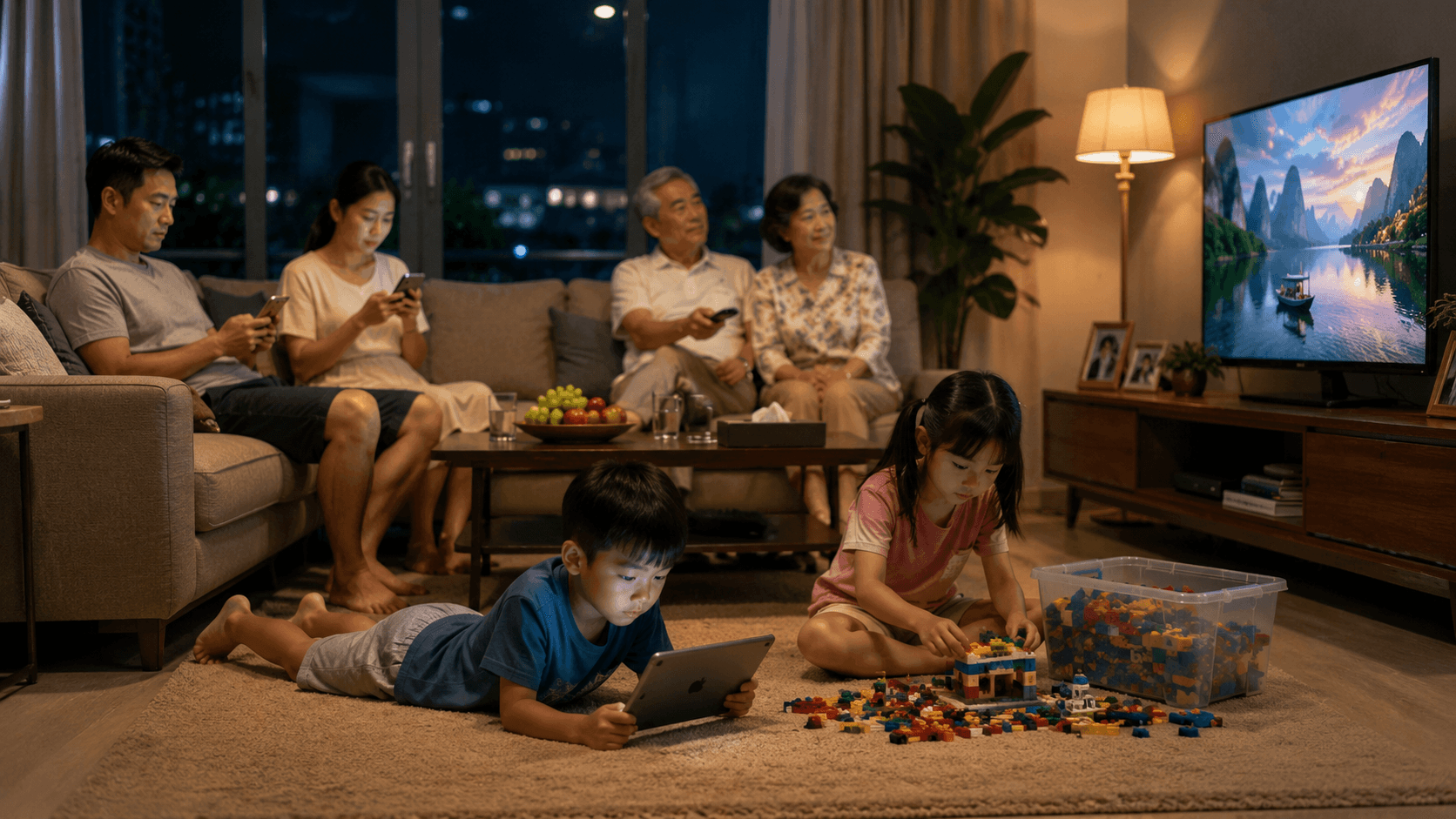
Children learn how to live from their families before they learn from school or society. If adults treat phones as extensions of their bodies, carrying them everywhere and giving them almost absolute priority, then children will view technology in the same way. Reminders like "put your phone away while eating," "don't stare at your phone while sitting with your parents," or "watch it after you've finished studying" will lose their effectiveness if the speaker is simultaneously giving instructions and checking notifications on the screen.
The story of "one house, many screens" is therefore not just about children having their childhood stolen by phones. It is also the story of adults, of modern life, of the pressures of making a living, of the habit of living fast and the fear of being left behind.
The dominance of screens also impoverishes something that is at the core of family life: the ability to listen. Family conversations are different from exchanging information outside the home. It's not just about asking where someone is going, what they're doing, what they're eating, whether they've paid tuition, or what time they need to wake up tomorrow. Family conversations are about looking into each other's eyes to recognize if someone is tired, sad, or has something difficult to say; about sitting long enough for a child to recount their school day, for an elderly person to reminisce without being interrupted, for a wife to confide in someone without fear of being considered senile, or for a husband to admit he's stressed without having to maintain a strong facade. These dialogues require genuine presence. They cannot happen when people glance down at their screens every few minutes, replying to messages, checking notifications, or dropping an emoji into a distant conversation.
The Vietnamese family has long been preserved by many simple yet enduring values. A shared meal, a cup of tea offered to grandparents, words of encouragement after work, the sound of children studying in the corner, the adults discussing household expenses, relatives, harvests, and their children's education – these activities create the rhythm of the home. They help each member feel a sense of belonging, of being seen, cared for, and reminded that, no matter what challenges they face outside, there are people at home waiting for them, understanding them, and listening to them.
If screens intrude into relationships, that heartbeat will gradually weaken. People still live together, still fulfill basic obligations, still care for each other with money, material things, and responsibilities. Only the emotional aspect, which needs to be nurtured with time and attention, is gradually considered secondary. Moreover, the worrying thing is that feelings of loneliness can arise even within a complete family.

The issue isn't the screen itself, but how people place it in their lives. A modern family can absolutely use technology as a useful tool without letting it overshadow family bonds. This starts with serious agreements, such as no phones during meals; parents stopping to look at their children while they're talking; the whole family spending a few minutes talking before bedtime instead of each person being engrossed in their own device; and weekends dedicated to "offline" time for walks, visiting grandparents, cooking a meal together, or doing something that doesn't require an internet connection. These things sound simple, but it is this simplicity that forms the foundation of a family.
Vietnamese Family Day reminds us each year of the meaning of "home," of love, responsibility, and sharing. A house may become larger, more comfortable, and brighter, but a family doesn't grow by the number of square meters or modern appliances. A family is sustained by the presence of people in each other's lives. If we fail to do that, we may one day realize that our home has everything except the most important thing: the feeling of living together.


