
Some common mistakes when driving a manual transmission car.
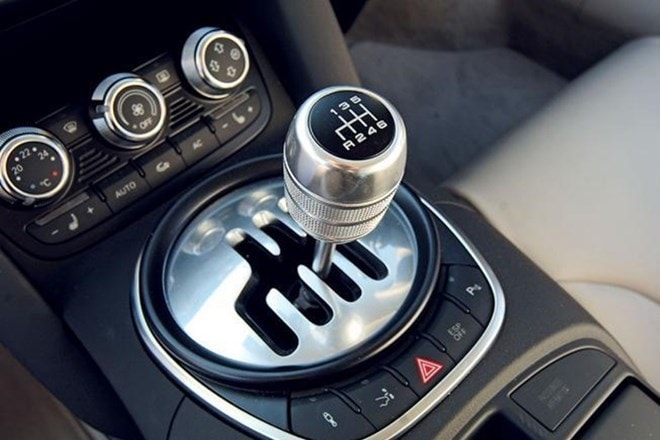
(Baonghean.vn) - Manual transmission vehicles require a lot of driver intervention; therefore, incorrect operation can affect durability and safety when the vehicle is on the road.
 |
There are several incorrect habits that many drivers still use when driving manual transmission cars. Below are some common mistakes.
Turn to N when going downhill.
Shifting to neutral (N) when going downhill is similar to disengaging the clutch when cornering, but even more dangerous. The steep slope increases the gravitational force acting on the vehicle, causing inertia to increase rapidly. Steep roads are often found in hilly or mountainous terrain, with continuous curves requiring frequent steering maneuvers. Shifting to neutral increases the risk more than ever. In this case, it's necessary to shift to a lower gear to use engine braking, following the principle of "use the same gear going down as going up."
Front clutch, rear brake
New drivers often have the habit of using the clutch first and then the brake. Some experienced drivers also have this habit because they are afraid of stalling. At low speeds, using the clutch first and then the brake doesn't have a significant impact because the vehicle's inertia is low. However, if the vehicle is moving at high speeds and the driver disengages the clutch first to stop, it will render the brakes ineffective and the vehicle will lose traction, similar to the case of disengaging the clutch while cornering.
Therefore, the advice from experienced drivers is that in all cases, you should brake first, and when the car shows signs of stalling, press the clutch to disengage before shifting gears or continuing to drive.
 |
Do not use the clutch to hold the vehicle on a slope.
When stopping on a slope, many drivers are accustomed to releasing the clutch to the point where the car remains stationary. However, this is harmful to the gearbox because components such as the clutch plates, drive gears, and bearings will have to withstand very high friction forces to keep the entire weight of the car stationary on the slope, while the brakes on all four wheels can handle this responsibility more easily.
In reality, this feature only allows the car to remain stationary for 1-2 seconds to give the driver time to switch from the brake pedal to the accelerator pedal. Use the parking brake when parking for longer than 5 seconds. If you are worried about the car rolling downhill, release the clutch slightly, press the accelerator, and slowly release the parking brake to allow the car to move uphill.
Shift gears to increase speed.
The higher gears on the gear lever help the car go faster while keeping the engine RPM low, saving fuel and ensuring the engine components operate under the lowest possible pressure. When wanting to accelerate, drivers often downshift, increase the throttle, and then shift back up. This allows the car to accelerate very quickly but is also more damaging to the gearbox compared to pressing the accelerator to increase speed.
Additionally, only shift gears when the vehicle has reached sufficient speed, and avoid the habit of shifting gears when the engine RPM reaches the red line. Forcing the gearbox to work under high pressure for extended periods will inevitably reduce its lifespan.
Disengage the clutch when cornering.
Disengaging the clutch while cornering is a dangerous habit of many drivers. When the clutch is disengaged, the car only moves by inertia without being slowed down by the engine, thus giving the feeling of smooth driving and a seamless turn when cornering, which many drivers prefer. However, this is a dangerous habit.
When the vehicle is only rolling by inertia, the braking system becomes less effective, requiring a longer braking distance, making it difficult for the driver to control speed if they oversteer or understeer. In addition, the wheels lose traction, increasing the risk of losing control.
 |
Lazy to shift gears
Neglecting to shift gears when necessary will cause the car to become sluggish and lack sufficient traction.
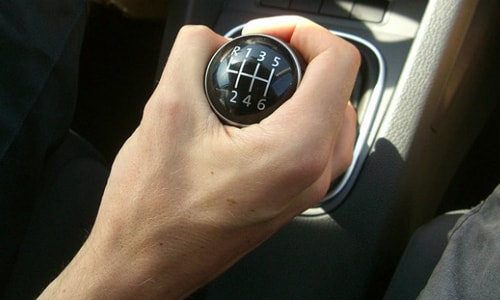
Many drivers have a habit of overusing the accelerator pedal and are too lazy to shift to lower gears. Therefore, when encountering traffic situations requiring slow driving, following closely behind, or needing momentum to overtake, many still use a single gear. In many cases, a lower gear should be used to ensure sufficient traction and allow for quick acceleration (when overtaking), but drivers still use a high gear (gear 5), causing the vehicle to be sluggish, prolonging the overtaking time, and potentially leading to danger.
 |
More economical than automatic transmission.
The notion that manual transmission cars are more fuel-efficient than automatic transmission cars was only true in the past, when automatic transmissions were not yet common and the new technology meant they consumed more fuel. However, nowadays, automatic transmission cars make up the majority of the market, and technology is constantly improving, resulting in fuel consumption being equal to or even less than that of a comparable manual transmission car.
Whether a car is fuel-efficient or not depends on driving skill. With a manual transmission, you need to use the appropriate gear and shift gears frequently to maintain engine longevity. If your driving skills aren't proficient, then any transmission will consume the same amount of fuel.
Things to keep in mind when driving a manual transmission car.
- Shift gears at the correct speed:The reality is that most drivers tend to shift gears before the engine reaches sufficient RPM, causing the car to feel sluggish and lack power. If you shift to a higher gear before reaching sufficient speed, the car will feel sluggish, and pressing the gas pedal won't increase acceleration (forced gear shifting).
If you shift gears properly, the car will have more power to shift into subsequent gears and keep the engine more durable. Combined with quick gear changes (quickly reducing throttle and disengaging the clutch – shifting gears – slowly releasing the clutch while simultaneously increasing throttle), and good handling of obstacles on the road, you will be able to travel faster and more smoothly.
- Use the clutch pedal properly:When using the clutch, what causes it to wear out quickly is not frequent use or clutch slippage, but rather the sudden contact of the clutch with the engine's flywheel, or the flywheel and primary clutch contact speeds not being the same, and the vehicle speed not matching the engine RPM.
When engaging and disengaging the clutch, if the vehicle doesn't lurch or lurch forward, it means the operation is correct. When releasing the clutch, the engine sound doesn't change, and the vehicle continues to move smoothly.
Simply depressing the clutch pedal when changing gears doesn't fully utilize its advantages. When driving on rough roads, disengage the clutch intermittently to prevent the vehicle from jerking. When overtaking obstacles in crowded areas, use the clutch gently for safety.
- Be careful when using the parking brake:Many drivers often use the parking brake when starting on an incline and tighten it again if there are signs of rolling back downhill. In fact, the parking brake is not designed to stop a moving vehicle, but only to keep it stationary once it has stopped.
If the parking brake is not fully released while the vehicle is in motion, it will lead to premature wear due to brake pad slippage, but more dangerously, the heat generated can cause the brake fluid to boil, resulting in brake failure.
When should you shift to neutral?Shifting the car to neutral while driving is not recommended because it doesn't actually save much fuel and it suddenly increases the car's inertia, making it difficult to control speed, increasing the risk of losing control, and if you encounter an obstacle and need to brake immediately, the brakes will not be very effective.
Ngoc Anh
(Synthetic)
| RELATED NEWS |
|---|


