
Mù Cang Chải mùa hoa tớ dày trên núi rừng
Amidst the year-end chill, the pink blossoms of the Tớ Dày flower bloom on the hillsides of Mù Cang Chải and Púng Luông (Lào Cai province), heralding the H'Mông New Year and associated with the Tớ Dày Flower Festival and the H'Mông Flute Festival in 2026.
Amidst the cold days in Mu Cang Chai and Pung Luong (Lao Cai province), the flowers of the "to day" plant bloom brilliantly on the hillsides, along the mountain passes, and in the H'Mong villages. The pink of the flowers blends with the green of the mountains and the brown of the earth, creating a vibrant winter landscape that attracts tourists to visit, take photos, and feel the atmosphere of the approaching Tet holiday.
The thick-flowered bougainvillea – the pink blossoms that herald the Lunar New Year for the H'Mông people.
The "tớ dày" flower, also known as "pằng tớ dày" in the Hmong language, is understood by locals to mean wild peach blossom. This flower is considered one of the symbols of winter in Mù Cang Chải and Púng Luông, associated with the scenery and rhythm of life in the highlands at the end of the year. When the "tớ dày" blooms, it is also the time when the Hmong people prepare for Tet (Lunar New Year) and the new spring.
The flowers of this tree have five petals, a slender and elongated shape, unlike ordinary peach blossoms. The soft petals extend from the rough tree trunks, highlighting the contrast between the rustic beauty of the mountains and the delicate brilliance of the flowers. The colder the weather, the deeper and more distinct the pink color of the flowers becomes, making the entire mountainside seem as if it's covered in a new layer of color.
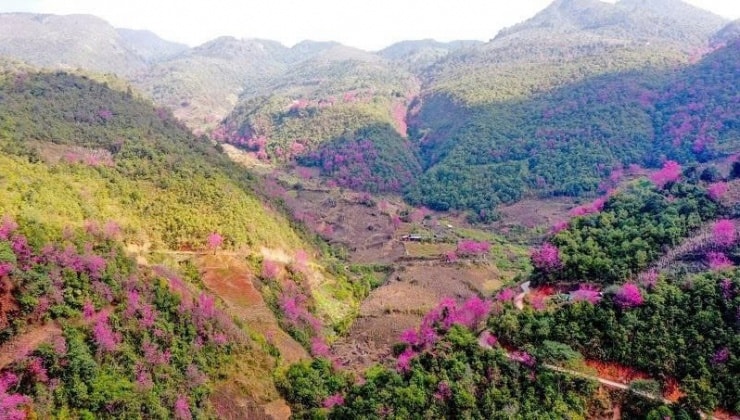
The flowers of the wild jasmine begin to bloom from mid-December this year, lasting until around February of the following year. This is the time when the mountains and forests are still bitterly cold and foggy, but they are brilliantly colored by the flowers. According to local people, the most beautiful period of the flowers lasts only about 10 days from the time they begin to bloom; after that, the flowers gradually wither, giving way to new shoots and leaves on the branches.
Walking along the hillsides of Mu Cang Chai and Pung Luong during the flowering season.
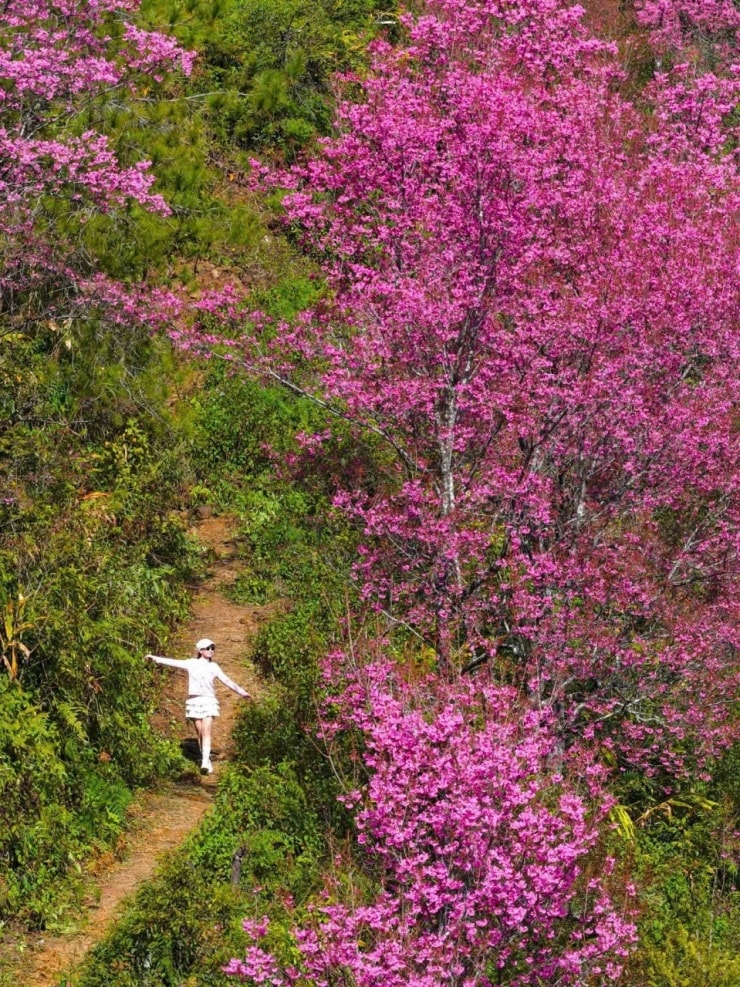
On the hillsides of Mi Hang village (Mu Cang Chai commune), Trong Tong village (Pung Luong commune), and along some central roads in Mu Cang Chai commune, the pink blossoms of the Tớ Dày flower burst forth, interspersed with the green of the mountains and the brown of the soil. These carpets of flowers stretch across the mountain passes, creating a multi-layered, colorful highland landscape that is both rustic and vibrant.
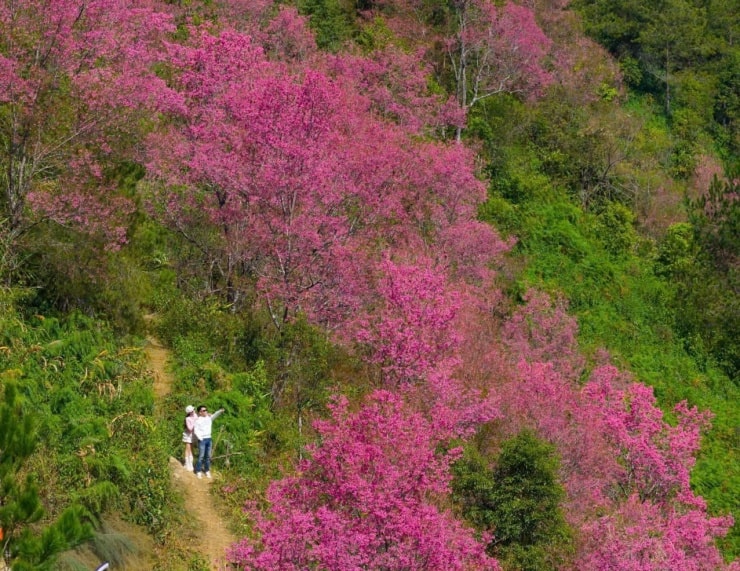
Walking along the winding roads that hug the mountain slopes, visitors encounter the pink blossoms of the "tớ dày" tree growing among home gardens, beside fields, or standing out against the bare terraced rice paddies in winter. The pink color of the flowers softens the dark brown slopes and bare tree trunks, creating a warm feeling amidst the cold of the highlands.
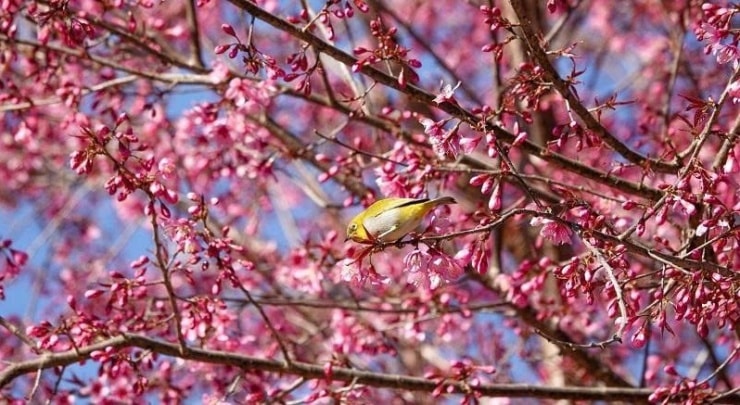
A fleeting moment of the flower season
The flowering season of the thick-flowered bougainvillea doesn't last very long. From mid-December to February, the tree begins to bud, blooms profusely, and then quickly enters its final stage. The most beautiful period, around 10 days, is when the petals are thick, the colors vibrant, and the entire canopy is covered – the ideal time to admire and photograph the flowers.
After that period, the flowers gradually fall, revealing new shoots and green leaves – a clear sign that spring is approaching. On the hillsides that were once ablaze with vibrant red blossoms, the fresh green begins to take over, bringing a new look to the mountains and forests.
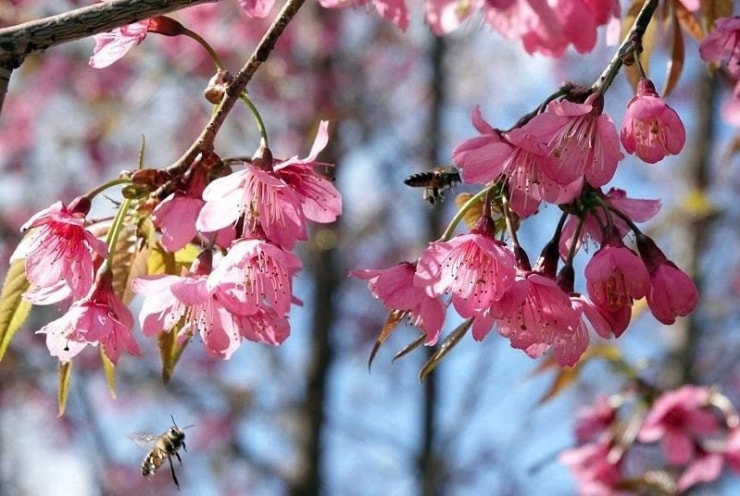
The thick-lipped flowers are a highlight of the H'Mông New Year celebrations.
The wild jasmine flower is closely associated with the cultural life and Tet (Lunar New Year) atmosphere of the local people. When the wild jasmine branches bloom, it's also a time when the village is bustling with preparations for the New Year, from renovating houses and cleaning fields to the lively Tet markets.
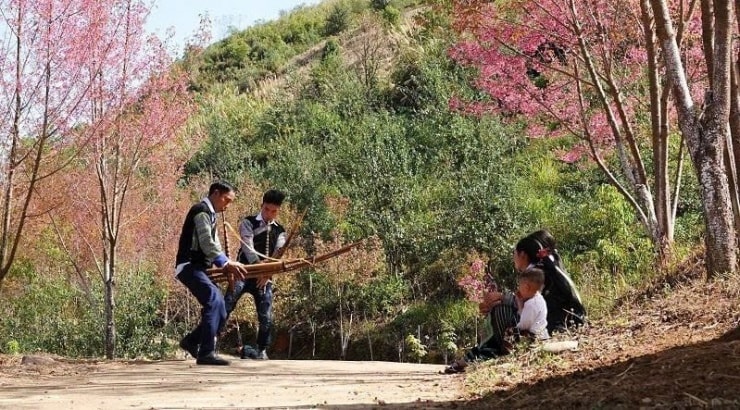
In that painting, the pink blossoms are not just a scenic feature but also a landmark, reminding people of a new cycle of seasons and life. The pink hues on the hillsides thus carry a sense of excitement and anticipation, like a subtle reminder that Tet (Lunar New Year) is fast approaching.
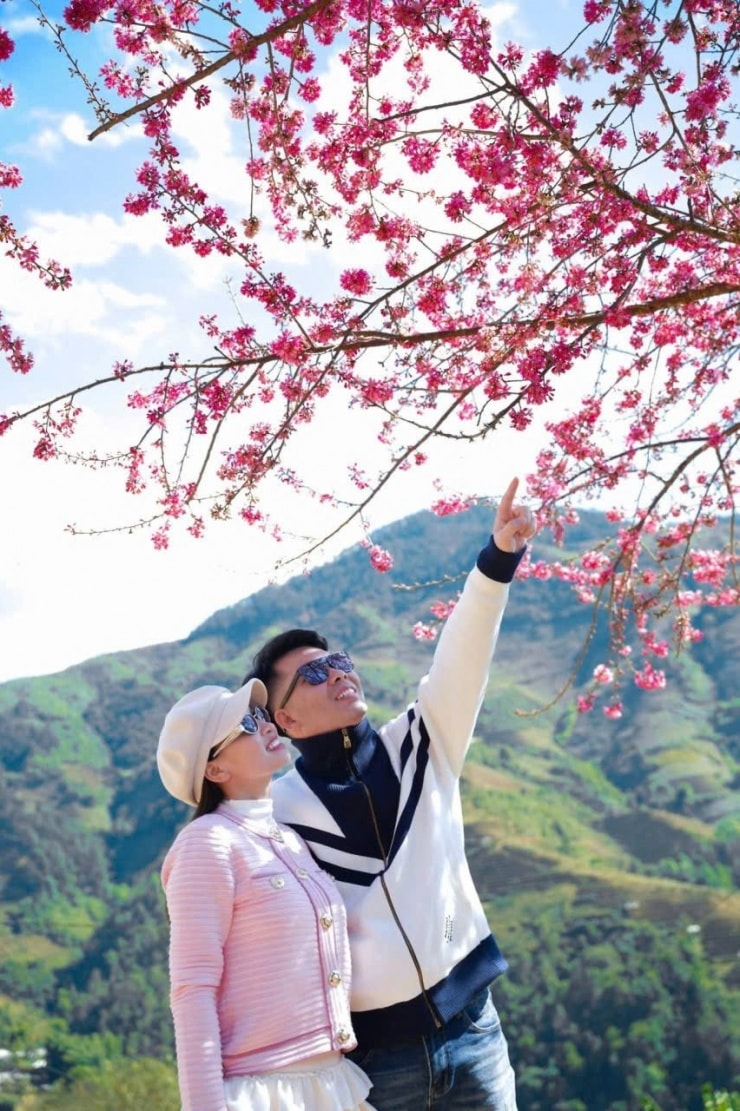
A visitor's experience amidst the flower-covered slopes.
When the wild rose bushes bloom, many tourists flock to Mu Cang Chai and Pung Luong to visit and admire them. They stroll along the dirt roads, stop under the canopy of roses, and capture the moments when the flowers blend with the clouds and mountains.
"The mountain scenery has retained its pristine beauty, dotted with vibrant flowers, making me feel like I'm immersed in a highland natural landscape," a tourist shared. That feeling comes from the combination of the cool air, the breeze carrying the scent of damp earth, the sound of roosters crowing mixed with laughter in the village, and the bright pink of the wild jasmine against the gray winter sky.
The Tớ Dày Flower Festival and the Hmong Flute Festival in 2026
In order to organize activities celebrating the Party and the Lunar New Year in 2026 and to welcome the 14th National Congress of the Party, the People's Committee of Mu Cang Chai commune has developed a plan to organize the Mong Flute Festival, the To Day Flower Festival, and a series of activities to celebrate the Lunar New Year in 2026. The programs are expected to take place from December 31st to the end of January next year, coinciding with the peak blooming season of the To Day flowers.
Các hoạt động này nhằm tuyên truyền, lan tỏa những giá trị văn hóa truyền thống, tăng cường liên kết và phát triển du lịch theo hướng bền vững, đồng thời góp phần gìn giữ, phát huy bản sắc văn hóa của đồng bào dân tộc Mông trên địa bàn. Với du khách, đó là dịp để vừa ngắm hoa, vừa hòa mình vào không khí lễ hội, lắng nghe tiếng khèn Mông và quan sát nhịp sống Tết vùng cao.
Kinh nghiệm nhỏ cho chuyến đi ngắm hoa tớ dày
Vì hoa tớ dày nở trong những ngày lạnh nhất trong năm, du khách nên chuẩn bị trang phục ấm, giày đế bám tốt để di chuyển trên các lối mòn, triền đồi. Thời điểm sáng sớm và chiều muộn thường cho ánh sáng mềm, phù hợp để chụp ảnh hoa và toàn cảnh núi rừng.
Khi ghé bản Mí Háng, Trống Tông hay đi dọc các tuyến đường trung tâm xã Mù Cang Chải, du khách nên xin phép người dân địa phương nếu muốn chụp ảnh gần nhà, nương rẫy; đồng thời giữ gìn vệ sinh, không bẻ cành hoa hoặc xả rác trên triền đồi. Dành trọn một ngày để thong thả dừng chân giữa các đoạn đường, ngắm hoa từ xa rồi lại tiến gần dưới từng tán cây sẽ giúp bạn cảm nhận rõ hơn vẻ đẹp của mùa hoa báo Tết nơi núi rừng Mù Cang Chải và Púng Luông.


