
Sowing season by the Lam Giang River
This season, people living from the upstream to the downstream of the Lam River are busy preparing for the winter crop. The fields stretching along the river seem to have donned a new coat of color.
Growing corn for livestock feed.
The Lam River flows through the districts of Ky Son, Tuong Duong, Con Cuong, Anh Son, Do Luong, Thanh Chuong, Nam Dan, and Hung Nguyen before merging into the sea. During the annual rainy season, the Lam River's water level rises, flooding the fields along the riverbanks and depositing a significant amount of alluvial soil. This creates favorable conditions for farmers to intensively cultivate short-term crops, resulting in high yields.
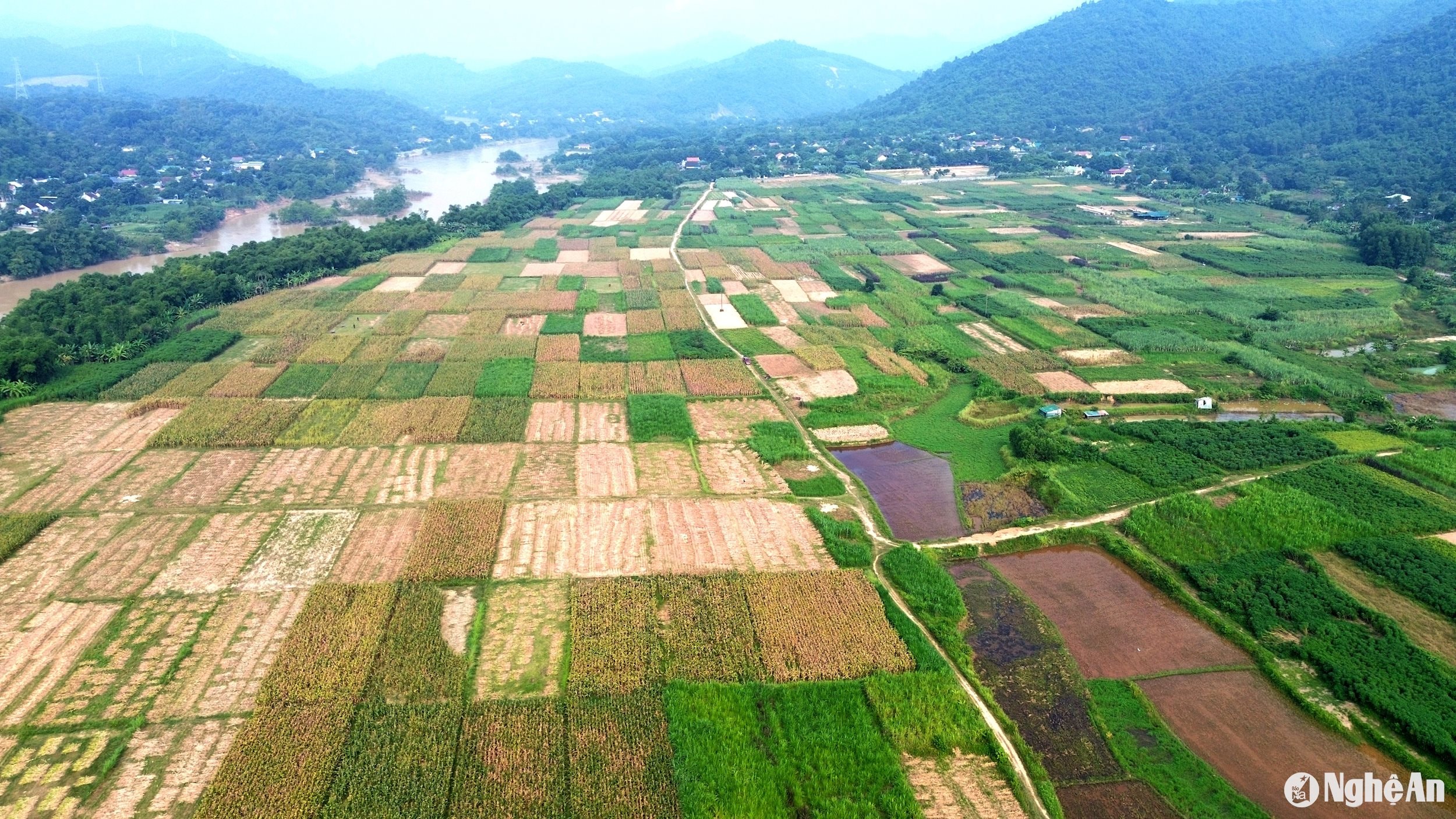
In the fields of Bai Xa village, Tam Quang commune (Tuong Duong district), farmers are busily preparing the land for the winter crop. Ms. Ngan Thi Tam from Bai Xa village said that after a difficult summer-autumn crop due to unfavorable weather, improving the soil and selecting high-quality seeds is now a top priority for her family to ensure a good income at the end of the year.
“Our family has 3 sao (approximately 0.3 hectares) of corn for the summer-autumn crop. Last season, the weather was erratic, especially the severe flooding, which negatively impacted the corn's growth. This season, we're replanting corn on the riverside land. The variety chosen for this winter crop is CP511, a high-yielding variety,” Ms. Tam shared.
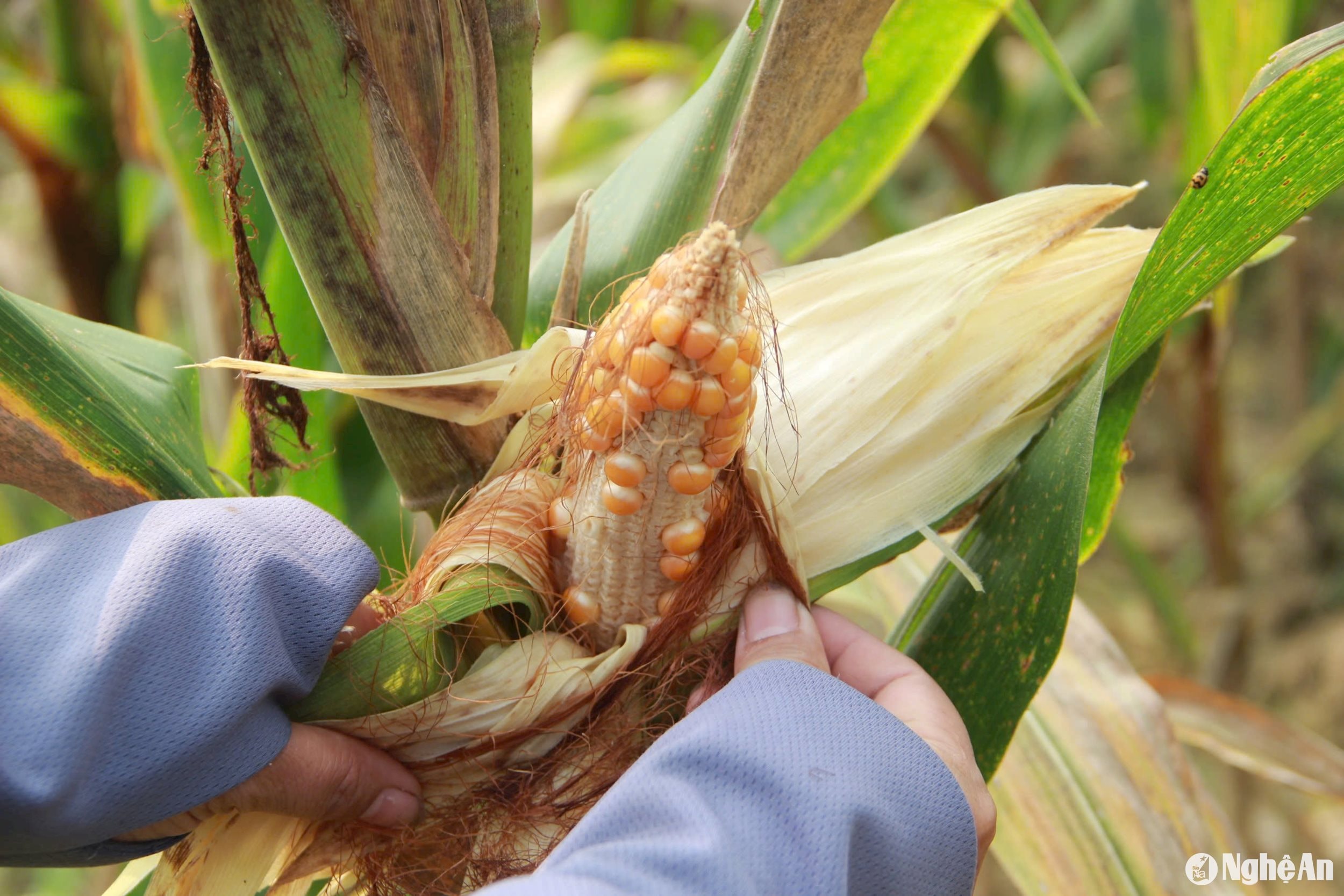
Ms. Kha Thi Hien, Chairwoman of the Tam Quang Commune People's Committee, said: The local area along the Lam River has 70 hectares in the villages of Bai Xa, Bai So, and Tam Lien. The people in these villages are characterized by agricultural development and have experience in livestock farming and crop cultivation. Therefore, they mainly grow corn three times a year to provide grain for livestock. In addition, during this winter season, they also grow peanuts, off-season watermelons, cantaloupes, pumpkins, etc. This area receives annual alluvial deposits from the Lam River, so crops thrive and yield high productivity. Crops like peanuts, melons, and pumpkins bring in profits of 18-22 million VND per hectare.
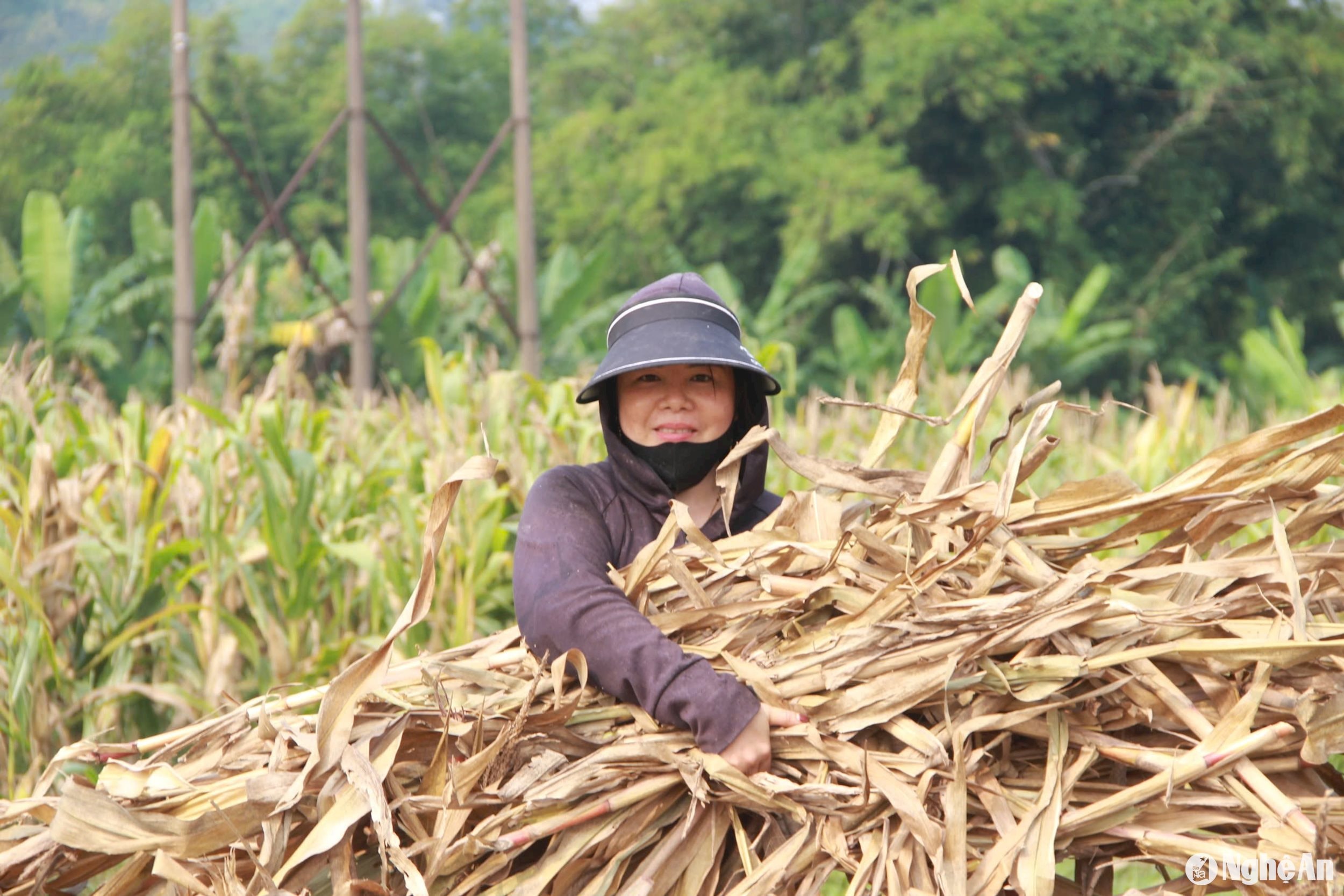
For corn, due to the introduction of hybrid corn varieties, the yield reaches 3.5 to 4 tons/ha. Most households in the villages of Bai Xa, Bai So, and Tam Lien raise livestock and poultry, so most of the harvested corn is stored by the villagers as animal feed rather than sold.
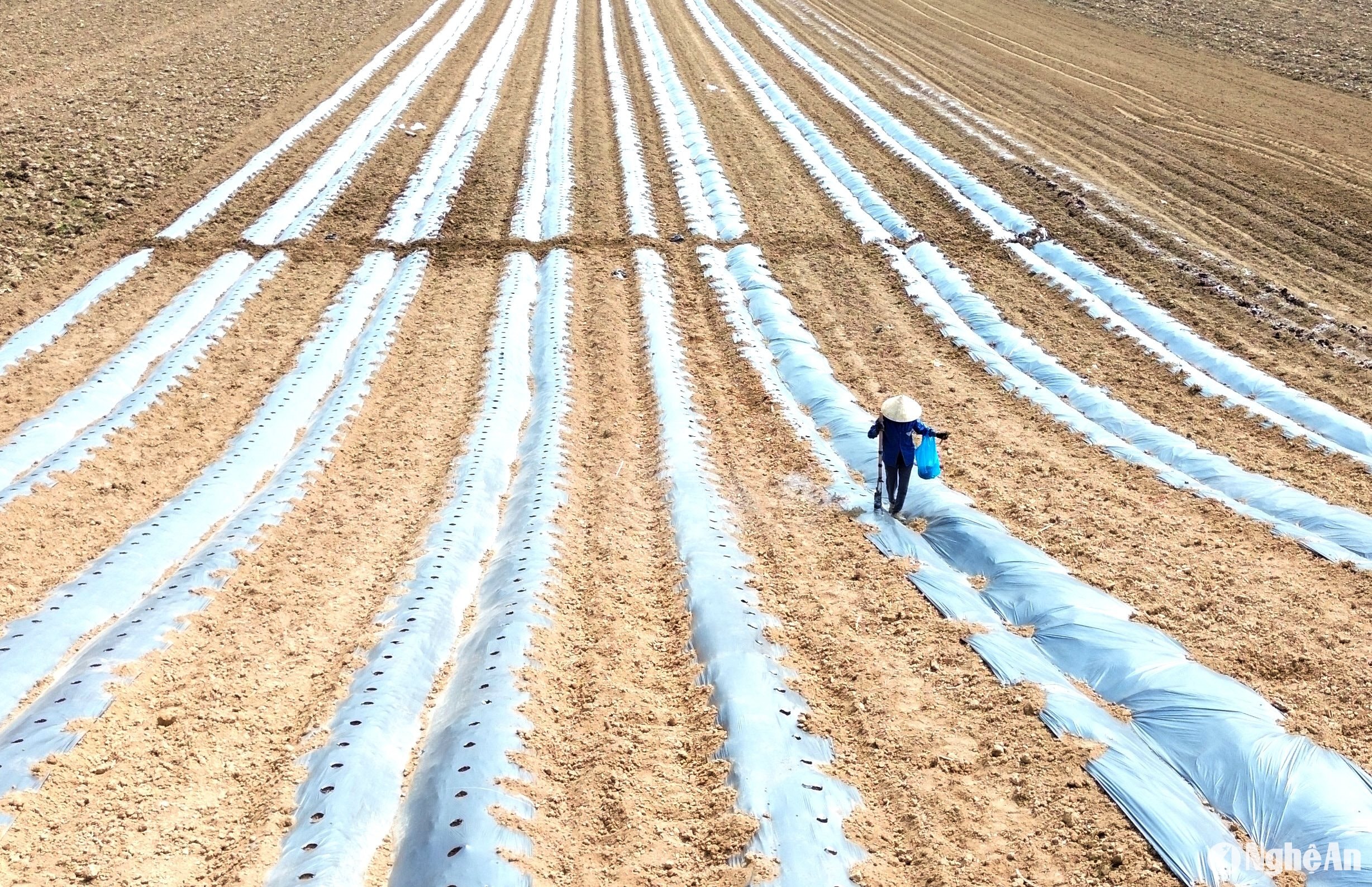
Along the Lam River in Anh Son district, in communes such as Tuong Son, Tam Son, Dinh Son, Hung Son, Cam Son, Hoa Son, Duc Son, Thach Son, and Vinh Son, the fertile fields are being busily planted with winter crops by local farmers. Long stretches of fields are being prepared by farmers using machinery to create furrows, fertilize, cover with plastic sheeting, and sow seeds.
The family of Ms. Nguyen Thi Huong in Hoi Lam hamlet, Cam Son commune, owns 10 sao (approximately 1000 square meters) of land for growing vegetables. This winter season, she planted 6 sao of green squash and 4 sao of pumpkin. These crops are well-suited to the soil conditions of the area, and their yield and market demand are relatively stable compared to other crops. Immediately after the seeds germinate, the family uses materials to build trellises for the squash to climb. Harvesting is expected after 2 months.
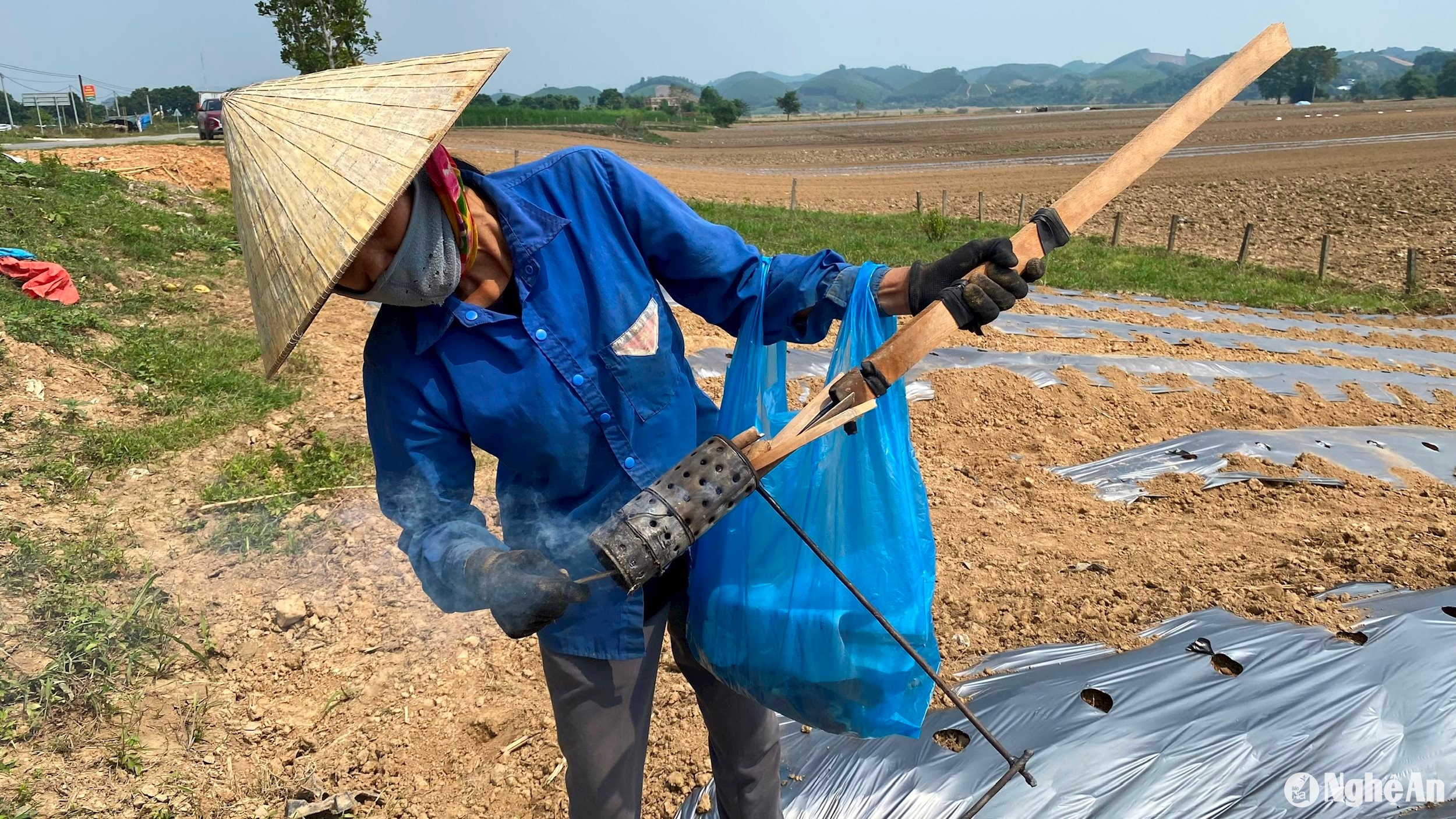
It is known that green squash is one of the winter crops that people in Cam Son commune have been growing in recent years in the floodplain area. This is a short-term crop, easy to grow, from planting to harvesting takes about 90 days and yields 5 to 6 harvests. Before sowing, farmers cover the soil with plastic sheeting to retain moisture and limit weeds; fertilizers mainly consist of well-rotted manure, and NPK fertilizer is added during cultivation.
Leveraging the advantages of riverside alluvial land.
Traveling down the Lam River to the lower districts such as Nam Dan, Hung Nguyen, Thanh Chuong, and Do Luong, you can see farmers busily heading to the fields to prepare for the winter crop season.
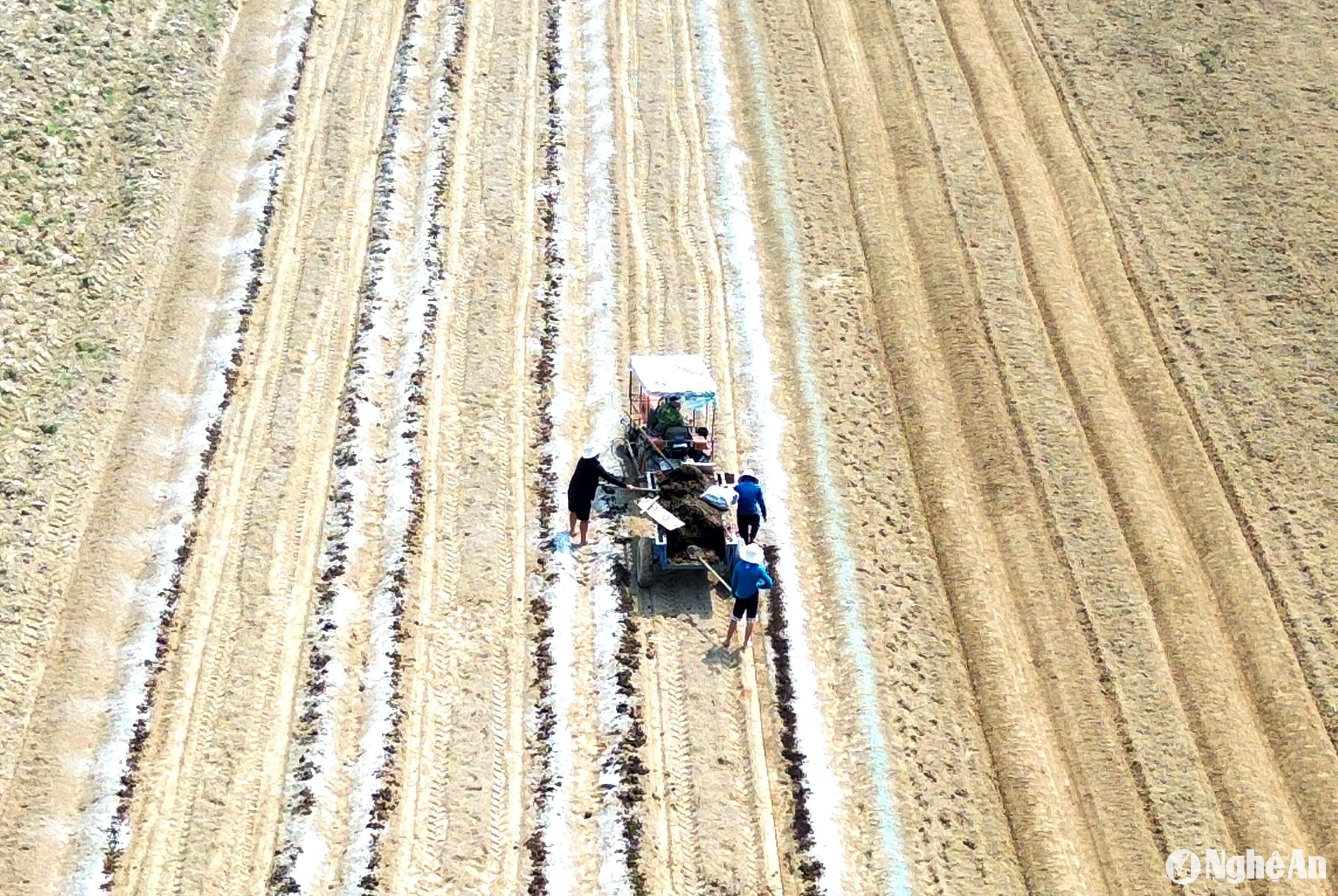
Do Luong District has developed a project for specialized vegetable and fruit cultivation areas with a scale of 150-200 hectares in the riverside floodplains of the Lam River, concentrated in the communes of Trung Son, Thuan Son, Tan Son, Nam Son, and Luu Son. Exploiting the potential of the riverside floodplains by establishing and planning specialized cultivation areas aims to concentrate investment in intensive farming for efficiency, creating a large volume of valuable vegetable and fruit products. This, in turn, contributes to the promotion and development of market-oriented livestock farming in the localities. This is an important direction in the context of agricultural production development linked to the construction of new rural areas in our province today.
Mr. Nguyen Tien Duc, Head of the Provincial Department of Crop Production and Plant Protection, stated: The alluvial land along the Lam River in the province covers approximately 8,000 hectares, concentrated in the districts of Hung Nguyen, Nam Dan, Thanh Chuong, Do Luong, and Anh Son… The advantage of this riverside alluvial land is that it is flooded annually, depositing fertile silt. Farmers' conversion to improved crop varieties and application of scientific and technical advancements in production have resulted in higher economic efficiency compared to other vegetable-producing regions.
Accordingly, farmers exploit the potential of the land each year, specializing in growing corn, vegetables, gourds, pumpkins, etc., harvesting 3-4 crops annually. The winter crop is more favorable because it benefits from the replenishment of alluvial soil after periods of flooding.
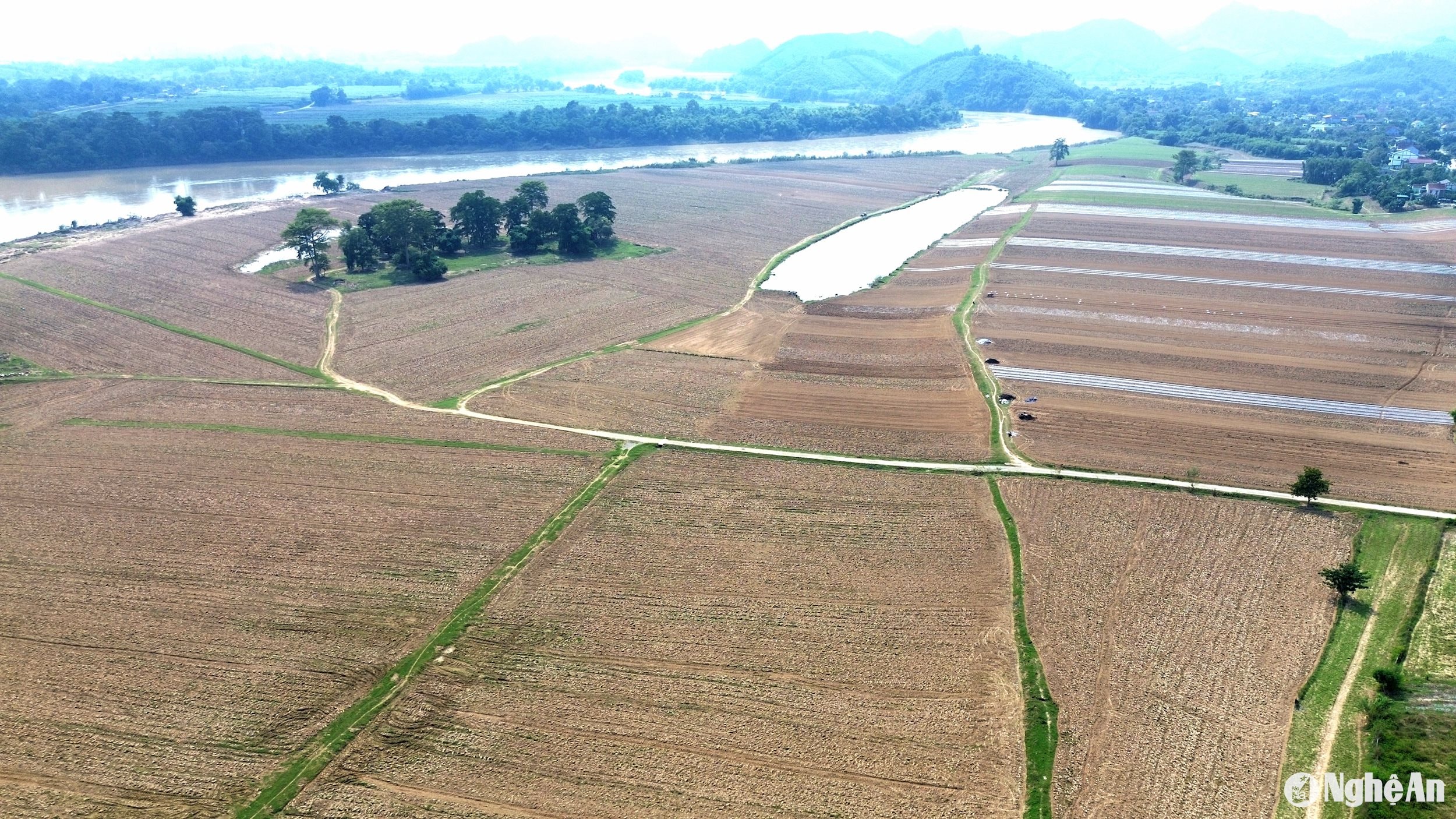
However, the alluvial plains along the Lam River also face disadvantages, such as being frequently submerged in deep water during the rainy season; limited irrigation and drainage systems; and the annual flooding, resulting in virtually no embankments or field boundaries, making transportation and travel difficult. Therefore, to cultivate these alluvial plains, farmers need to pay attention to the weather, avoid floods, and protect themselves from pests and diseases.


