
Buying social housing through a power of attorney contract can result in losing everything.
Despite being notarized with official seals, transactions involving the purchase and sale of social housing through power of attorney contracts can leave buyers completely destitute.
Publicly advertising the sale of social housing.
Nowadays, it's not difficult to find advertisements for the sale of social housing (both projects where residents have already moved in and projects under construction) on real estate transaction websites.
The buying and selling of social housing is happening openly. For example, on the website batdongsan.com.vn, in the past month or so, eight people have advertised apartments for sale at SDU 143 Tran Phu - Ha Dong (Hanoi). This is a commercial housing project that the investor converted into a social housing project and was completed in the fourth quarter of 2015.
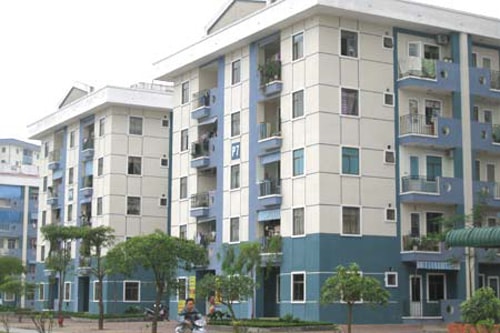 |
| Buyers of social housing through power of attorney contracts may face many risks, even losing everything. |
We contacted the sellers of social housing apartments at 143 Tran Phu Street, Ha Dong District (Hanoi). Although not yet permitted to conduct buying, selling, or renting transactions according to regulations, some homeowners still asserted: "The ownership can be transferred immediately, or it can be delayed for 5 years, depending on the buyer's needs."
A news article published on batdongsan.com.vn on January 3, 2018, stated: “I have a diplomatic allocation to purchase an apartment in the Bright City social housing project in Hoai Duc. If you are interested and genuinely want to buy, please contact the owner directly: 09014…” Many other social housing projects, even those not yet completed, are also being advertised for sale, such as the housing project for officers and soldiers of the Ministry of Public Security (at 43 Pham Van Dong), the Lucky House project (Kien Hung, Ha Dong)… Most social housing apartments are being advertised with a markup of 100-400 million VND above the original price.
Using power of attorney contracts to circumvent the law.
Besides being openly advertised for sale, there is currently a situation where social housing is being bought and sold through notarized "Power of Attorney Contracts".
According to a contract obtained by the reporter, the terms of this social housing authorization contract state that the authorized party (the buyer) will, on behalf of the authorizing party, pay the purchase price to the investor according to the schedule, sign the handover minutes when the investor hands over the apartment, prepare and sign utility contracts such as electricity and water with relevant authorities, and make payments for the use of these services…
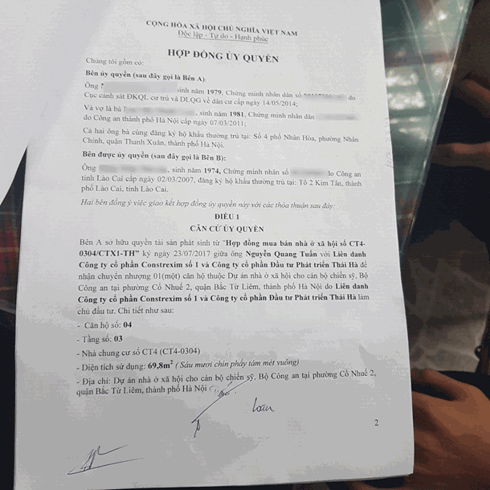 |
| This power of attorney contract is used for transactions related to social housing. |
According to lawyer Tran Van Tu of the Hanoi Bar Association, using a power of attorney contract to replace a social housing purchase contract is a way to circumvent the law and poses significant risks to homebuyers because: According to Article 562 of the 2015 Civil Code, a power of attorney contract is an agreement between the parties whereby the authorized party performs a task on behalf of the authorizing party.
According to Article 430 of the 2015 Civil Code, a contract for the sale of property (social housing is considered property) is an agreement between the parties whereby the seller transfers ownership of the property to the buyer, and the buyer pays the seller. Therefore, legally, the two contracts are fundamentally different. A power of attorney contract only authorizes the seller to manage and use the property on behalf of the owner, without performing the most important task: transferring ownership of the property to the buyer. Consequently, buying and selling a house through a power of attorney contract lacks legal basis.
In the event of a dispute or revocation, the buyer's rights are difficult to guarantee because: If a dispute is resolved in court, there is a very high probability that the court will declare the aforementioned power of attorney contract invalid due to its fraudulent nature, as stipulated in Article 124 of the 2015 Civil Code.
Article 124 stipulates: “When parties establish a civil transaction in a fraudulent manner to conceal another civil transaction, the fraudulent civil transaction is invalid, while the concealed civil transaction remains valid, unless that transaction is also invalid according to the provisions of this Code or other relevant laws.” In this case, the power of attorney contract intended to conceal a civil transaction involving the sale of a house would be invalid according to the above provision.
If a social housing unit is confiscated by the state due to violations of regulations on buying and selling social housing, claiming rights becomes very difficult because the buyer is not the owner, especially if the seller is uncooperative," lawyer Tran Van Tu analyzed.
Another legal issue arises with power of attorney contracts when the grantor dies. According to Article 140 of the 2015 Civil Code, the power of attorney contract terminates upon the grantor's death. Naturally, the actual buyer will no longer be able to exercise the rights stipulated in the power of attorney contract, which can easily lead to disputes with the actual seller's heirs. Therefore, buyers of social housing through power of attorney contracts may face significant risks, even losing everything.


