
The US warns Iran about military exercises in the Strait of Hormuz.
The U.S. Central Command (CENTCOM) has issued a formal warning to Iran regarding its planned live-fire exercises in the Strait of Hormuz, amid a show of military strength from both sides in the Middle East.
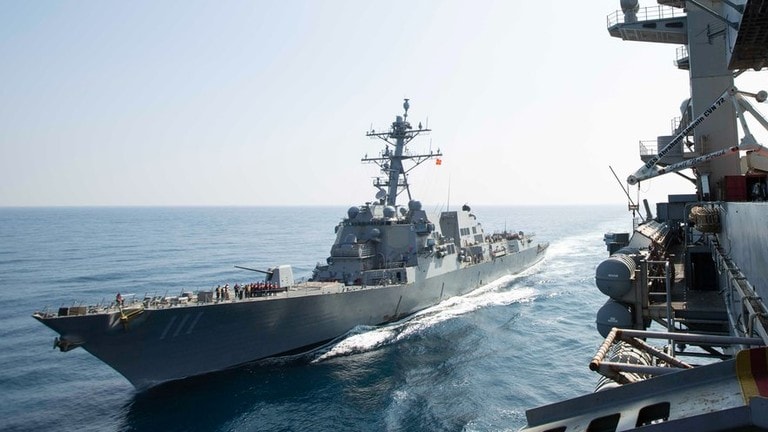
In a statement issued on January 30 (local time), CENTCOM requested that the naval forces of Iran's Islamic Revolutionary Guard Corps (IRGC) conduct the two-day exercise (starting January 31) in a "safe and professional" manner.
The U.S. side asserts it will not tolerate dangerous actions such as: speedboats approaching at close range or risking collision with U.S. warships; aircraft flying low above U.S. military vehicles with unclear intentions; and weapons pointed directly at U.S. forces.
This warning comes as the U.S. is also conducting large-scale "combat readiness" exercises across the region. The U.S. Air Force Central Command (AFCENT) said these drills are aimed at practicing the ability to rapidly deploy fighter jets to key operational locations.
US President Donald Trump recently confirmed the deployment of a "powerful fleet," led by the aircraft carrier USS Abraham Lincoln, toward the Gulf. He emphasized his desire to resolve tensions through diplomacy with two key demands: Iran must not possess nuclear weapons and must end its repression of protesters.
In response to Washington's actions, Iran adopted a tough stance. The Iranian delegation at the United Nations stated that while it was ready for dialogue, Tehran would "defend itself and retaliate in an unprecedented way" if pressured.
A senior Iranian diplomatic official asserted that the country was "200% ready" and would deliver an "appropriate, not just proportionate, response," while also hinting at the possibility of targeting US bases.
The Strait of Hormuz, where Iran plans to conduct its exercises, is a vital artery for global oil shipping, with approximately 100 commercial vessels passing through daily. CENTCOM acknowledges Iran's right to operate professionally in international airspace and waters, but emphasizes the need to avoid any unnecessary risks that could destabilize the region.


