
The US aims to purchase 12,000 inexpensive container-launched cruise missiles.
The Pentagon has signed agreements with new contractors to mass-produce low-cost weapons, addressing the problem of depleted ammunition stocks following major military operations.
The U.S. Department of Defense has just announced a large-scale procurement plan aiming to acquire 12,000 inexpensive cruise missiles within the next five years. This move is intended to address weapons shortages following protracted conflicts and to change the traditional defense procurement model, which has been criticized as slow and expensive.
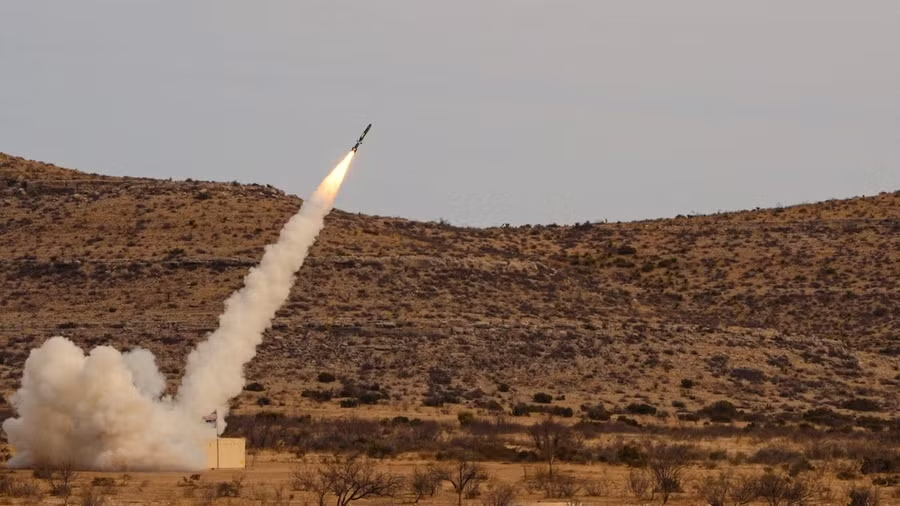
Low-cost containerized missile strategy LCCM
The Low-Case Containerized Missile (LCCM) program has officially launched through framework agreements with four contractors: Anduril, CoAspire, Leidos, and Zone 5. These entities are scheduled to begin delivering test missiles in June 2026. The biggest difference of this program is its preference for new technology companies over traditional defense contractors.
The LCCM system is designed for deployment from standard commercial shipping containers. This capability allows the weapon to be disguised on civilian cargo ships, enabling discreet transport and surprise attacks. Anduril expects to supply at least 1,000 Barracuda-500M missiles over the next three years, while Leidos is developing a new variant based on the AGM-190A design.
Enhanced hypersonic and long-range capabilities.
In addition to the LCCM program, the Pentagon has also signed a contract with the startup Castelion to purchase at least 500 Blackbeard hypersonic missiles within the next two years. The Blackbeard system is capable of deployment from existing HIMARS launchers or future unmanned platforms. While the specific cost has not been disclosed, Blackbeard is expected to be a cost-effective hypersonic solution to supplement the current expensive arsenal.
List of contractors participating in the low-cost weapons program:
- Anduril:Supply Barracuda-500M cruise missiles.
- Leidos:A variant developed from the AGM-190A design.
- Castlelion:Production of the Blackbeard hypersonic missile.
- CoAspire and Zone 5:Participate in the Long-Range Strike Ammunition (ERAM) initiative.
Pressure from depleted arms stockpiles.
The decision to increase production of inexpensive weapons stems from the fact that key US weapons stockpiles such as Tomahawk missiles and PrSM ballistic missiles have consumed a significant amount of resources in military operations during the 2025-2026 period. Military planners recognize that inexpensive drones and missiles have the potential to inflict serious damage at a much lower cost than conventional weapons.
A prime example is the US Air Force's LUCAS unmanned attack system, developed using reverse engineering technology from the Shahed-136 UAV. Combining new, inexpensive systems with expensive, modern weapons is considered a key strategy for the US to prepare for protracted conflicts with peer adversaries in the future.


