
The US deployed A-10 attack aircraft and Apache helicopters to counter Iran in the Strait of Hormuz.
The US command plans to use A-10 Thunderbolt II attack aircraft and AH-64 Apache helicopters to intercept Iranian unmanned vehicles in the Persian Gulf.
The U.S. military is planning to bolster its combat air force to counter Iranian unmanned underwater vehicles (UUVs) and unmanned boats in the Persian Gulf region, with a focus on the Strait of Hormuz. Key assets to be deployed include AH-64D/E Apache attack helicopters and A-10 Thunderbolt II attack aircraft.
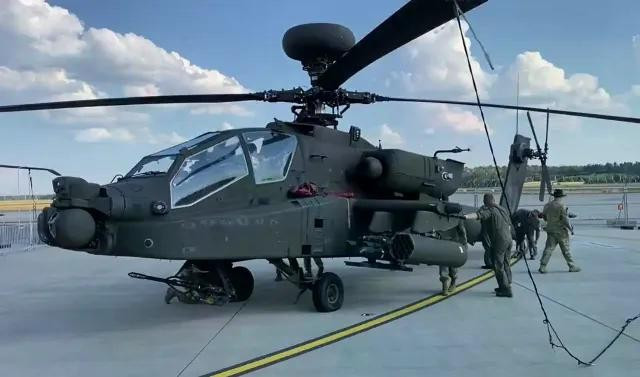
Strategy for using ground attack aircraft against unmanned vehicles.
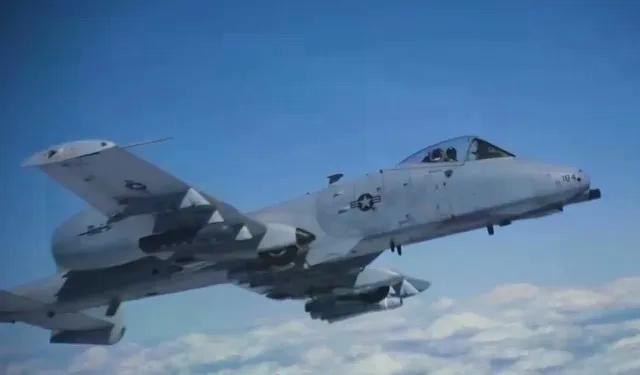
The U.S. Joint Chiefs of Staff confirmed the deployment of A-10 Thunderbolt II attack aircraft to counter Iranian activities. Preliminary assessments indicate that this aircraft has proven effective in attacking Iranian air targets and unmanned naval vehicles. Simultaneously, modern Apache helicopter variants are also being used to patrol and protect this strategic maritime region.
Notably, the roles of the AH-64 and A-10 are expected to undergo a significant shift in the near future. In addition to their unmanned aerial vehicle (UAV) hunting missions, these aircraft will move towards providing direct fire support to US Marine Corps expeditionary units as they deploy to seize landmasses around the Strait of Hormuz.
Logistical and deployment base challenges
The biggest challenge facing the U.S. Air Force today is securing its airfields. With U.S. military bases in Kuwait, the UAE, Qatar, Bahrain, and Jordan under constant threat, deploying AH-64s and A-10s requires both ensuring security and expanding operational range to provide sufficient patrol distance across the Strait of Hormuz.
Furthermore, the U.S. Navy's operational capabilities in the region are also facing considerable uncertainty. One aircraft carrier was reportedly damaged after an Iranian attack, while another suffered a technical malfunction causing a fire in the Red Sea, forcing it to move to Crete, Greece for repairs.
The possibility of retaliation from Iran.
To counter the US plan to bolster its air force, Iran could deploy warships equipped with mobile air defense systems (MANPADS) in the Persian Gulf. This would create a complex tactical confrontation between a powerful air strike force and mobile air defense systems at sea.
Currently, although the balance of power is still considered to favor the US-Israel alliance, the ability of each side to prepare and adapt in the near future will determine the actual developments in the Strait of Hormuz – one of the world's most important shipping lanes.


