
The US ends the $7,500 incentive: Where is the electric vehicle market headed?
Federal tax incentives ending September 30, 2025, fueled record EV sales in the third quarter. 55% of vehicles sold were eligible, with up to 90% receiving some form of credit; Rho Motion forecasts a decline in demand in the fourth quarter.
When the maximum $7,500 tax credit for electric vehicles in the US expires on September 30, 2025, the market immediately revealed a greater dependence on policy than the industry had previously acknowledged. Prior to the deadline, consumers rushed to order and take delivery of vehicles, resulting in a phenomenal third quarter; but this also simultaneously opened up the risk of a significant decline in the following months.
According to the EV & Battery Database, the Tesla Model Y is the best-selling electric vehicle eligible for Section 30D incentives, followed by the Tesla Model 3 and Chevrolet Equinox. The U.S. Environmental Protection Agency (EPA) identified 20 purely electric vehicles (BEVs) and one plug-in hybrid (PHEV) that met the incentive criteria; this group accounted for approximately 55% of total electric vehicle sales from January to September. Rho Motion estimates that up to 90% of BEVs and PHEVs sold in the first nine months of the year benefited from some form of tax credit.
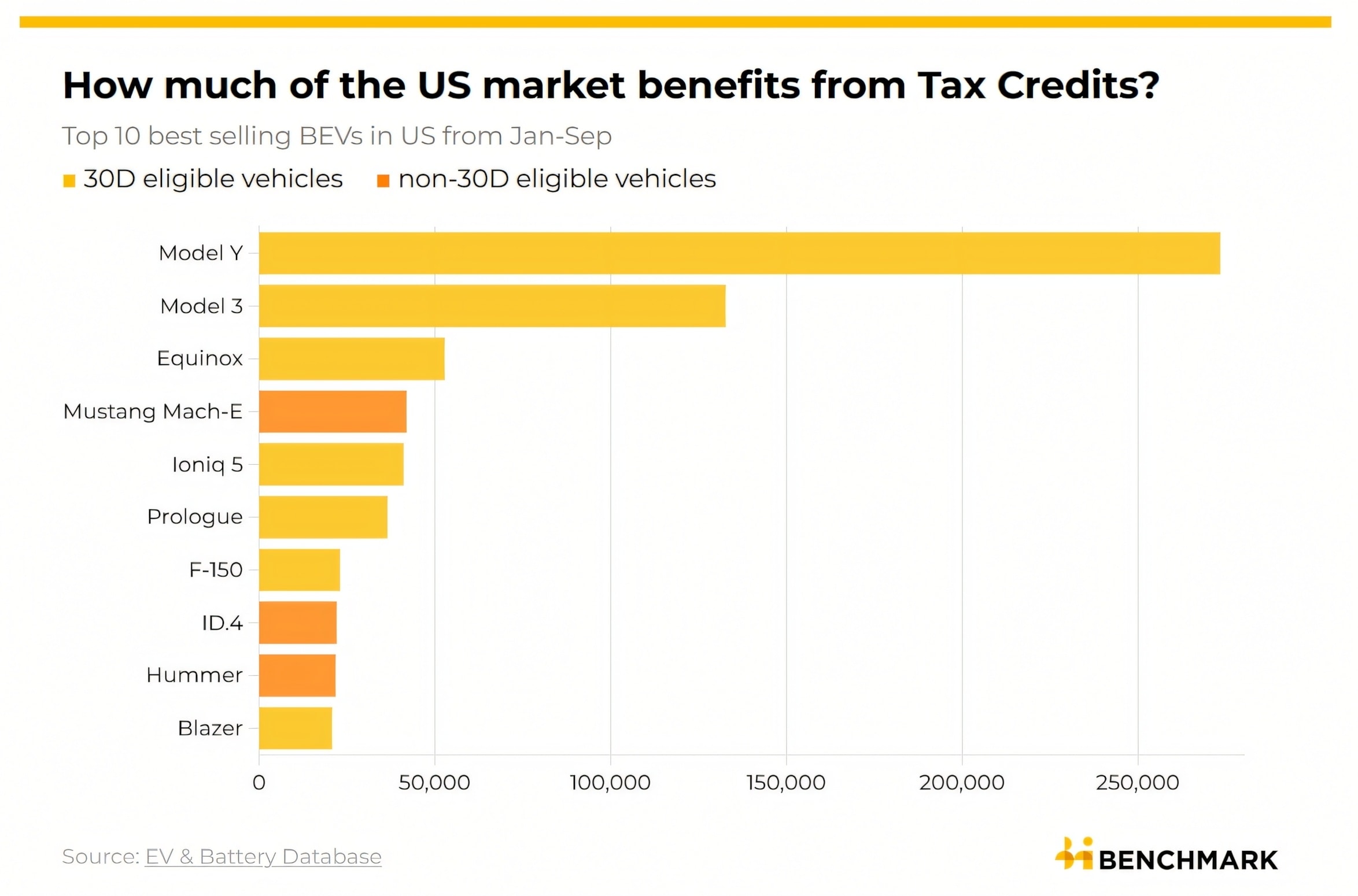
The last-minute boost and the gap after September 30th.
The New Clean Vehicle Credit (up to $7,500) incentive was a key driver of demand, clearly evident in Q3 2025. Ford recorded 30,612 electric vehicle sales in Q3, an 86% increase from Q2; General Motors saw a 44% increase to 66,501 vehicles; Tesla increased by 27%, while demand for the Hyundai Ioniq 5 more than doubled. Simultaneously, the Qualified Commercial Clean Vehicle Credit (up to $7,500) boosted the leasing channel, allowing companies to flexibly reduce leasing prices and expand their corporate customer base.
As the September 30 deadline approaches, a wave of orders is spreading across the US. However, according to Rho Motion, this is likely only a short-term buffer: demand for EVs and PHEVs is projected to decline in the fourth quarter, once incentives are no longer in place. Factors such as tariffs, high domestic production costs, and relaxed fuel efficiency standards could reduce the incentive to invest in electric vehicle manufacturing in the US, putting pressure on profit margins and prices.
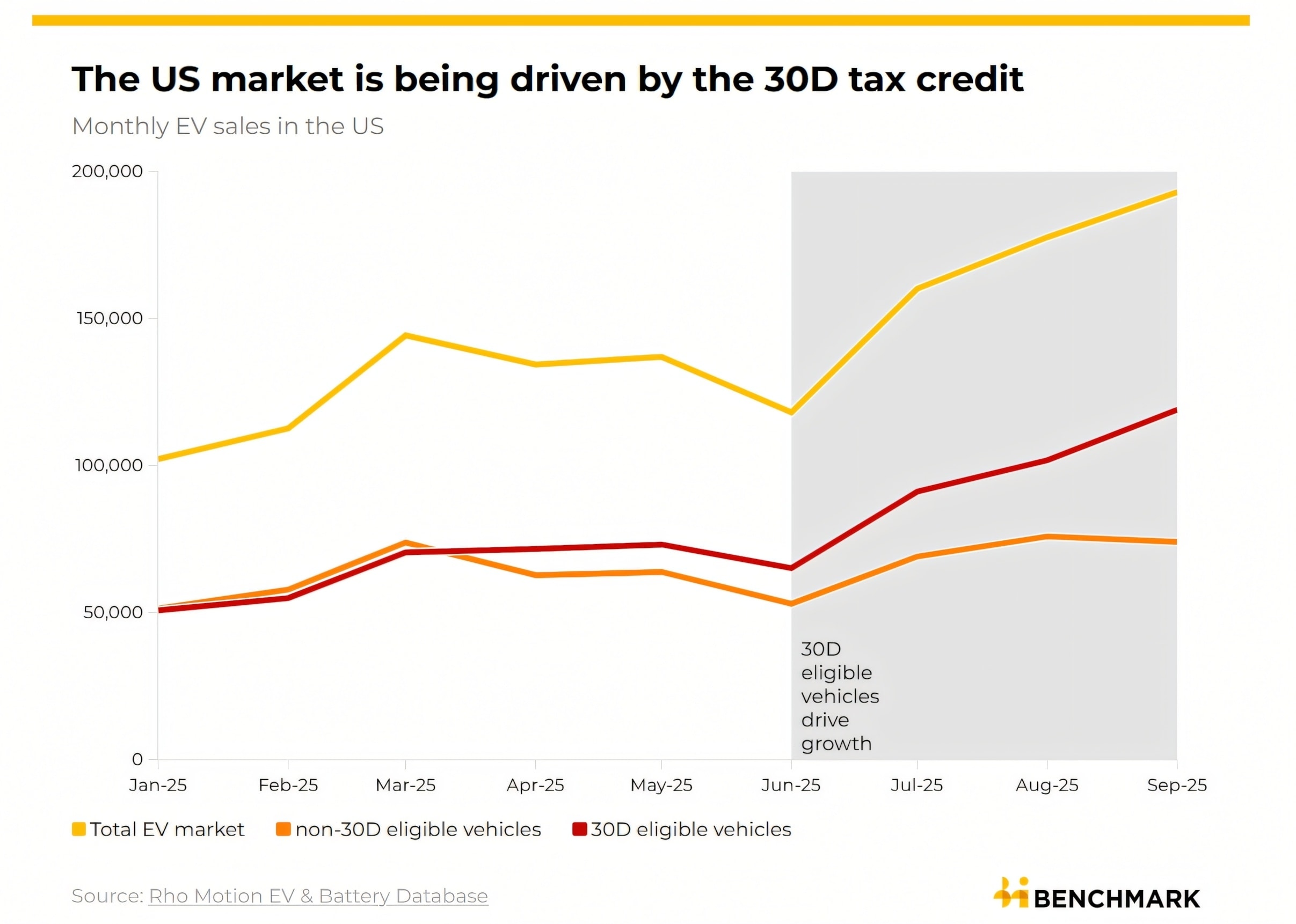
Leasing becomes a leverage
Unlike outright purchases, leased vehicles are not subject to the strict North American assembly origin requirements applied to individual buyers. This allows manufacturers to leverage trade tax credits to adjust lease prices more flexibly, turning leasing into an effective demand-stimulating tool in a price-sensitive consumer environment.
The momentum from leasing partly explains the surge in sales near the deadline, as manufacturers and leasing companies optimized cost packages to allow customers to take advantage of offers in time. However, once the offers are gone, this cost advantage also narrows, posing a challenge to maintaining sales momentum in the fourth quarter.
Who benefits the most before the deadline?
The short-term picture shows that eligible models like the Tesla Model Y, Model 3, and Chevrolet Equinox have taken advantage of the final stages of the incentive period to accelerate their growth. In addition, Ford, General Motors, and Tesla all recorded double-digit growth compared to the previous quarter, while Hyundai's Ioniq 5 stood out for its rapidly increasing demand. Focusing resources on credit-eligible configurations is a clear strategy in the market.

Key figures
| Index | Data | Source |
|---|---|---|
| Maximum discount value | 7,500 USD | New Clean Vehicle Credit; Qualified Commercial Clean Vehicle Credit |
| Eligible samples (1–9/2025) | 20 BEV, 1 PHEV | EPA |
| Sales share from eligible samples | 55% | EPA |
| Percentage of vehicles eligible for some form of credit | Up to 90% | Rho Motion |
| Ford EV to go on sale in Q3 2025 | 30,612 vehicles; +86% compared to Q2 | Company data |
| GM EV to go on sale in Q3 2025 | 66,501 vehicles; +44% compared to Q2 | Company data |
| Tesla's growth in Q3 2025 | +27% compared to Q2 | Company data |
| Demand for Hyundai Ioniq 5 | More than doubled | Company data |
| Offer ends on [date] | 30/9/2025 | US federal policy |
Prospects and challenges after the preferential treatment.
The third-quarter growth trajectory demonstrates the sensitivity of purchasing power to incentives. After the policy ends, the market enters a more challenging phase: demand may slow in the fourth quarter, production investment plans face high domestic costs, and the impact of trade barriers. For companies, the strategy of having products eligible for incentives has proven effective, but to maintain sales, the pressure to shift towards cost competitiveness and supply chain management is significant.
On the positive side, the customer base has expanded in the first nine months of the year, and a large segment of buyers have accessed EVs through leasing plans. However, as forecasts warn, without incentives, the market is likely to adjust to real demand, more accurately reflecting affordability and user expectations in the short term. Policy remains crucial to the growth trajectory of electric vehicles in the US.


