
US launches airstrikes against Iran for the third consecutive day.
The US continued its large-scale airstrikes against Iran for the third consecutive day, while also announcing the re-imposition of a blockade on Tehran's ports and plans to impose a 20% fee on goods passing through the Strait of Hormuz. Washington's latest moves have escalated tensions in the Middle East, driving up global oil prices and raising concerns about the risk of a wider conflict.
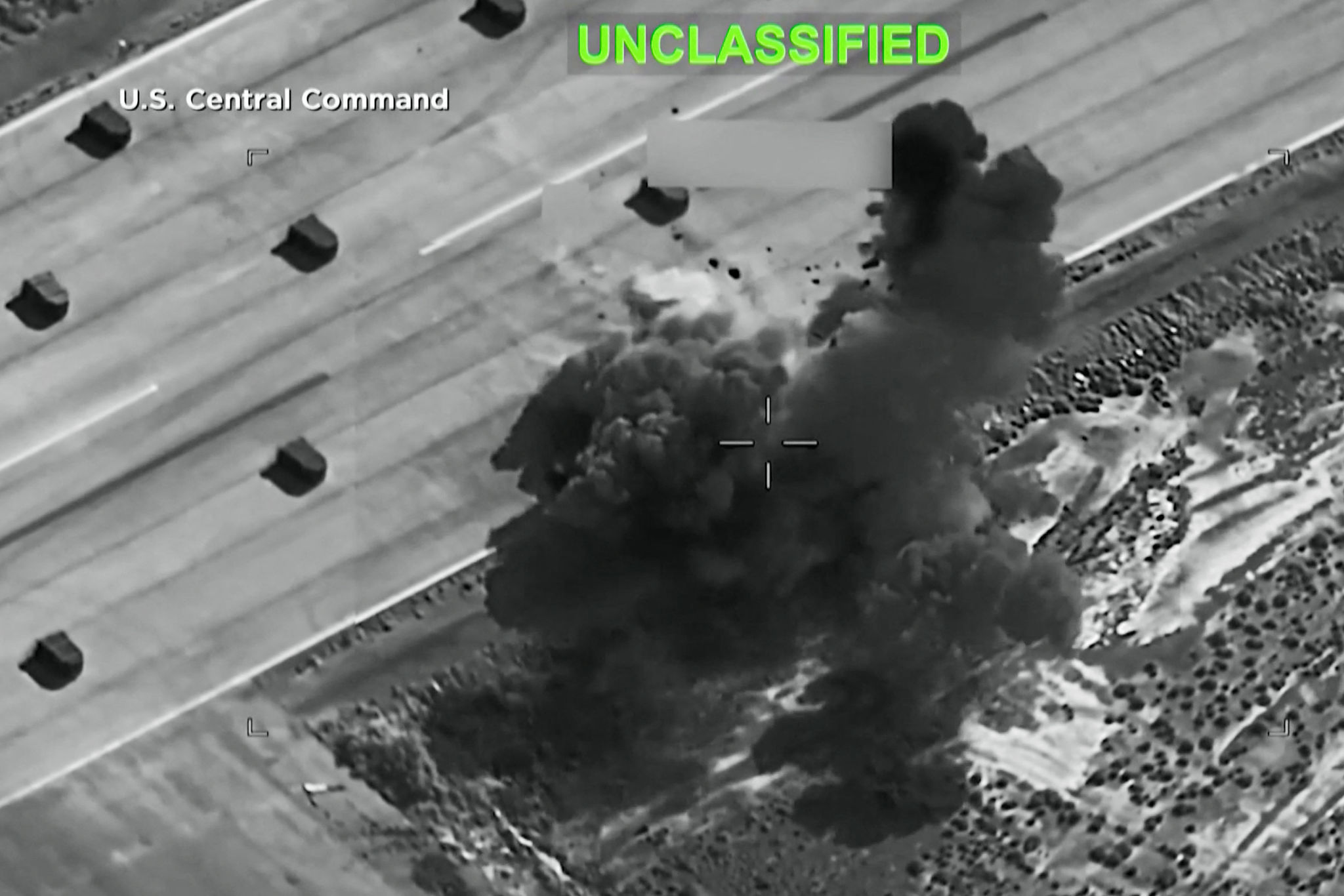
In the early hours of July 14, the US military continued its airstrike campaign, lasting approximately five hours, targeting multiple objectives across Iran, including coastal areas in Bushehr and Bandar Abbas. The US Central Command (CENTCOM) stated that the operation aimed to "degrade Iran's ability to attack commercial shipping lanes."
Speaking at the White House, President Donald Trump declared that Washington would "attack very strongly" against Iran in the coming days if tensions continued to escalate. However, he left open the possibility of reaching an agreement with Tehran to end the conflict.
Immediately following the US airstrikes, Iran's Islamic Revolutionary Guard Corps (IRGC) announced it had launched missiles and drones targeting Bahrain, including a housing complex for US forces and several other facilities.
Not only Bahrain, Iran has also expanded its attacks to target several US allies in the region. Jordan said its air defenses shot down four Iranian missiles. Earlier, the IRGC claimed to have carried out attacks against Bahrain, Jordan, Kuwait, and Oman.
Iran insists it is only targeting U.S. military interests in the Gulf, while warning that any country cooperating with Washington could be considered "war-ready".
According to the United Arab Emirates (UAE), Iran also attacked two ships operating in the Strait of Hormuz, killing one crew member.
Tensions escalated particularly after President Trump announced that the US would reimpose a blockade on Iranian ports from 8 p.m. GMT on July 14 and "take over" control of the Strait of Hormuz – a strategic shipping lane that carries about one-fifth of the world's commercial oil.
In addition, Trump announced plans to impose a 20% fee on all goods transported through the strait. This announcement immediately drew a strong reaction from Tehran, with Iran accusing Washington of "piracy."
Iranian Foreign Minister Abbas Araghchi responded on social media that charging fees is reasonable if a country guarantees maritime safety, but "20% is clearly too high." Meanwhile, Washington has long opposed any intention to charge fees to ships passing through the Strait of Hormuz, citing provisions of international law.
The White House confirmed last week that President Trump had formally notified Congress of the resumption of U.S. military operations against Iran, allowing the Pentagon to continue operations in the region for another 60 days without further congressional approval.
In addition to the campaign in the Strait of Hormuz, Trump also threatened to destroy the underground Pickaxe Mountain nuclear facility near Natanz – where Western intelligence suspects Iran is building an undisclosed uranium enrichment facility.
Despite the escalating conflict, the US President has affirmed that the possibility of reaching a peace agreement with Tehran remains open. However, Iranian Foreign Ministry spokesman Esmaeil Baqaei stated that the memorandum signed by both sides in June – the foundation for the negotiation process – is now in a "crisis."
According to Baqaei, Iran will not continue to fulfill its commitments if the US also abandons its obligations. Nevertheless, Tehran continues to maintain contact through intermediary countries including Qatar, Pakistan, and Oman to prevent the conflict from spiraling out of control.
The latest developments have had a significant impact on the global energy market. World oil prices rose by more than 9% on July 13th and continued to increase by more than 1% on July 14th, as investors worried about the risk of supply disruptions from the Middle East. Experts believe that the continuous escalation of military actions by both sides is making the prospect of reaching a lasting peace agreement increasingly fragile.


