
The US establishes a squadron of LUCAS UAVs in the Middle East, based on the Shahed.
CENTCOM has established a squadron of LUCAS suicide drones in the Middle East, developed from Iran's Shahed; each drone costs approximately $35,000, is autonomous, and has multiple launch options; the deployment location is unclear.
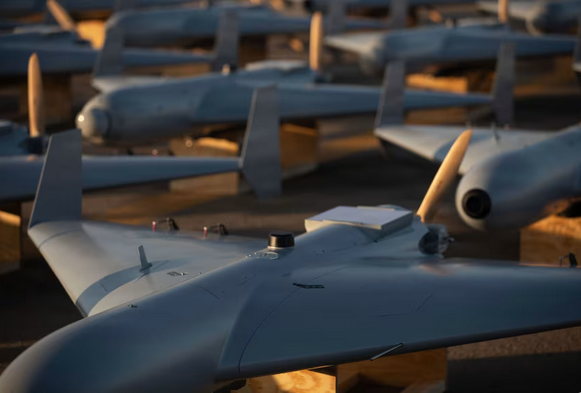
The U.S. military has established its first suicide drone squadron in the Middle East, using the LUCAS system, developed from Iran's Shahed drone. This force is part of the Scorpion Strike Task Force, established by CENTCOM a few months ago. Each LUCAS drone costs approximately $35,000 and is described as having a wide operational range, autonomous operation, and multiple launch options.
Overview
According to CNN, the new squadron is under the command of a nearly 20-member force called Task Force Scorpion Strike. Admiral Brad Cooper, Commander of CENTCOM, said in a statement on December 3 that the force would deploy the new UAVs “as a deterrent.” The squadron’s location in the Middle East has not been disclosed.
The move comes amid a surge in drone and missile attacks from Iran and its proxies. In 2024, Iran launched approximately 170 drones and over 120 ballistic missiles targeting Israel, most of which were intercepted; US forces shot down 70 drones and 3 ballistic missiles on the night of the attack, and two US pilots were awarded the Silver Star Medal. US bases in the region have been attacked, including one in Jordan that killed three US soldiers. At the same time, Houthi forces in Yemen have repeatedly used drones and missiles to attack commercial vessels in the Red Sea.
Technical analysis
LUCAS (Low-Cost Unmanned Combat Attack System) was developed based on the Iranian Shahed suicide drone that the US seized several years ago. According to a US defense official, the seized Shahed model was damaged; a group of US defense companies collaborated on reverse engineering to develop LUCAS from what was recovered.
According to the press release, LUCAS has the following key specifications:
- Operates automatically.
- The scope of operations is broad (not specified).
- Multiple launch configurations: catapults, missile takeoff and landing systems, mobile ground launchers, and motorized vehicles.
- The cost is approximately $35,000 per unit.
This cost is considered low compared to many conventional US weapons systems. A US defense official acknowledged that the previous focus on large-scale, expensive precision systems “put forces at a disadvantage” against cheaper UAVs, and said “we are now reversing that.”
Tactics and deployment
The automated and multi-option launch capabilities allow LUCAS flexibility in launch points and deployment vehicles, supporting rapid responses to dispersed threats in the region. The emphasis on "deterrence" indicates the primary objective is to create a proactive response to attacks using inexpensive UAVs.
The undisclosed location of the squadron helps ensure operational security. The number of UAVs in the squadron is not disclosed, only that it is "numerous" and will increase.
Key comparison: Lucas and Shahed
| Criteria | LUCAS | Shahed |
|---|---|---|
| Source | Developed by American defense companies; based on the seized Shahed prototype. | Iran |
| Role | Suicide drones, low-cost attack drones. | Suicide drones; used by Russia in Ukraine. |
| Automation | Yes, according to the CENTCOM press release. | Not mentioned in the source. |
| Launch plan | Launch vehicles; missile takeoff and landing systems; mobile ground launchers; motorized vehicles | Not mentioned in the source. |
| Expense | Approximately $35,000 per unit. | Not mentioned in the source. |
Impact and context
The emergence of LUCAS reflects a shift in US priorities in a combat environment where inexpensive UAVs play a dominant role in the Middle East and Ukraine. The low-cost approach, flexible deployment, and autonomous operation aim to shorten response times and reduce the operational burden against intense UAV attacks.
Operationally, placing LUCAS under Task Force Scorpion Strike allows for centralized command and control within the CENTCOM area, creating a unified deployment channel. However, key factors such as specific operational range, personnel size, and squadron locations have not yet been announced.
In the short term, LUCAS is expected to contribute to strengthening deterrence against attacks targeting forces and infrastructure in the region. In the medium term, its low cost allows for expansion of its numbers as needed, aligning with the US defense officials' stated goal of "reversing the disadvantage" posed by inexpensive UAVs.


