
Is the US taking a more conciliatory stance on the future of the Syrian president?
After years of pursuing a policy aimed at removing Syrian President Bashar al-Assad, the US appears to be gradually accepting the reality that he will remain in power until at least 2021.
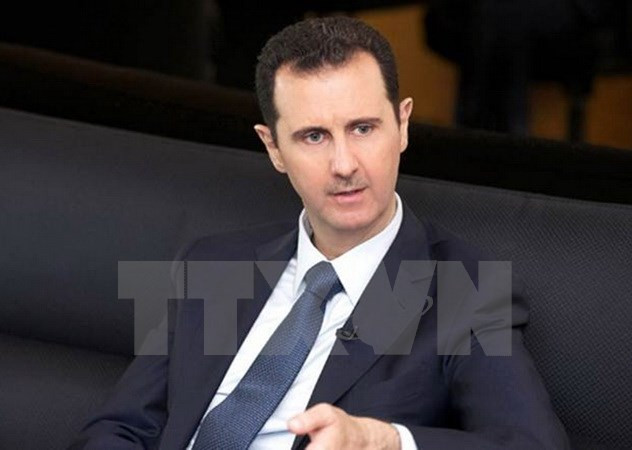 |
| Syrian President Bashar al-Assad. Photo: Reuters/VNA |
The New Yorker, citing US and European officials, revealed that the Trump administration was prepared to accept President al-Assad remaining in power until the next Syrian presidential election, scheduled for 2021.
In a statement on December 12, while reaffirming Washington's commitment to the Geneva peace negotiations in Switzerland and its belief in a future for Syria without President al-Assad, US State Department spokesperson Heather Nauert also emphasized that this depends on the strength of the Syrian people and the decisions of their voters.
Commenting on the aforementioned viewpoint, on December 12, former US Ambassador to Syria Peter Ford stated that this was not a truly significant step forward.
According to him, the US administration has made a small concession in accepting the reality that the world has long known: Syrian President al-Assad is not going anywhere.
Meanwhile, on December 12, Syrian peace talks continued in Geneva, including separate bilateral talks between UN Special Envoy for Syria Staffan de Mistura and delegations from the Syrian government and unified opposition delegations.
Following the meeting with the UN envoy, the Syrian government delegation, led by Syria's ambassador to the UN, Bashar al-Jaafari, issued no statement.
Meanwhile, the opposition claims its goal is to advance the peace process in Syria to ensure the safety of its citizens.
The opposition also called on all parties to negotiate a political transition based on United Nations Security Council Resolution 2254.
The opposition continues to defend the position that President al-Assad should not hold any role in the transitional government.
This is the eighth round of UN-sponsored talks on Syria, seen as an opportunity for the UN to revive efforts to end the conflict, which has lasted nearly seven years and claimed more than 340,000 lives.
These negotiations began on November 28th and are expected to continue until December 15th. Special Envoy Mistura believes the biggest obstacle is the lack of mutual trust between the parties.
Parallel to the Geneva process, a new round of negotiations sponsored by Russia on resolving the Syrian conflict will take place from December 21-22 in Astana, the capital of Kazakhstan.
At the upcoming negotiations, the parties are expected to approve regulations for a working group responsible for the release of detainees, the transfer of the bodies of those killed, and the search for missing persons.
In addition, the parties also plan to discuss the operation of de-escalation zones and adopt a joint statement on humanitarian aid operations in Syria.
According to Vietnam+
| RELATED NEWS |
|---|


