
The US aims for dominance in European gas markets via the Balkans.
The United States is gradually consolidating its position as the leading gas supplier to the European Union (EU) as the bloc accelerates its path to ending its dependence on Russian energy. Experts believe that the Balkan region, with its network of LNG ports and pipelines connecting to Central Europe, will become a strategic link in Washington's plan to expand its energy influence on the continent.
Following the outbreak of the Russia-Ukraine conflict in 2022, energy security became one of the European Union's top priorities. Repeated disruptions to Russian gas supplies prompted Brussels to accelerate plans to diversify its import sources and gradually reduce its dependence on Moscow.
According to the Council of Europe, Russia currently accounts for approximately 12% of the EU's total gas imports. However, the bloc has adopted a roadmap to completely end gas imports from Russia by the end of 2027. To achieve this goal, the EU has invested billions of euros in liquefied natural gas (LNG) receiving ports, expanding pipeline networks and increasing the capacity to receive gas transported by sea.
Analysts believe the EU's shift to LNG has created a significant opportunity for the US. Thanks to a sharp increase in shale gas production in recent years, Washington has quickly become the world's leading LNG exporter and is now the EU's largest LNG supplier. According to forecasts by the Institute for Energy Economics and Financial Analysis (IEEFA), by 2026, the US will surpass Norway to become the EU's largest supplier of natural gas, marking a significant shift in the region's energy landscape.
Croatia became a crucial link.
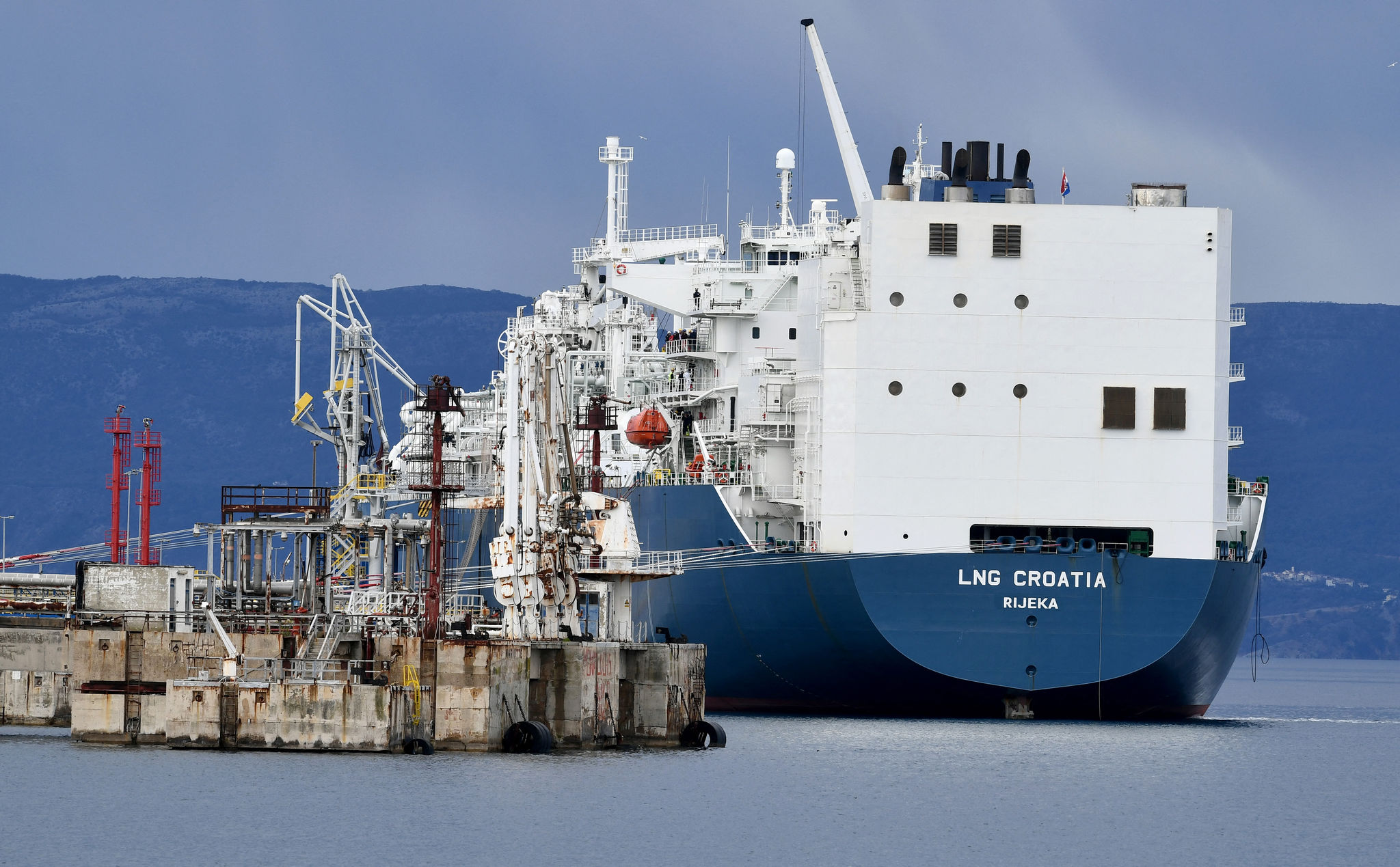
One of the key links in the US strategy is the floating LNG terminal off the coast of Croatia's Krk Island. After the upgrade was completed, the terminal now has a capacity to receive approximately 6.1 billion cubic meters of gas per year, equivalent to nearly 2% of the EU's total gas consumption.
Natural gas imported through the port of Krk is routed through pipelines connecting to Hungary and several Central European countries, facilitating deeper access for LNG from the US to the European market.
According to energy expert Ivan Brodic, the role of the Krk port could expand further in the coming years as the US pursues its goal of completely replacing Russian supplies in Europe.
The US is also backing the implementation of a gas pipeline project between Bosnia and Croatia, connecting Bosnia to the Krk LNG port before integrating into the European gas transmission system. According to experts, this pipeline will not only help diversify supply sources for the Balkan region but could also open up a new gas transport corridor to post-war Ukraine at a more competitive cost than current routes.
In addition to the Krk LNG port, Croatia also possesses a pipeline system connecting to Bosnia and Herzegovina, Hungary, Slovenia, and Serbia, capable of transporting nearly 500,000 barrels of crude oil per day.
The increased US presence in the European gas market not only reflects a shift in the supply structure following the Russia-Ukraine conflict but also indicates that geopolitical competition for energy is entering a new phase.


