
The US is developing a new class of frigates as part of its Golden Fleet plan.
U.S. Navy Secretary John Phelan announced that Huntington Ingalls Industries will build a new class of frigates, with the first ship expected to launch in 2028, as part of the Golden Fleet architecture aimed at a more dispersed naval force, longer-range firepower, and greater survivability against anti-ship missile threats.
On December 19, U.S. Navy Secretary John Phelan announced plans to build a new class of frigates, undertaken by Huntington Ingalls Industries (HII), with the first ship expected to launch in 2028. This is one of the pillars of the "Golden Fleet" initiative, a new fleet model that the U.S. Navy is pursuing with the goal of modernizing its forces by 2040.
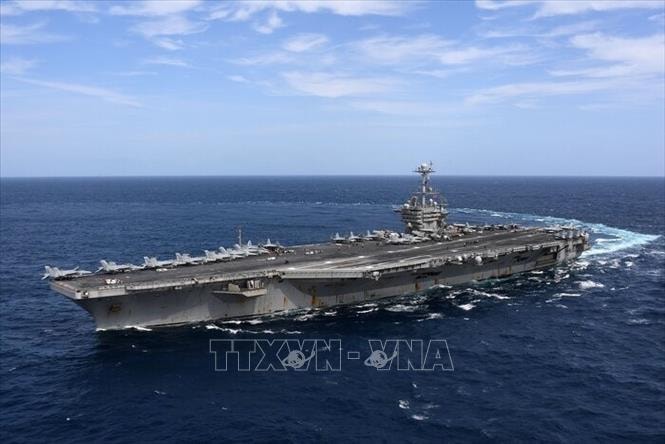
The new frigate class and its role in the Gold Fleet.
In a social media post, John Phelan confirmed that HII – the largest military shipbuilding corporation in the US – will be responsible for building the new class of frigates. The first ship of this class is expected to be launched in 2028, marking the beginning of the realization of the new fleet structure.
According to information released by Mr. Phelan, the new class of frigates is designed to protect larger ships from threats from enemy aircraft and surface vessels. Thus, it will be the primary escort class, acting as a medium-range defensive shield for carrier strike groups, large surface warships, and maritime logistics formations.
The Wall Street Journal quoted a HII spokesperson as saying that the company is in discussions with international partners about the possibility of forming a joint venture, thereby significantly expanding its shipbuilding capacity to support its "Golden Fleet" plan. This collaboration aims to ensure that industrial capacity can meet large-scale shipbuilding volumes in a relatively short time.
Alongside the new frigate class, the Constellation-class warship program will also be accelerated. According to sources, the US is likely to cooperate with allies to produce a smaller version of the "Golden Fleet," serving both the needs of the US Navy and the North Atlantic Treaty Organization (NATO). European shipbuilding companies such as Fincantieri and Naval Group have been cited as potential partners.
The proposed structure of the Gold Fleet.
According to Secretary John Phelan, the "Golden Fleet" is expected to include at least 49 new support ships, including refueling and transport ships. The U.S. Navy plans to request funding for the construction of these ships in the 2026 budget.
In addition to the new class of frigates, the U.S. Navy also plans to add another class of large surface warships to the "Gold Fleet," which Phelan described as "big and beautiful ships." According to sources, the new fleet structure will combine heavy warships with light and medium warships, along with a class of smaller ships specializing in coastal operations.
| Main ingredients | Planned role |
|---|---|
| New class of frigates | Protecting large ships from enemy aircraft and surface vessels; escorting main naval task forces. |
| Large surface warship ("big, beautiful ship") | Heavy battleships, equipped with long-range attack firepower, increase survivability against anti-ship missiles. |
| Small coastal combat vessels | Nearshore operations, flexible cluster-based combat, reconnaissance support, rapid response, and coordinated unmanned aerial vehicle (UAV) operations. |
| At least 49 support vessels | Refueling, transportation, logistical support, and maintaining a presence at sea. |
This model aims to move away from the traditional structure based on destroyers, cruisers, and aircraft carriers, shifting towards a dispersed, flexible force capable of long-range precision strikes and maintaining a presence in enemy-controlled areas. The fleet will consist of smaller groups of ships, but organized into a network, supporting each other in terms of sensors, firepower, and logistics.
New generation battleships and technical requirements
The next-generation flagship in the "Golden Fleet" is described as being significantly larger than the existing Arleigh Burke-class destroyers or Ticonderoga-class cruisers. These ships are expected to feature integrated electric propulsion systems, reinforced hulls, advanced radar systems, and the capability to carry long-range hypersonic missiles.
The goal is to enhance offensive firepower while increasing survivability against threats such as the DF-21D and DF-26 anti-ship missiles, or hypersonic ballistic missiles launched from submarines. The emphasis on these weapons reflects the U.S. Navy's requirement for a class of ships capable of operating in a high-threat environment where adversaries possess long-range strike capabilities against maritime targets.
In addition, the fleet includes a class of smaller coastal combat vessels, integrated with mission modules and operating flexibly in clusters. These vessels are expected to support reconnaissance, rapid response, and coordination with unmanned surface, underwater, and airborne vehicles.
Implementing the political strategy and timeline.
The "Golden Fleet," named in the style of national security programs under President Trump, has begun to be discussed internally within the U.S. Navy. The overall goal is to modernize the force by 2040, in the context of increasingly complex maritime operational requirements.
The White House chief is believed to have directly discussed this proposal with U.S. Navy leaders. This reflects the executive branch's level of interest in the new fleet development direction, although details of these discussions have not been released.
The U.S. Congress is expected to discuss the "Golden Fleet" plan in early 2026, when the Navy submits framework documents requesting funding for the initial design phase. Defense committees will carefully examine its feasibility, cost-effectiveness ratio, and compatibility with current U.S. industrial capabilities.
Impact on U.S. naval doctrine
Strategically, the "Golden Fleet" is considered a turning point in U.S. naval doctrine, shifting from a superpower structure heavily reliant on aircraft carriers to a diversified, dispersed force capable of operating deep within enemy-controlled territory. This new force aims for long-range precision strike capabilities, risk diversification across multiple platforms, and increased resilience against preemptive strikes.
This approach is expected to significantly impact joint operations, logistics, and force deployment strategies across the entire U.S. military over the next decade. The redesign of the fleet structure will force the Navy to shift from a mindset focused on concentrating firepower around a few large carrier strike groups to a model of multiple smaller, more self-defensive groups capable of coordinated firepower via a network.
At this stage, most of the specific technical details of the new class of frigates, large surface warships, and littoral combat ships remain unreleased. Decisions regarding specifications, numbers, and deployment timelines will depend on the budget review process in Congress, the capabilities of the U.S. shipbuilding industry, and the outcome of discussions with partners and allies, as indicated in various sources.


