
US tightens immigration grip after gunfire outside the White House.
Last week, a brazen shooting near the White House that killed a U.S. National Guard soldier triggered a chain reaction, leading to unprecedentedly stringent immigration controls by the Trump administration. These developments have raised serious questions about the fate of thousands of legal immigrants.
The ambush between Washington DC
.png)
On the afternoon of November 26th, the Thanksgiving atmosphere in Washington D.C. was shattered by gunfire. The incident occurred just a few blocks from the White House, where National Guard members were on patrol. According to sources on the scene and investigators, the suspect was identified as Rahmanullah Lakanwal, 29, an Afghan citizen. He drove across the United States from Washington state on the West Coast to Washington D.C. on the East Coast to carry out what U.S. officials described as an "ambush." Armed with a .357 Magnum revolver, Lakanwal opened fire on the soldiers. The attack had devastating consequences. In an official Thanksgiving Day announcement, President Donald Trump confirmed that 20-year-old Sarah Beckstrom, a member of the West Virginia National Guard, had died from her injuries. "My little daughter is with God," Gary Beckstrom, the victim's father, shared his profound grief on social media. The second victim, 24-year-old soldier Andrew Wolfe, remains in critical condition. The suspect, Lakanwal, was also injured in a shootout with law enforcement and is currently being held in strict custody at the hospital. The FBI immediately launched a counterterrorism investigation, searching his residence and seizing numerous electronic devices to determine his motive.
The background of suspect Rahmanullah Lakanwal is becoming the focus of a heated debate about U.S. national security. According to CIA Director John Ratcliffe and investigative documents, Lakanwal is not an ordinary refugee. Before coming to the U.S., Lakanwal was a member of a special paramilitary unit in Afghanistan – often referred to as the "Zero Unit." This force was supported, trained, and paid by the CIA to carry out counterterrorism missions and covert operations in Kandahar province.
Lakanwal entered the United States in September 2021 as part of Operation "Allied Welcome"—a massive resettlement program under President Joe Biden for Afghans who had supported the U.S. and feared Taliban retaliation after the U.S. withdrawal. This detail highlights a paradox: an individual who had been trained and collaborated with U.S. intelligence in counterterrorism now became a suspect in an attack on American soil targeting U.S. soldiers.
The blame war
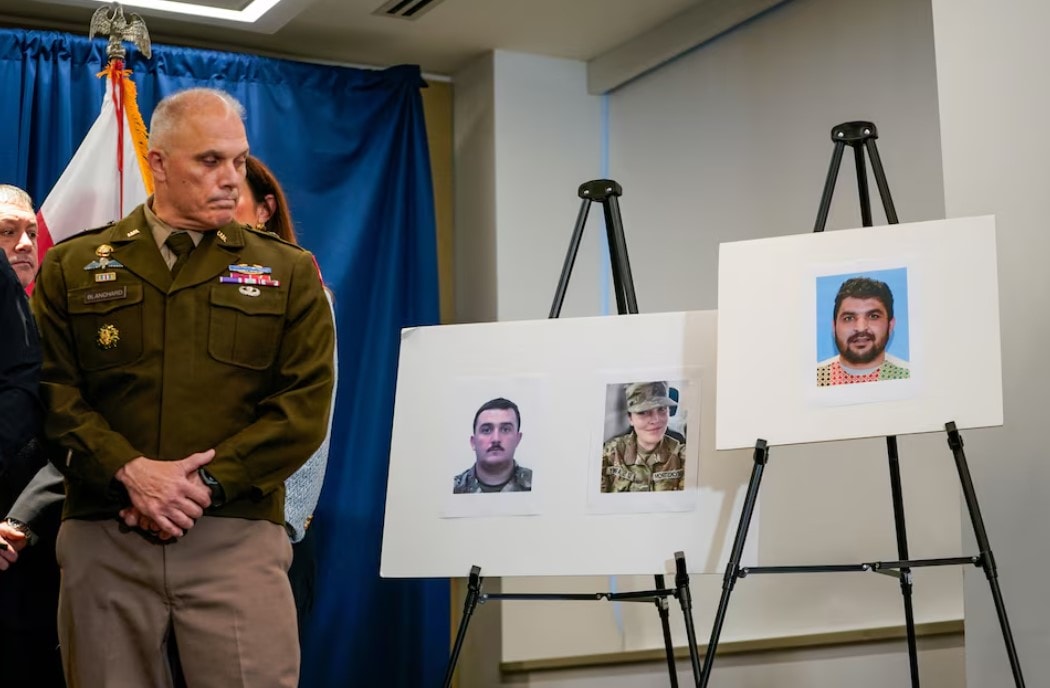
According to analysts, the shooting occurred against a backdrop of deep political divisions in the United States, and it was immediately "politicized" to serve arguments about border security. Republicans and the Trump administration quickly used the event as evidence of the previous administration's failures. President Trump, in statements following the incident, directly blamed the lax vetting process during the chaotic 2021 troop withdrawal under Biden. "This brutal incident reminds us that there is no greater national security priority than ensuring complete control over who enters and stays in our country," Trump emphasized. Senior officials such as FBI Director Kash Patel and Washington D.C. Attorney Jeanine Pirro also unanimously criticized the Democrats' policies for allowing dangerous individuals to slip through the net.
However, Lakanwal's immigration records reveal a complex detail: Although he entered the country during the Biden administration, the suspect's asylum status was officially approved in April 2025 – three months after Trump took office. Advocacy groups like AfghanEvac have spoken out in defense of the Afghan community, asserting that the security screening process for evacuees is extremely rigorous and that Lakanwal's individual actions should not be used to generalize about an entire community that is actively contributing to American society.
The impact of the shooting extended beyond a mere criminal case, leading to immediate and drastic changes in immigration policy by the White House. Less than 24 hours after the shooting, the Trump administration activated a series of drastic measures. The U.S. Citizenship and Immigration Services (USCIS) announced an indefinite suspension of all immigration applications related to Afghan citizens. In addition, Joseph Edlow, Director of USCIS, announced on social media a "comprehensive and rigorous reassessment" of all Green Cards for citizens from "countries of concern." The list of countries targeted for review includes 19 nations, including Afghanistan, Iran, Somalia, Libya, Yemen, Cuba, Venezuela, and others. These countries had previously been subject to entry restrictions due to perceived lack of standard security screening procedures.
The aforementioned decision is causing deep concern within the legal immigrant community in the United States. Reviewing permanent resident (Green Card) status is a rare and extremely serious move that could lead to the revocation of residency rights and mass deportation, even for those who have lived and worked legally in the U.S. for many years.
Beyond immigration concerns, the incident also provided a pretext for President Trump to increase the military presence in Democratic-led cities. Previously, the presence of the National Guard in Washington D.C. had been a subject of controversy and had been challenged in court by local authorities. Following the shooting, the Pentagon, under the direction of Defense Secretary Pete Hegseth, announced it would deploy an additional 500 troops, bringing the total number in the capital to 2,500. This move was explained as supporting crime suppression, but observers worried about the risk of "militarizing" civilian law enforcement operations.
In conclusion, it can be seen that,The shooting in Washington D.C. last week became the "last straw," triggering a new wave of tough policies that could change the fate of hundreds of thousands of immigrants to the "promised land" of America. While investigators are still searching for the true motive behind the shooting, the political wheel in Washington has begun to turn dramatically. The balance between national security, humanitarian responsibility to former allies, and the rights of legal immigrants is becoming more difficult than ever.


