
The US has agreed to provide Ukraine with monthly interceptor missiles to help bolster its air defense system.
Ukraine reached an agreement to receive interceptor missiles monthly from the US through the PURL mechanism, but this quantity is still insufficient to meet its air defense needs.
Ukrainian President Volodymyr Zelensky announced that the Kyiv authorities have reached an agreement with the United States on receiving monthly shipments of interceptor missiles. This decision comes as Ukrainian air defenses face a severe shortage of equipment in response to missile and drone attacks.
Agreement to supply missiles through the PURL mechanism.
According to Ukrainian leaders, the country's current air defense and interceptor missile systems are primarily manufactured in the United States. The new agreement is expected to maintain a stable supply flow for the ground-based defense network.
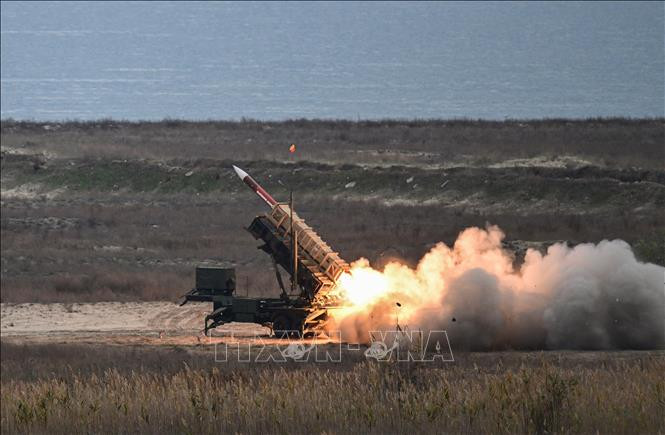
The procurement of missile ammunition is carried out through the PURL program. Under this operating mechanism, Ukraine directly orders air defense equipment from the United States using funding provided by partner countries. Despite the new agreement, the number of interceptor missiles remaining in Ukraine's inventory is recorded as lower than in 2025 and insufficient to meet actual operational needs.
The challenge of defending against ballistic missile systems.
Pressure on Ukraine's air defense system increased as the intensity of enemy attacks remained high. The Ukrainian military admitted that during the attacks on the night of August 5th, its defense units were unable to intercept the series of Iskander-M ballistic missiles, S-400 missiles, and Tsirkon missiles launched by Russia.
Furthermore, the progress of military aid from the US has been affected because Washington has to prioritize the allocation of its Patriot missile reserves to protect its forces, bases, and allies in the Middle East. The disruption and delays in replenishing the ammunition supply have directly impacted Kyiv's ability to protect its strategic infrastructure.
Expanding sourcing options and technological barriers
Faced with limitations from US supplies, Ukraine is attempting to negotiate with European countries that possess potential stockpiles. Germany, Poland, and the Scandinavian countries are considered potential partners capable of sharing their existing air defense missile systems and ammunition.
Furthermore, the option of independently producing Patriot interceptor missiles domestically also faces significant obstacles. The US representative to NATO confirmed that Washington does not license the transfer of Patriot missile manufacturing technology to third parties. These advanced interceptor missiles fall under the category of defense technologies subject to strict export controls, therefore manufacturing can only be carried out by domestic US contractors.


