
The US launches 'Operation Freedom' in the Strait of Hormuz, hinting at positive negotiations with Iran.
On the morning of May 4th, US President Donald Trump announced that discussions with Iran were showing "very positive" signs. Simultaneously, Washington announced the deployment of "Operation Freedom" to escort commercial ships safely out of the blockaded Strait of Hormuz.

Positive signals from the negotiating table.
Sharing on the social media platform Truth Social, US President Donald Trump confirmed that representatives from Washington are holding positive discussions with Tehran.
I am well aware that my representatives are having very positive discussions with Iran, and this could lead to a positive outcome for all parties.
Mr. Trump emphasized
On the Iranian side, Foreign Ministry spokesman Esmaeil Baqaei said on state television that Tehran had submitted a 14-point plan "focused on ending the war." Baqaei also confirmed that Washington had responded to the proposal through Pakistani mediators and that Iran was reviewing it to determine the next steps.
According to the US news site Axios, Iran has set a one-month deadline for negotiations on an agreement to reopen the Strait of Hormuz, lift the US naval blockade, and end hostilities. These diplomatic efforts are taking place against the backdrop of a ceasefire between the two countries since April 8th, and only one round of direct peace talks held in Islamabad, Pakistan.
"Operation Freedom" and efforts to free up maritime traffic.
Alongside diplomatic efforts, the US has decided to take direct action in the maritime hotspot. Starting on the morning of May 4th, Middle Eastern time, US forces will deploy "Operation Freedom" to escort commercial ships stranded in the Strait of Hormuz to safe waters.
President Trump called it a "humanitarian gesture" toward the crews of hundreds of ships running out of food and essential medical supplies due to the prolonged lockdown.
Data from maritime intelligence firm AXSMarine shows that, as of the end of April, more than 900 commercial vessels were still stranded in the Gulf.
Details of the operation, the U.S. Central Command (CENTCOM) stated that participating forces would include guided-missile destroyers, more than 100 land- and sea-based aircraft, multi-domain unmanned platforms, and 15,000 personnel. Admiral Brad Cooper, Commander of CENTCOM, affirmed that this defensive mission is "essential to regional security and the global economy."
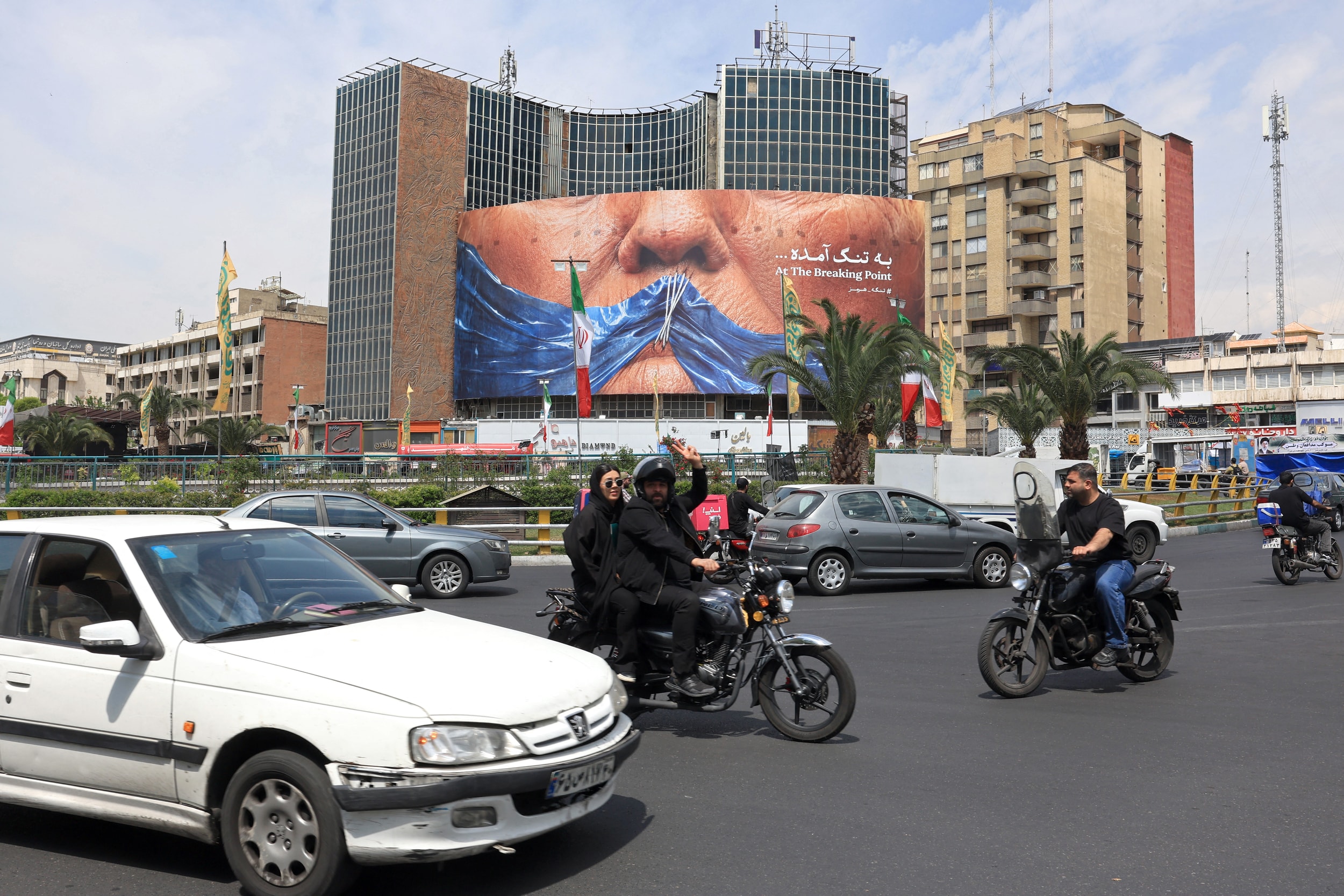
Economic tensions and the risk of conflict.
Since the conflict erupted in late February 2024, Iran's blockade of the strategic Strait of Hormuz has cut off the flow of oil, gas, and fertilizers to the global economy, causing oil prices to rise by approximately 50% compared to pre-conflict levels. German Foreign Minister Johann Wadephul recently spoke by phone with his Iranian counterpart Abbas Araghchi, demanding that Tehran immediately reopen the strait to avoid further severe consequences for the European economy.
In response, the U.S. also imposed a reciprocal blockade on Iranian ports. U.S. Treasury Secretary Scott Bessent described this as a comprehensive economic embargo aimed at cutting off the Tehran regime's financial resources.
Despite progress at the negotiating table, the risk of direct confrontation at sea remains. The US escorting ships through the narrow strait would place US forces very close to Iranian forces. The US president issued a stern warning that any interference with this humanitarian ship escort "will be dealt with strongly."
Meanwhile, Iran's Islamic Revolutionary Guard Corps (IRGC) declared that Trump must choose between "an impossible campaign or a bad deal." Mohsen Rezaei, a military adviser to Iran's Supreme Leader, also issued a stern warning on social media, claiming Iranian forces are capable of "sinking" US warships and aircraft carriers if a confrontation were to occur.
Regarding Iran's 14-point peace proposal:
Responding to the 14-point peace plan sent by Tehran through Pakistan, US President Donald Trump expressed skepticism, stating that Iran "has not yet paid the price it deserves." At the same time, US Treasury Secretary Scott Bessent affirmed that Washington is tightening its grip on the Tehran regime through "Operation Economic Rage," which runs parallel to military campaigns.
Iran's Islamic Revolutionary Guard Corps (IRGC) declared that the US has only two options: either get bogged down in an "impossible military campaign," or reach an agreement with Tehran.
German Foreign Minister Johann Wadephul spoke directly with his Iranian counterpart by phone, demanding that Tehran immediately open the Strait of Hormuz and completely abandon its nuclear weapons program in exchange for a negotiated solution.
Tensions between Israel and Lebanon have not subsided:
Despite the ceasefire agreement, the Israeli military issued new evacuation orders for more than 10 villages in southern Lebanon. Israeli airstrikes on May 4 killed at least one person and injured four rescue workers.
A representative of Hezbollah stated that they reject direct talks between the Lebanese and Israeli governments, asserting that the armed group would "obstruct" the negotiation goals and would not implement any results reached.


