
The US deploys E-6B Mercury nuclear command aircraft to the Middle East.
E-6B Mercury strategic bombers, dubbed the "Doomsday Planes," have appeared in the Middle East to ensure nuclear command and control capabilities amid escalating tensions with Iran.
The US is believed to have deployed E-6B Mercury strategic command aircraft to the Middle East. This move comes amid escalating military tensions between Washington and Tehran, raising concerns about the ability to coordinate nuclear attacks and maintain strategic command capabilities from the air in the event of a full-scale conflict.
The strategic role of the E-6B Mercury doomsday plane.
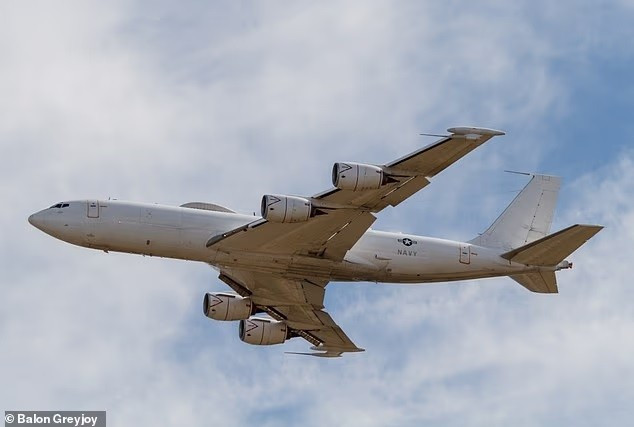
The E-6B Mercury is a strategic command and control aircraft operated by the U.S. Navy. According to military experts, this aircraft is specifically designed to survive a nuclear war and serve as a mobile command center, ensuring the smooth transmission of supreme military orders.
George Galloway, a Western politician, stated that the preparation or deployment of these assets in the Middle East could have serious consequences for the international community. He emphasized that the nuclear command and control systems on these aircraft belong to the US military and their presence in the Persian Gulf region sends a strong deterrent message.
TACAMO combat capabilities and communication systems
Technically, the E-6B Mercury is built on the airframe of the commercial Boeing 707. However, the interior and internal electronics have been completely modified to perform the TACAMO (Take Charge and Move Out) mission – a strategic communications system that allows the US President or military command to maintain contact with nuclear forces.
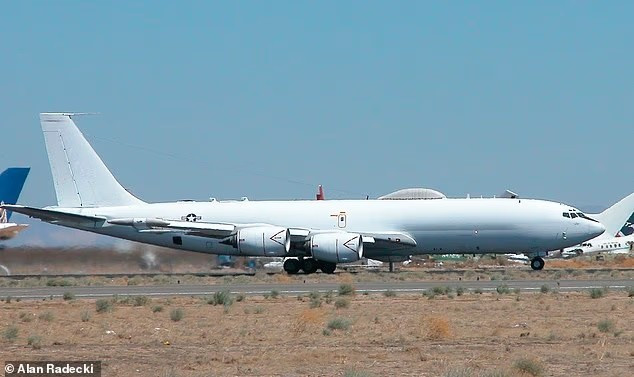
More than just a base transceiver, the E-6B Mercury also serves as the "Looking Glass." In this role, the aircraft is capable of coordinating and commanding the launch of intercontinental ballistic missiles (ICBMs) from land-based launchers or nuclear submarines at the bottom of the ocean, even if the ground-based command infrastructure has been completely destroyed.
Data on monitoring and developments on the ground in the Middle East.
Aviation tracking data shows that since the conflict with Iran broke out on February 28, the frequency of E-6B Mercury sorties has increased significantly. Numerous flights have been recorded taking off from US domestic bases, crossing the Atlantic to head into the Middle East.
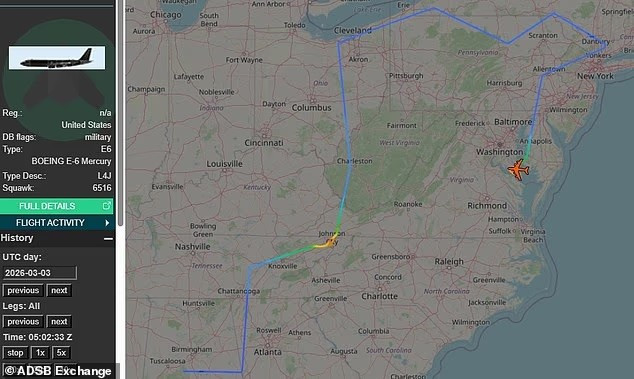
Notably, on March 5th, two E-6B Mercury aircraft were observed heading toward the Middle East, just days after US and Israeli military operations targeting objectives in Iran. The presence of these nuclear command aircraft raised concerns among observers about the possibility of the crisis escalating beyond control.
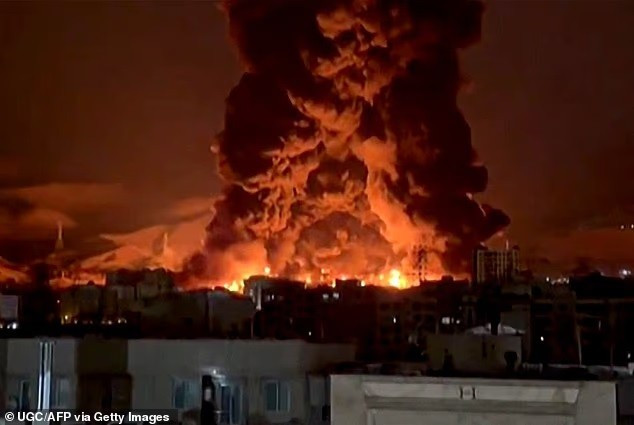
Although these flights may be part of drills to demonstrate combat readiness, the reality on the ground presents less optimistic predictions. Former Pentagon adviser Douglas Macgregor and activist Kim Dotcom have both warned of the risk that nuclear weapons could be considered if the parties fail to reach a compromise. Currently, the Pentagon refuses to comment in detail on the specific flight paths of the E-6B Mercury aircraft, citing national security concerns.


